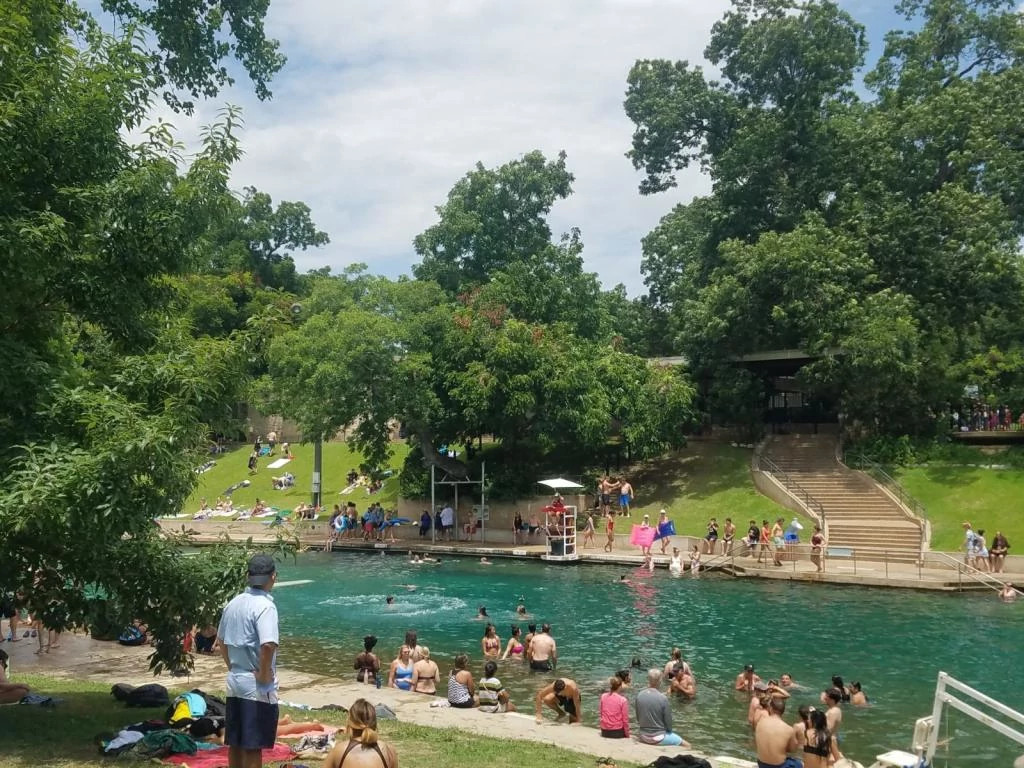
Barton Springs Pool Tree Updates
Call for Artists: Honor 'Flo' Through Community Art
Austin Parks and Recreation seeks a social practice artist to create a community-focused artwork using wood from 'Flo,' the historic pecan tree removed from Barton Springs Pool in 2023. Artists with experience in public art or community engagement are encouraged to apply. The deadline has been extended until June 25, 2025, at end of day. Download Request for Artist Qualifications PDF.
Formal Communications
- 10/2/2023 Press release, scheduled removal: Update on Barton Springs Pool Tree Flo
- 9/29/2023 Memo to Mayor and City Council, scheduled removal: Council Memo - Proposed removal date
- 9/11/2023 Press release, announcing postponement of removal: Austin Parks and Recreation to Review Additional Considerations for Barton Springs Pool Tree "Flo"
- 9/8/2023 Press release, arborist assessments complete: Celebration of Life for Barton Springs Tree “Flo”
- 9/8 Memo to Mayor and City Council, arborist assessments complete: Council Memo - Assessments
- 8/18/2023 Press release, diagnosis announcement: Barton Springs Pool Tree Diagnosed with Infection
10/2/2023 Update
Due to the safety risks, the leaning tree at Barton Springs known as "Flo" will be removed on October 5, 2023 when Barton Springs Pool is closed. Austin Parks and Recreation took many factors into consideration when reaching this decision, most importantly, public safety.
The Department invites the public to honor "Flo" at a Celebration of Life on October 4, 2023 at 6:30 p.m. at Barton Springs Pool, 1000 Azie Morton Rd. The celebration of life will include a water blessing, speakers about Flo’s history and music. People who attending the celebration should plan to park on the south side of the pool and walk around due to limited space in the main lot. The pool will be cleared from 6 p.m. until 7 p.m. for the ceremony. Entry fees will be waived from 5:30 p.m. until 8 p.m. for those attending the celebration of life.
Austin Parks and Recreation recognizes the immense value "Flo" has provided to our shared community and that the tree removal will change the landscape around Barton Springs Pool. PARD is collecting stories, memories, and photos about Flo. Stories can be viewed online. The public is invited to share their remembrances via email at treestories@austintexas.gov.
9/14/2023 Update
Structural Engineer Assessment
9/11/2023 Update
Austin Parks and Recreation has decided to delay the ceremony and removal of the iconic Barton Springs leaning pecan tree affectionately known as “Flo” while the Department reviews additional considerations.
9/8/2023 Update
All third-party ISA Certified Arborist assessments of the iconic Barton Springs leaning pecan tree affectionately known as “Flo” are now complete. The following companies provided reports, which may be reviewed by clicking on each company name:
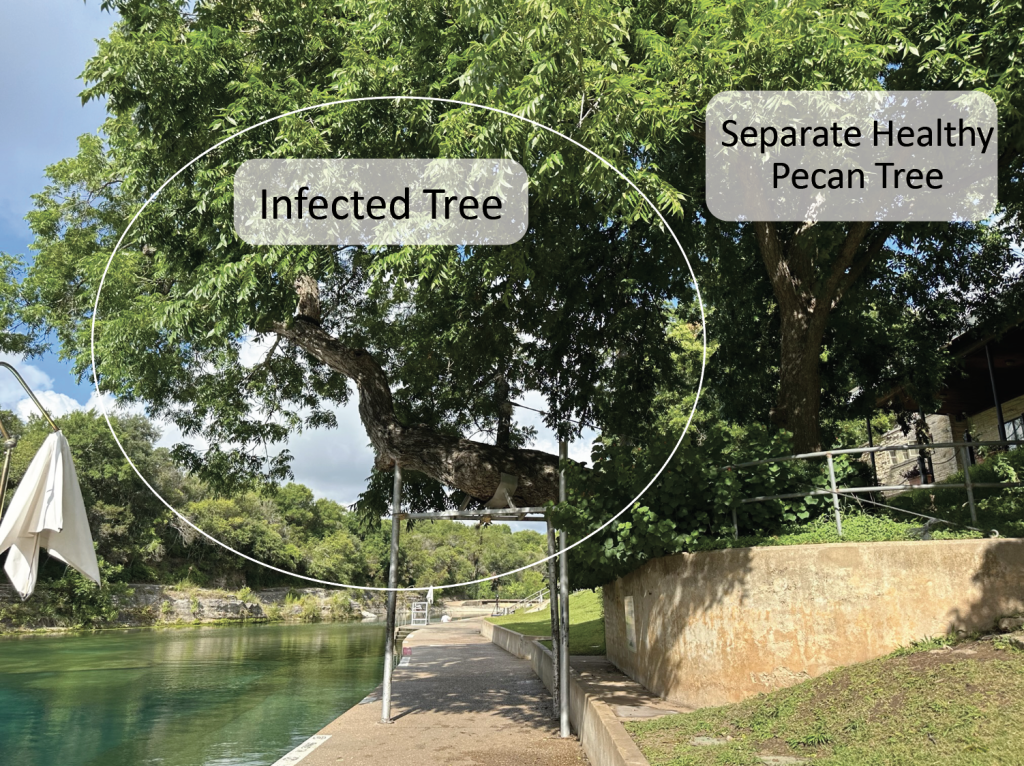
Diagnosis
On July 6, 2023, Austin Parks and Recreation staff, during a regular inspection of the Barton Springs tree known as Flo, noticed a fungal fruiting body at the base of the tree. A sample was sent to the plant diagnostic lab at Texas A&M for analysis.
On August 15, 2023, Austin Parks and Recreation received results confirming the diagnosis of Kretzschmaria deusta, also known as brittle cinder fungus. Lab results are viewable here. Following this diagnosis, the Department has contacted three independent ISA Certified Arborists to provide a follow up inspection and independent professional opinions to help guide management decisions. The first report is expected by the end of the day August 18, 2023, and the other two are expected the following week.
There are no effective treatments for brittle cinder fungus. Because this disease feeds on live tissue, it can cause otherwise healthy-looking trees to collapse under their own weight. Once a tree is infected with this disease, tree removal is typically recommended to reduce safety risks.
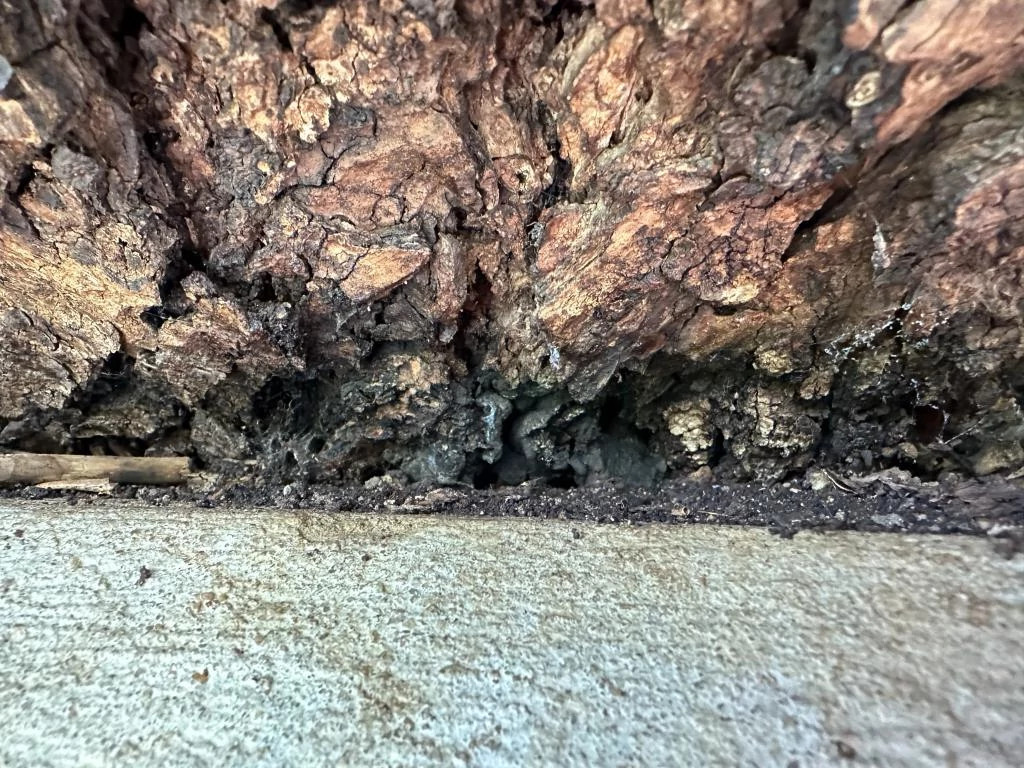
Brittle Cinder Fungus
Safety Actions
As a precautionary safety measure, while the Department awaits the additional reports from the three ISA Certified Arborists, an additional rope was installed to provide support. The tree’s immediate area will be also be restricted from public access.
Background
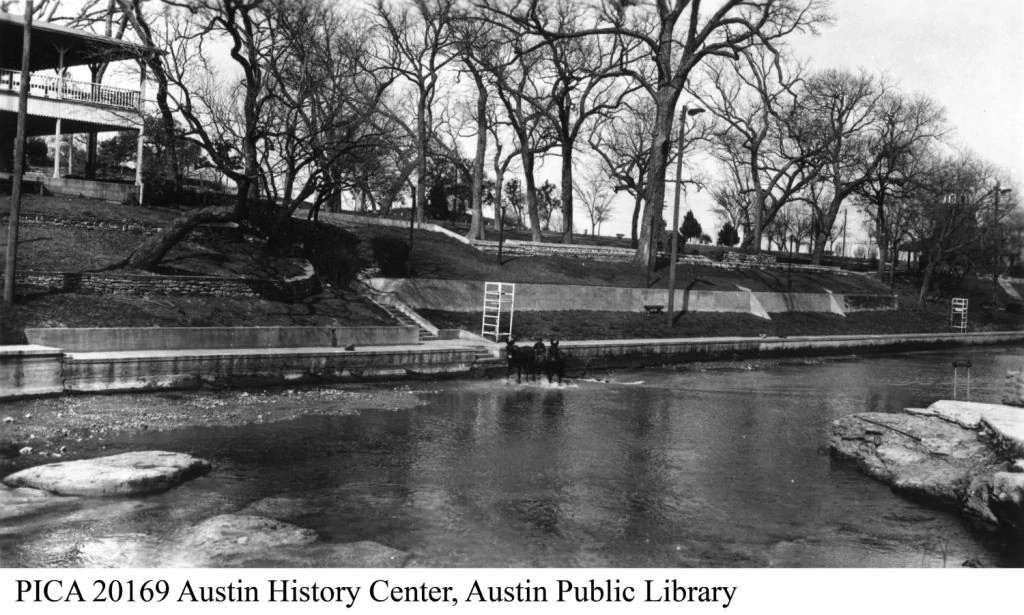
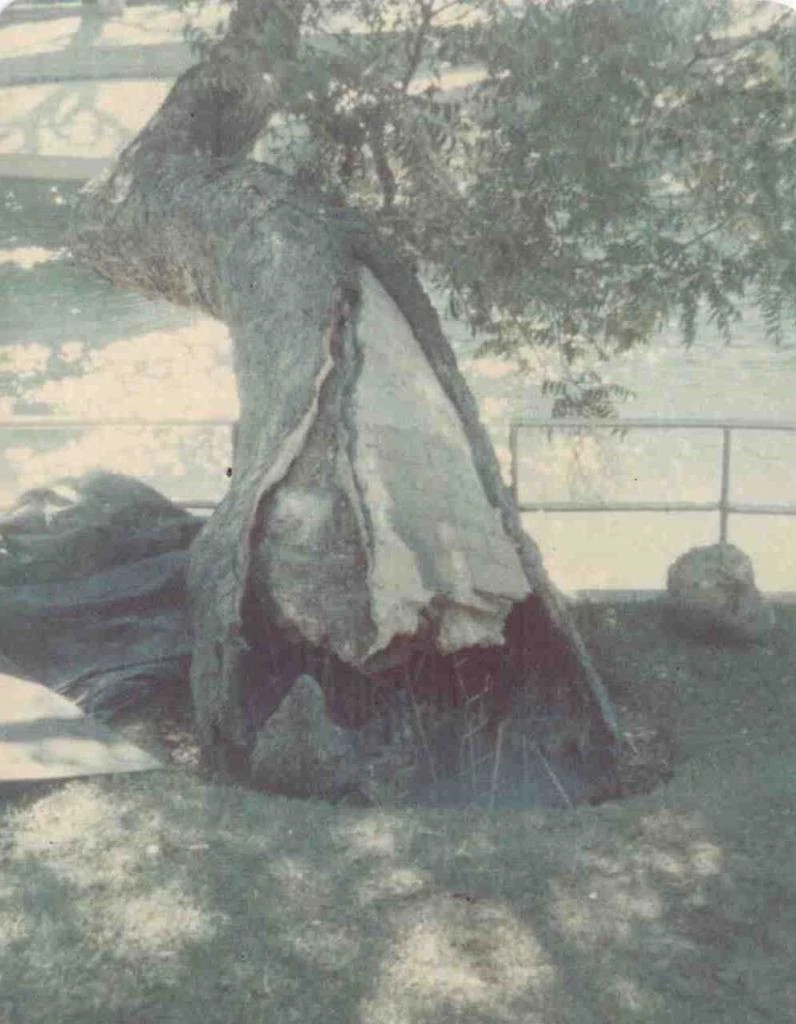
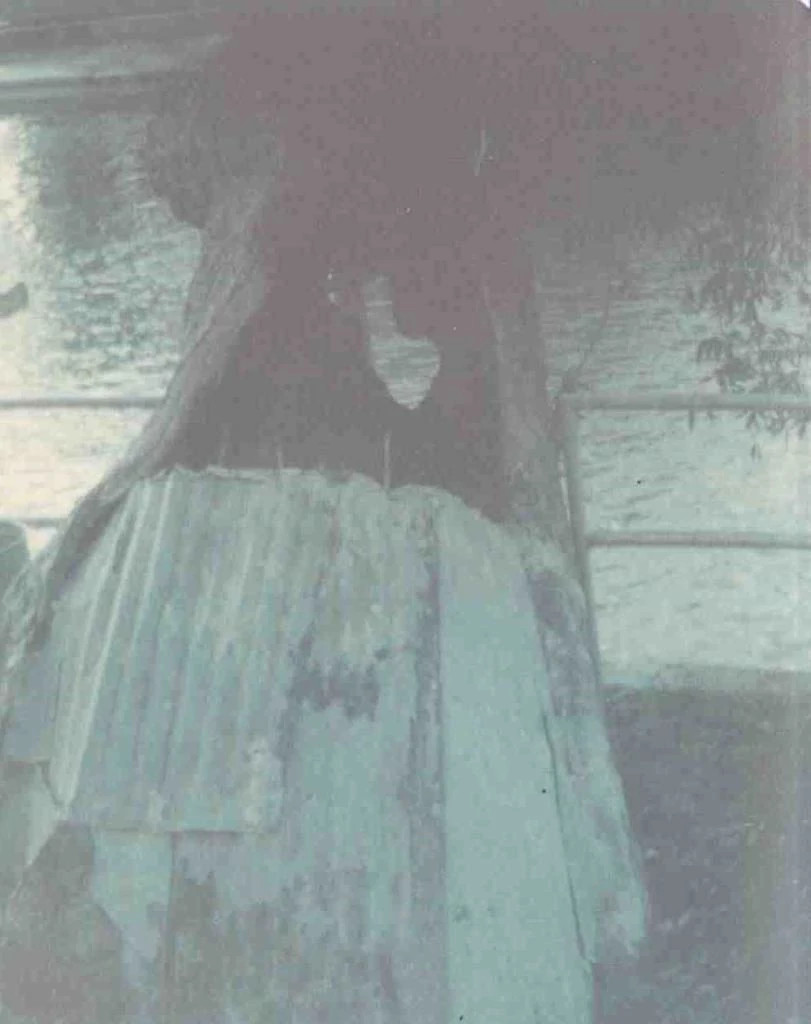
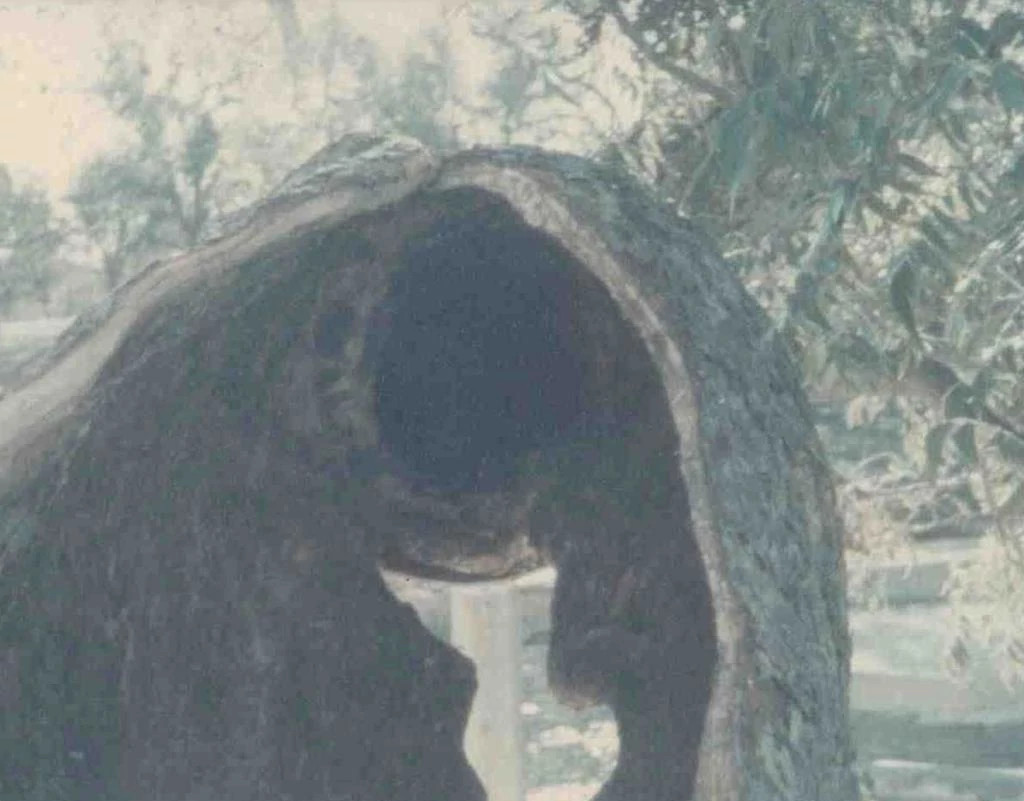
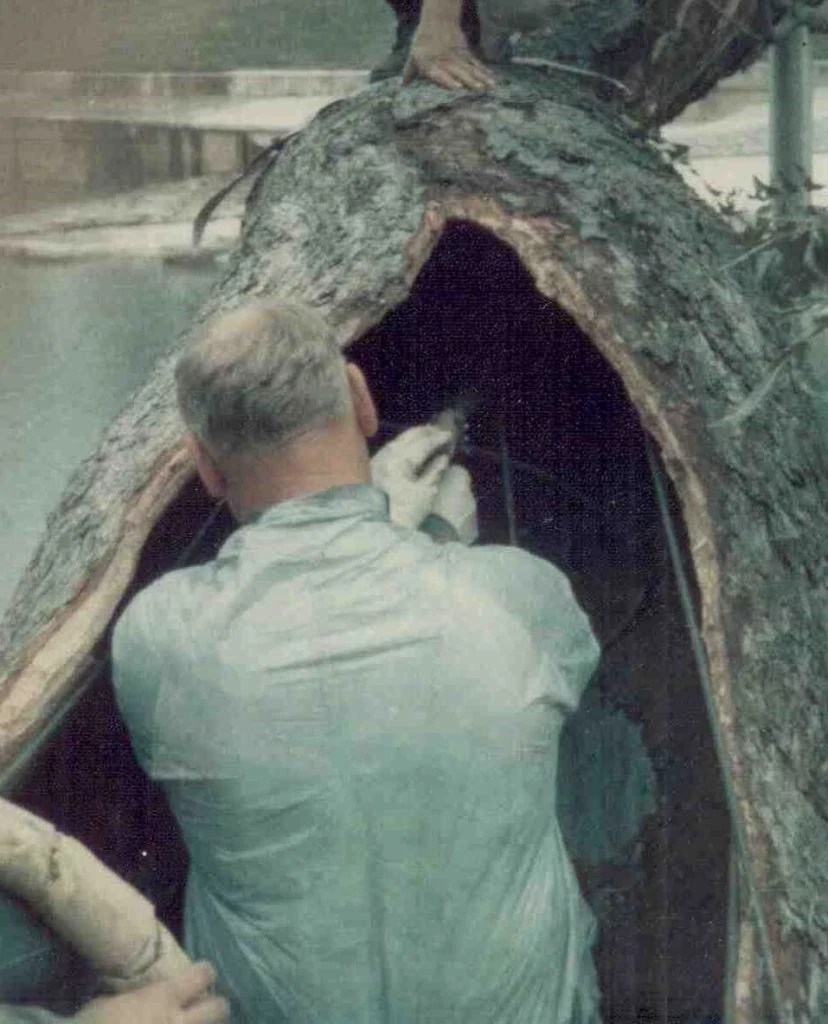
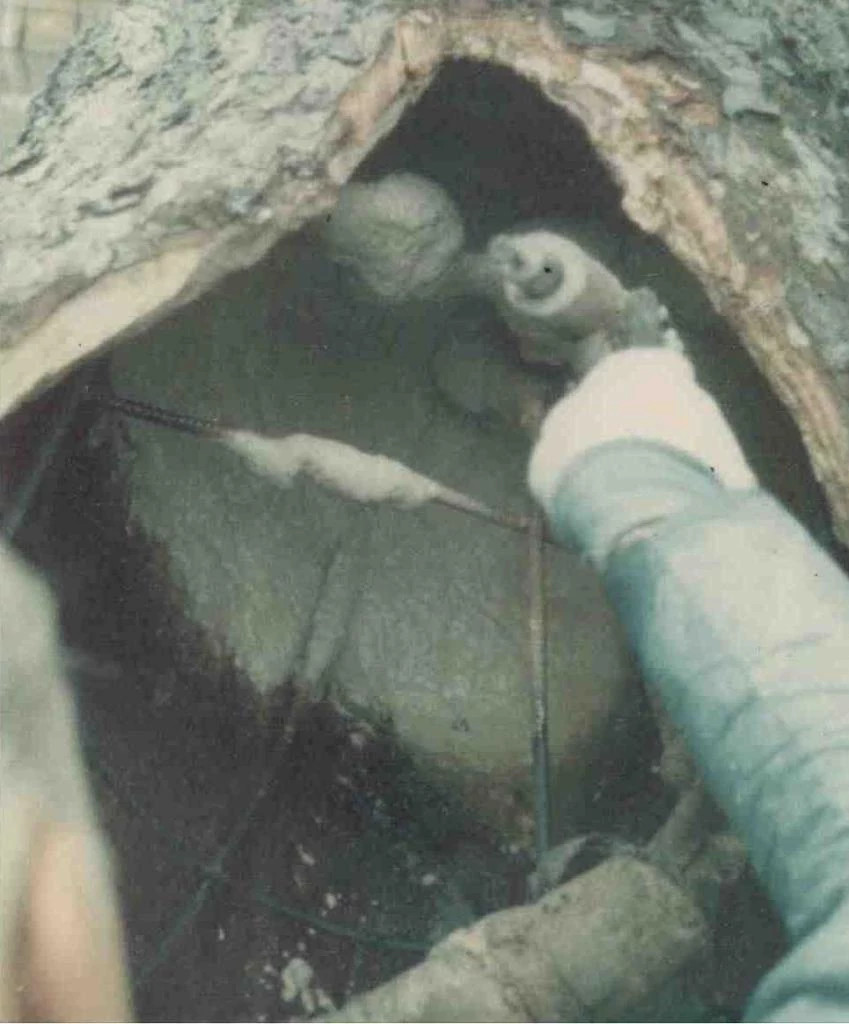
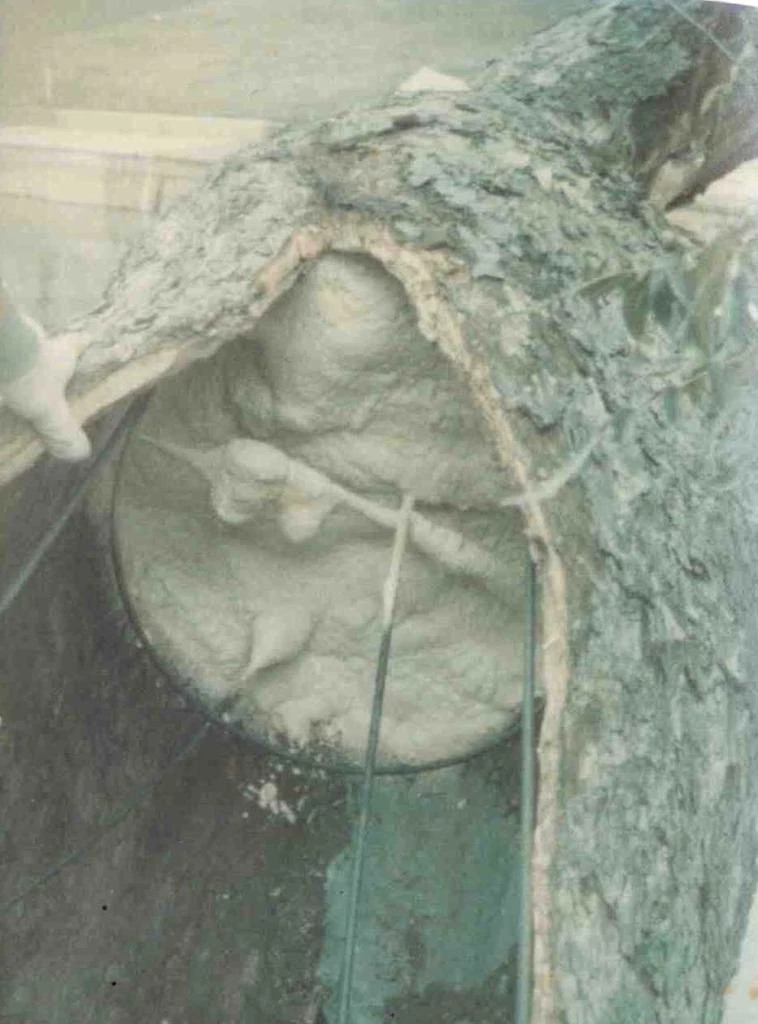
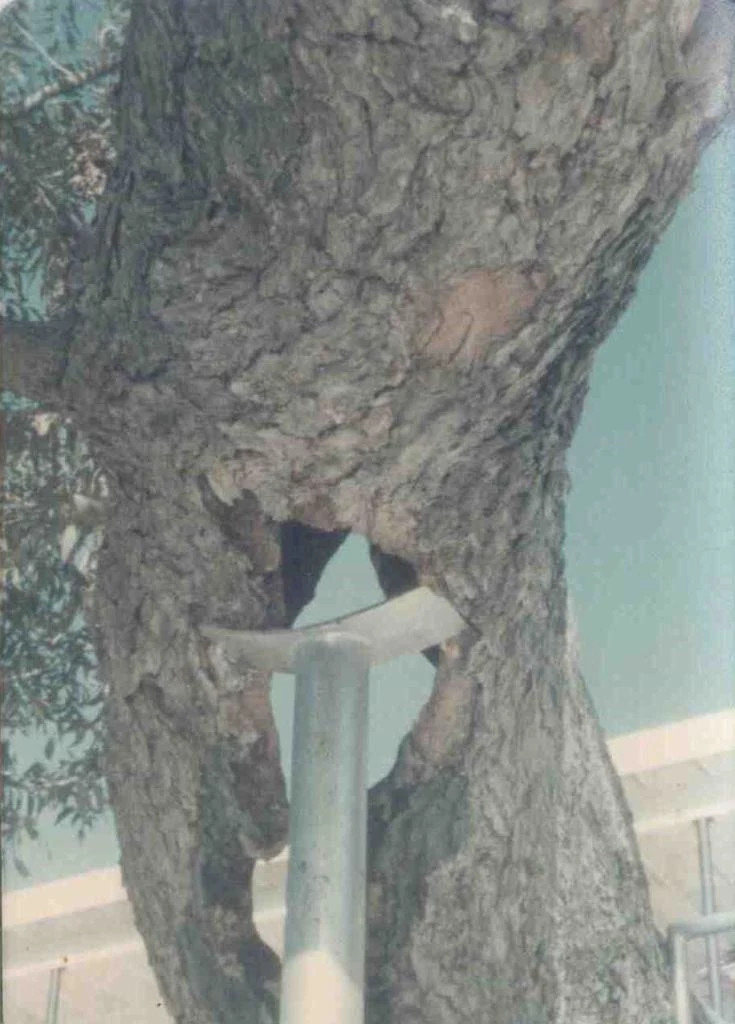
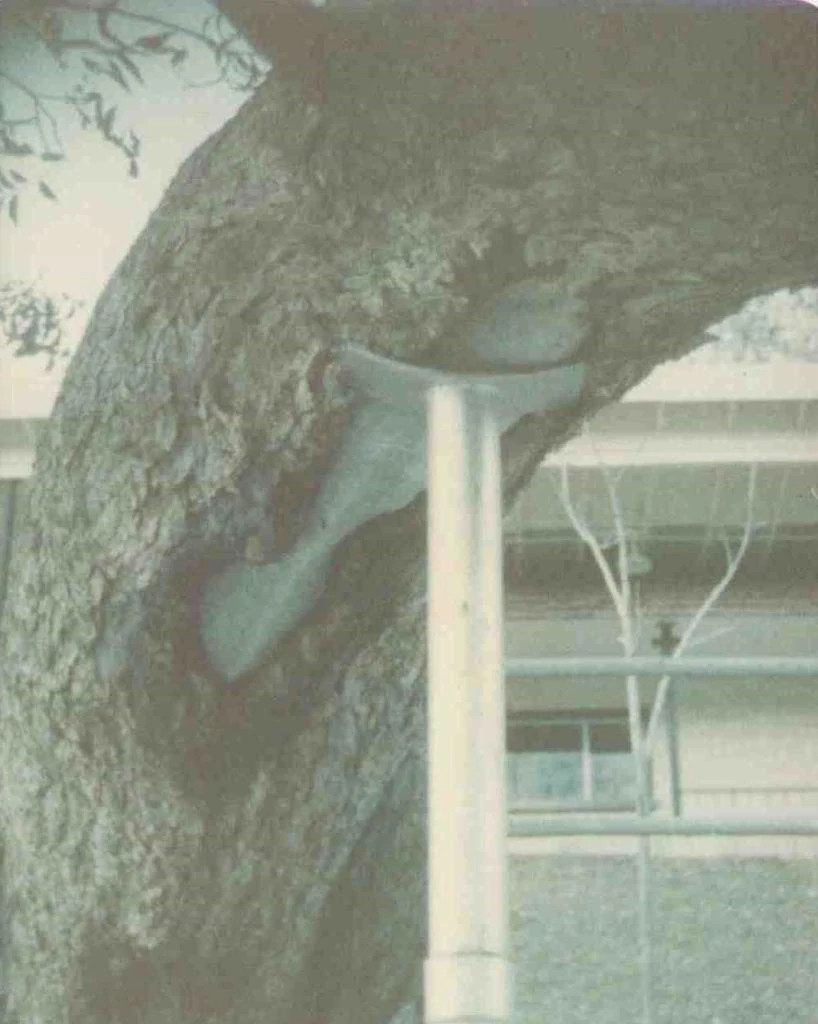
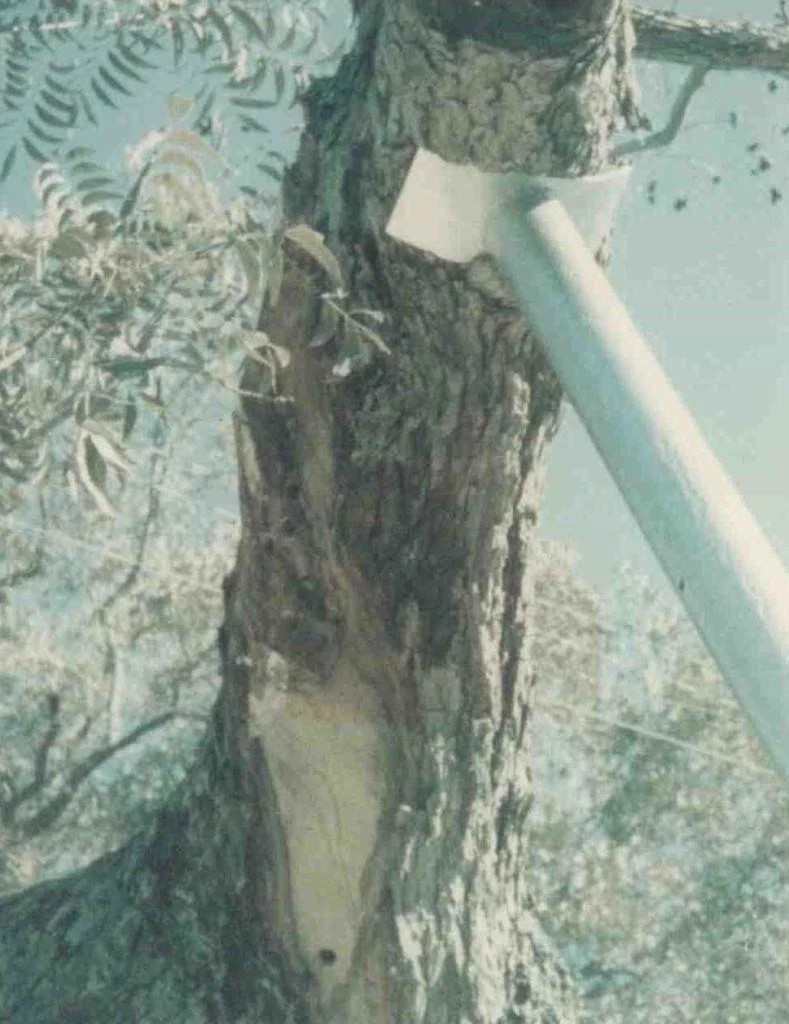
The Department recognizes the immense significance of this tree and has taken great measures to preserve it for many decades. Historic photos show that the tree has leaned over the pool deck since at least 1928. Currently, the tree is supported by a combination of cables and a permanent steel support structure. In the 1970s, the large trunk cavity was partially filled with concrete to help the tree close the wound and provide structural stability. This is no longer considered a best management practice in the tree care industry and has been found to speed internal decay. Around the same time, another pecan tree was planted uphill of "Flo" to replace the canopy that would be lost when "Flo” started to decline. More recently, fencing was installed around the critical root zone to reduce soil compaction from foot traffic. Staff have monitored the tree’s structural integrity since that time due to its proximity to pool users.
Over the last 100 years, this tree has been a part of Barton Springs pool and watched as generations have enjoyed this uniquely Austin space.
Historic images
The earliest known photos of "Flo" are dated from 1925-1926, and are housed in the Chalberg Collection of the Austin History Center.
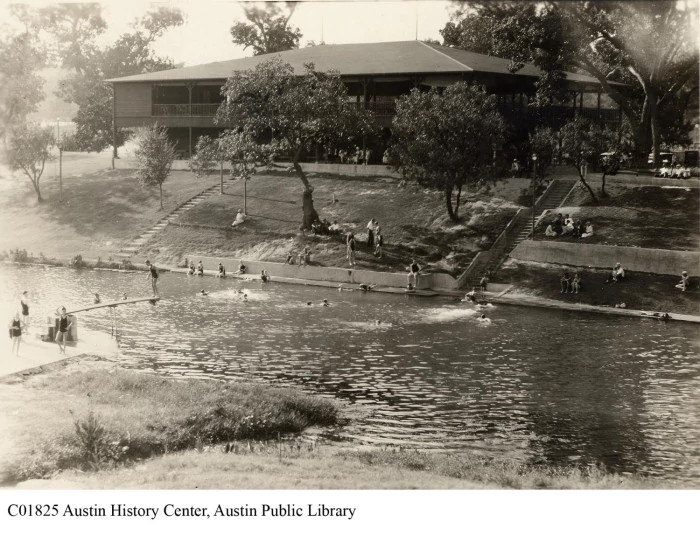
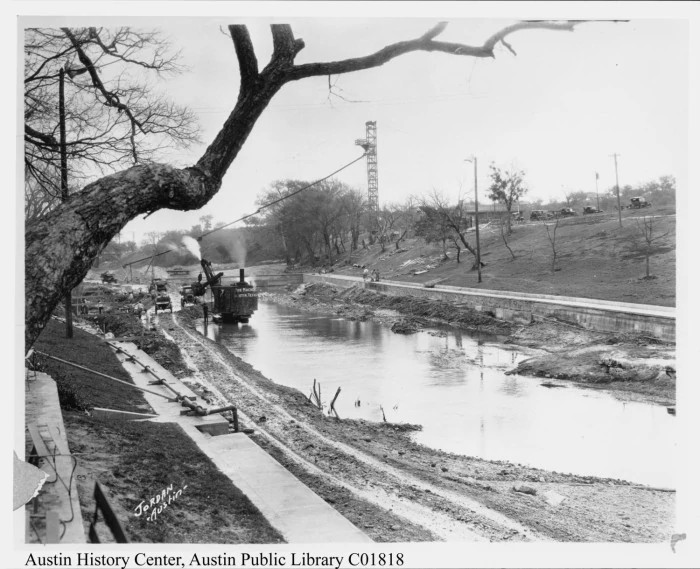
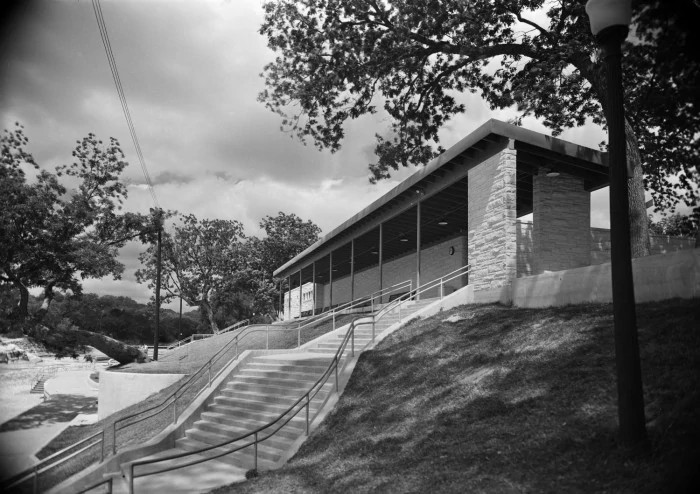
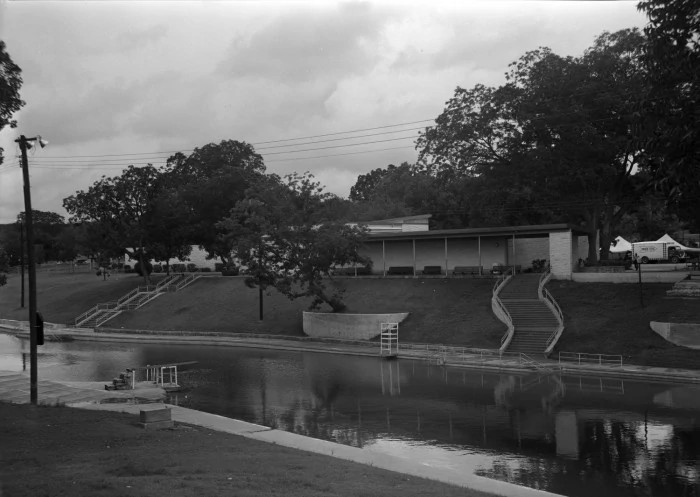
After the old wooden bath house at Barton Springs Pool was washed away by flooding in 1935, the current limestone building was constructed in 1946. The stairs adjacent to "Flo" were also redesigned and a retaining wall constructed downhill from the tree. Images below are from the Dewey Mears Collection at the Austin History Center.
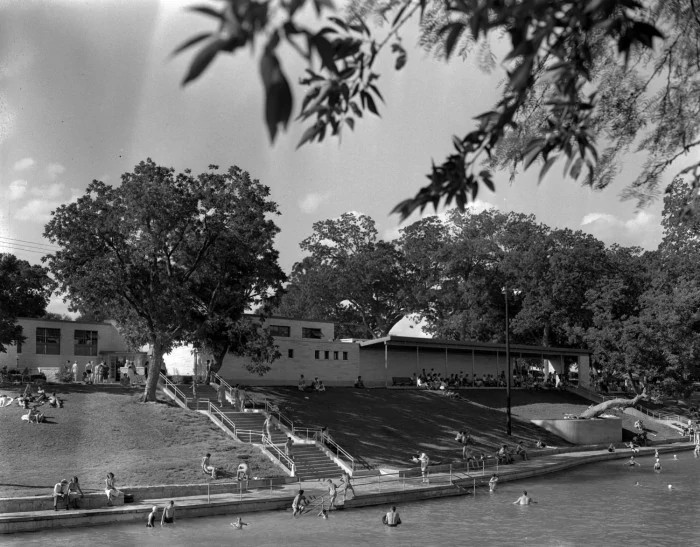
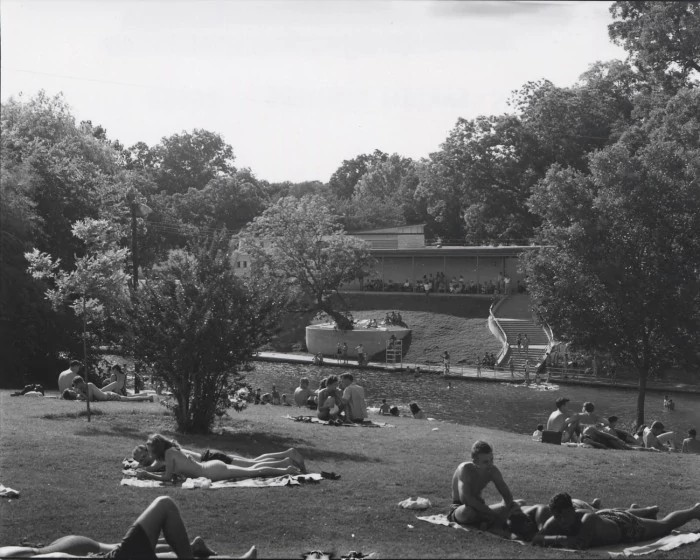
We do not know when the large cavity in the trunk of the tree was first filled, but the first supports were installed some time between 1948 and 1958. (Photo courtesy of PARD Aquatics.)
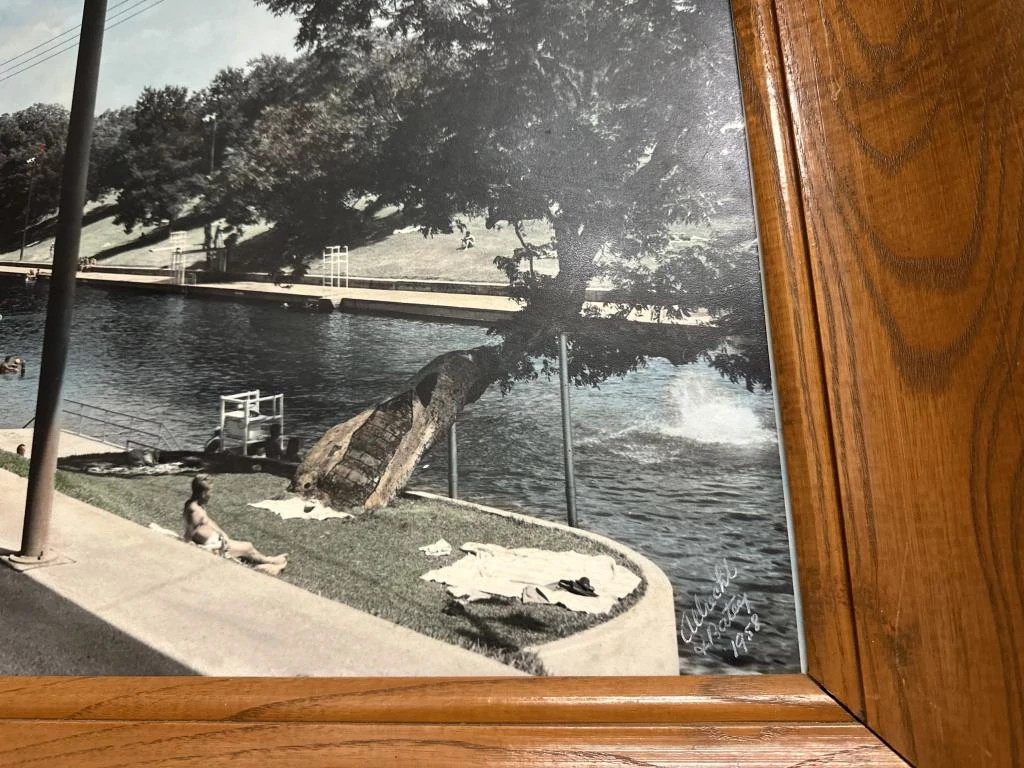
In the mid-1970s, the original brick fill was removed and replaced with a combination of sand cement, pumice, and a blown-in product resembling gunnite. The materials were layered in the cavity, with the heaviest material in the bottom and the lightest toward the top of the stem.
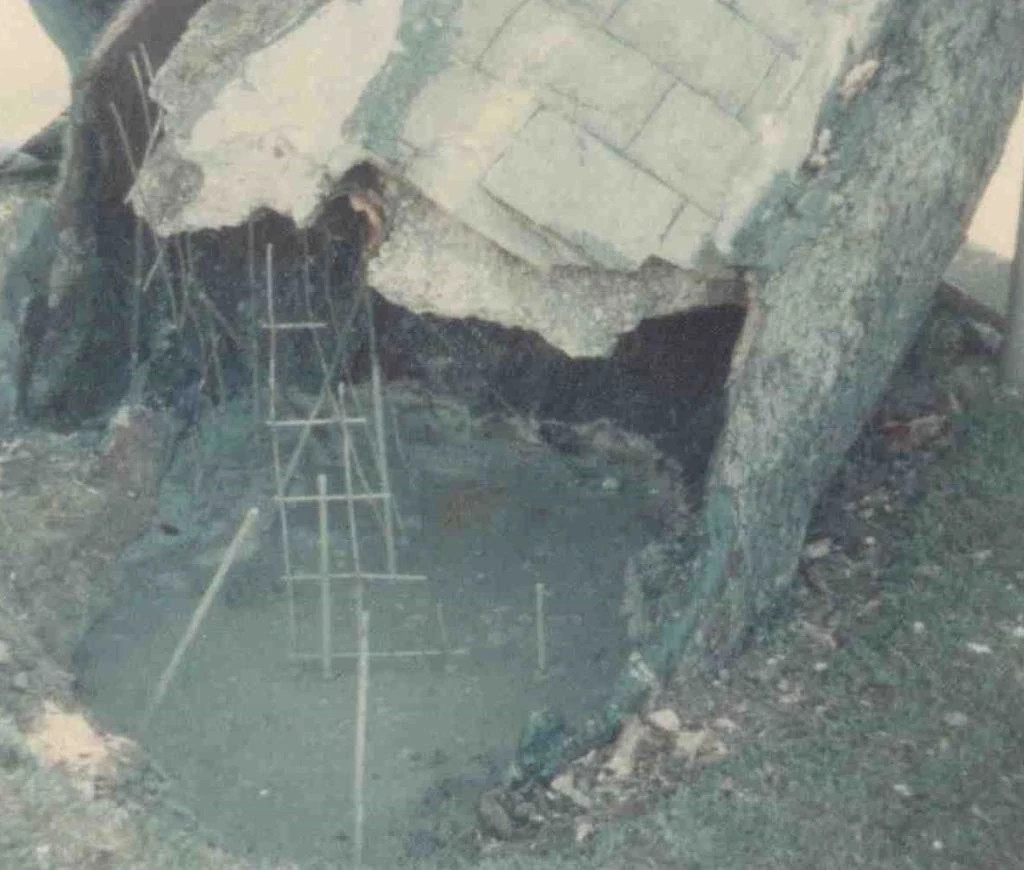
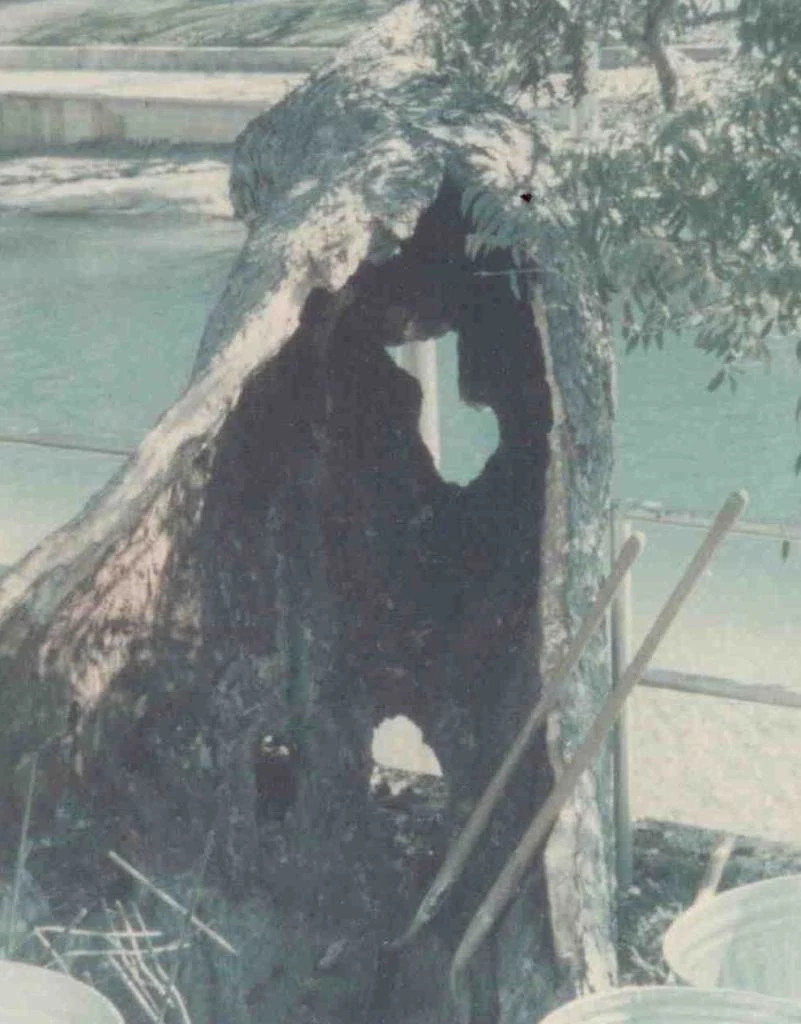
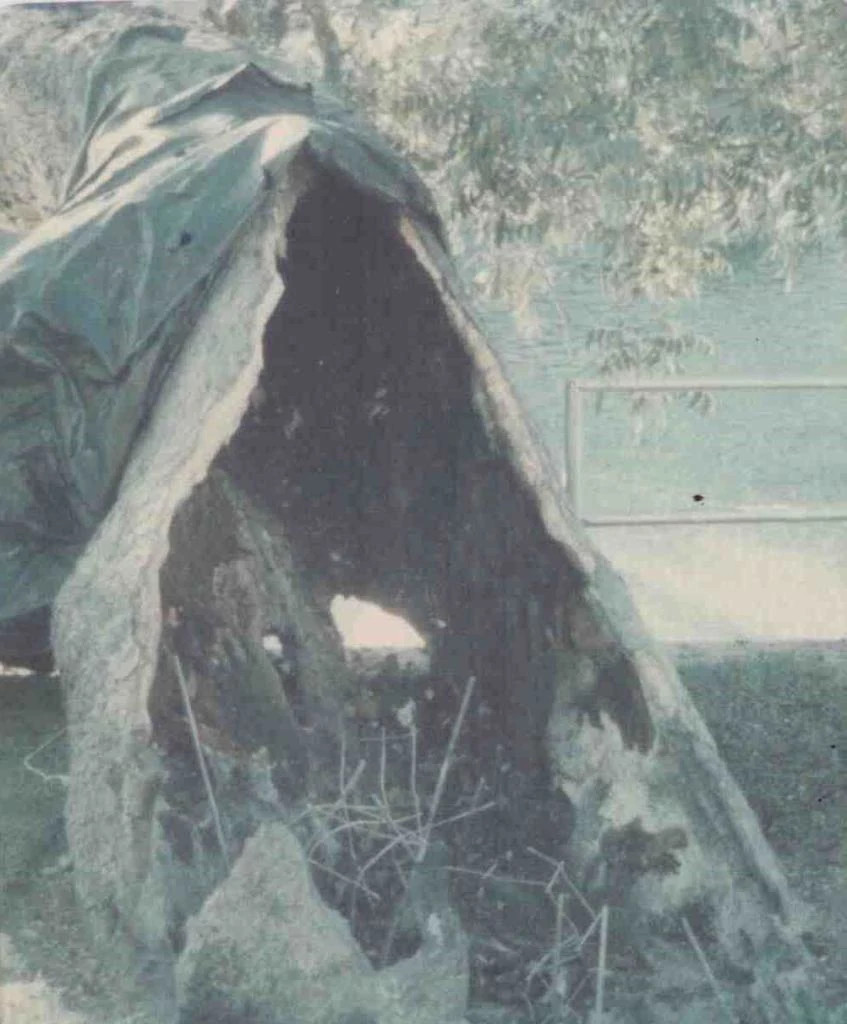
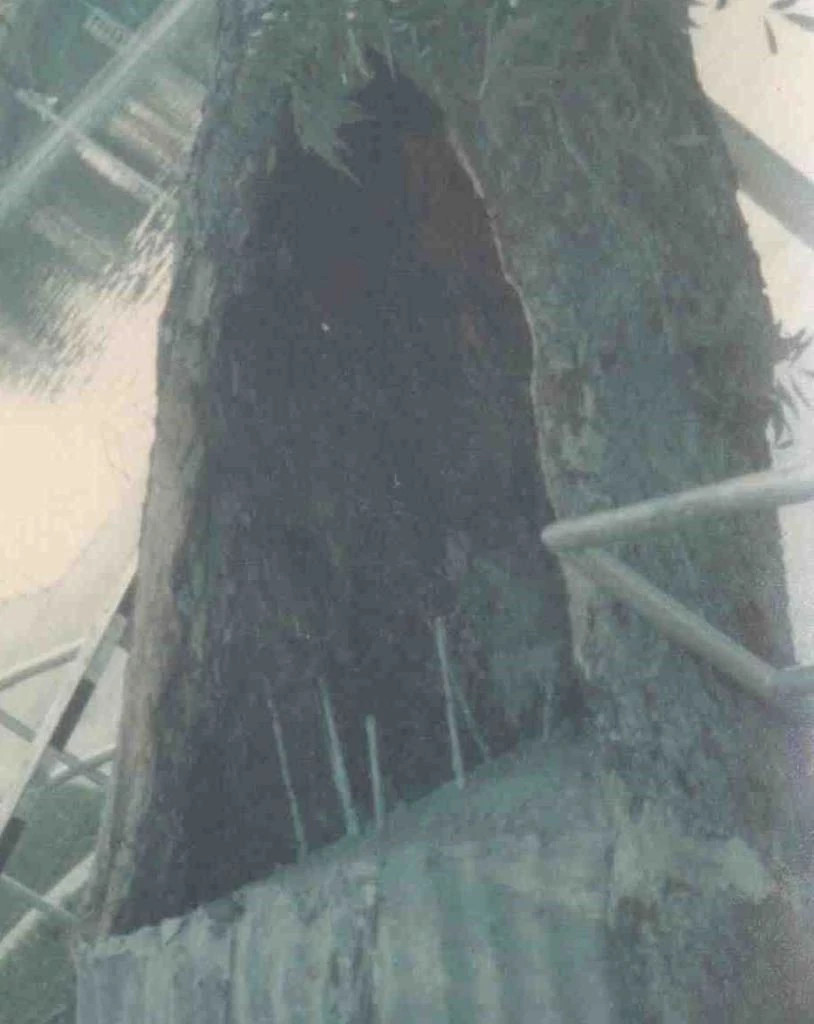
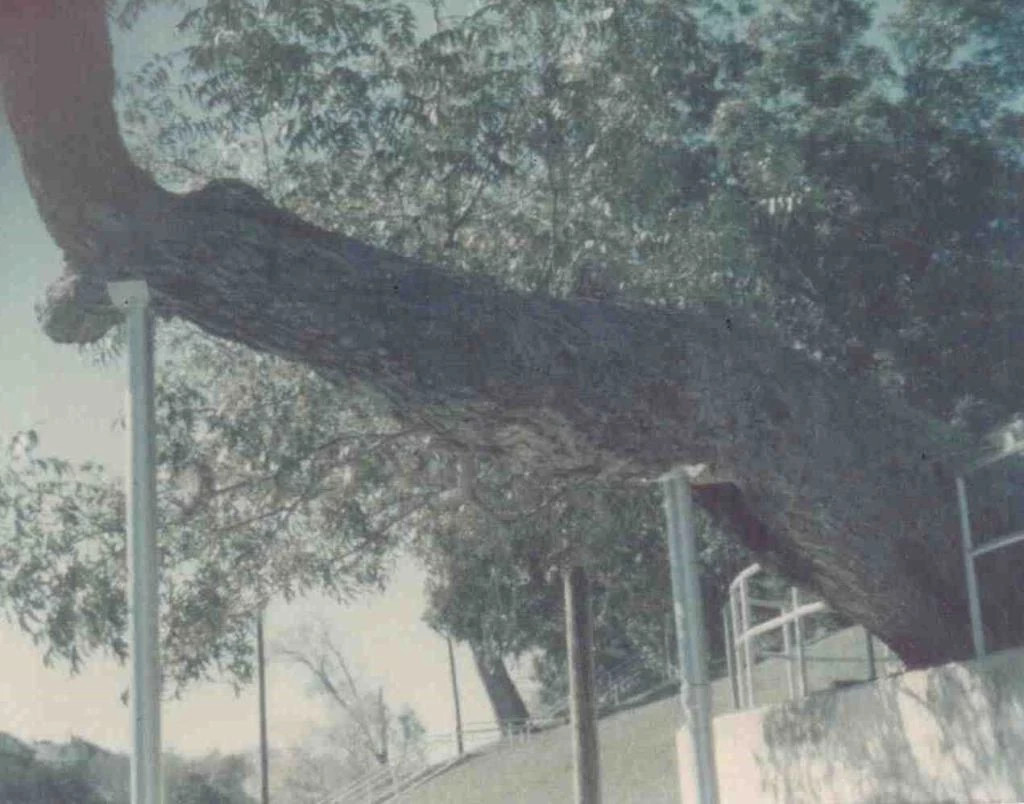
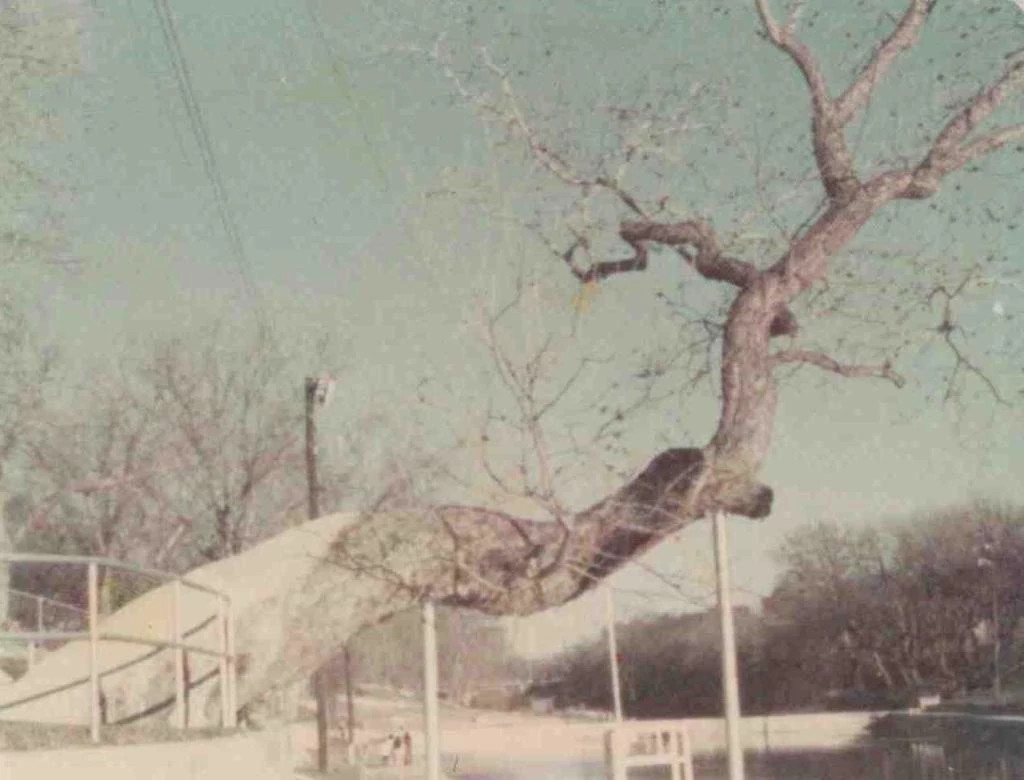
In anticipation of losing Flo, a replacement tree was planted just uphill. The exact date of planting is unknown, but the department believes it to have been planted in the late 1970s or 1980s. According to a former parks employee, the original plan was to train the new tree to lean over the pool's edge in imitation of Flo.
Flo and replacement tree in 2004.
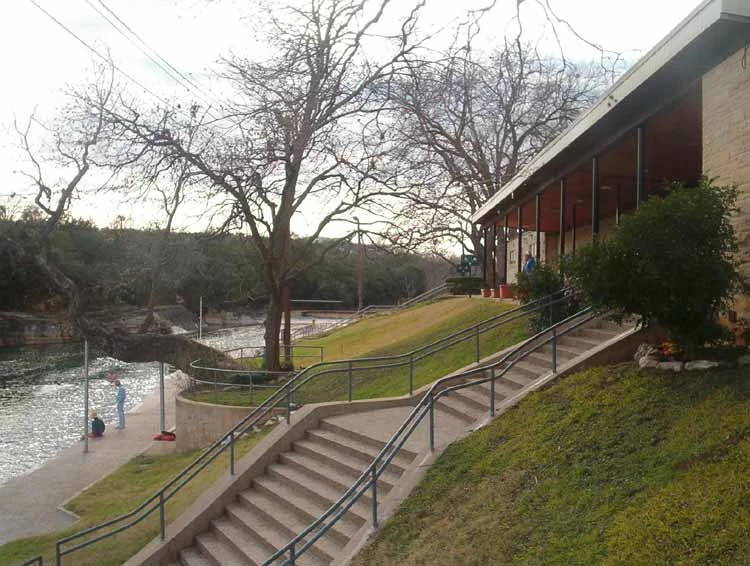
July 5, 2019