
Net-Zero Hero: Krysta Accardi & Lisa Richardson
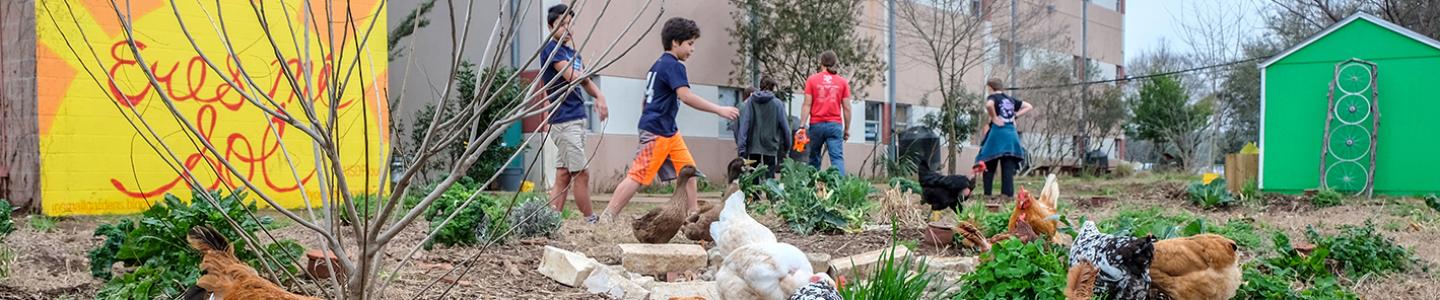
We’re helping to make Austin Net-Zero by engaging students, staff, and our community to enhance the educational experience, inspire pride, and foster a culture of environmental stewardship and inclusivity for generations to come.
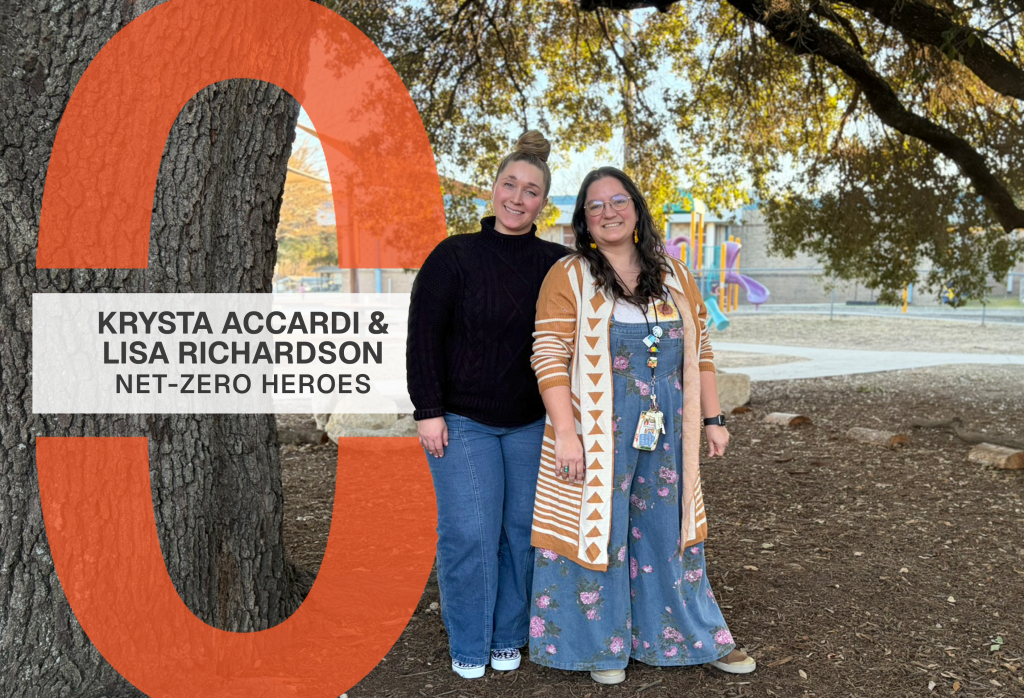
We’re proud to introduce our newest Net-Zero Heroes: Krysta Accardi and Lisa Richardson, co-leaders of Odom Elementary’s Green Machine! Lisa serves as the school librarian, and Krysta is a Social Behavior Skills Teacher at Odom. Together, they’ve brought their skills and talents together to advance sustainability efforts on campus—from introducing chickens and other wildlife to launching garden clubs to running trash audits with students. Lisa is an EcoRise Ambassador, and both she and Krysta have led Eco-Audits on campus. The pair also spearheaded efforts to certify Odom Elementary as part of the National Wildlife Federation’s Eco-Schools program, ultimately receiving the highest honor by becoming a Green Flag school.
We met with Lisa and Krysta on campus to learn more about the incredible work they’ve been up to and how they motivate each other in support of their students and the larger school community.
What inspired you to take action?
Accardi: For me, working in special education, I’ve learned that movement matters. For many of my students, movement isn’t just a break. Movement is how they regulate their emotions, manage energy, and stay engaged. That need for movement naturally turned into small garden projects, like digging, planting, and watering. Students were moving their bodies, calming their minds, and seeing something grow because of their effort. Over time, it evolved into a fundamental value within our classroom. Gardening wasn’t just about keeping hands busy anymore. It became about caring for something outside ourselves, improving our environment, and making a visible difference in our school and community.
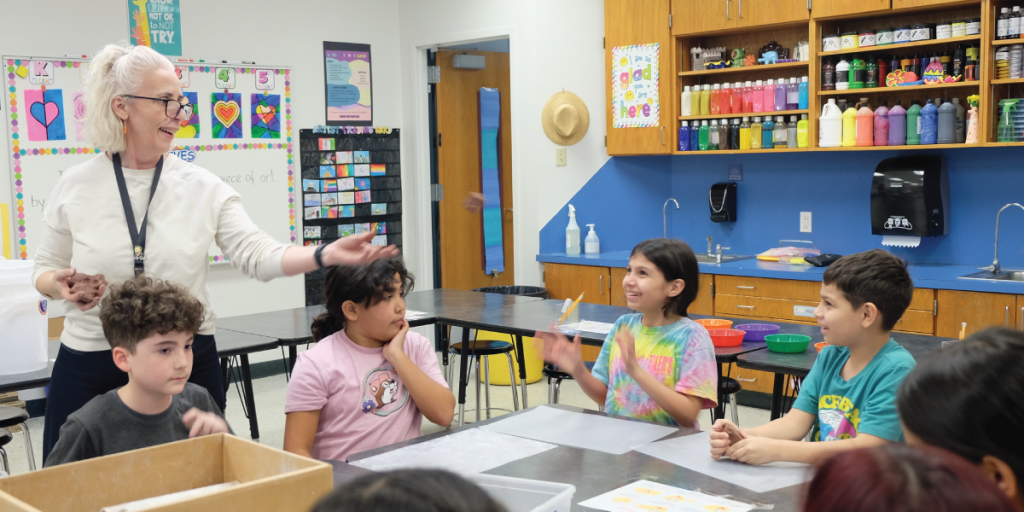
The Odom Garden Club, led by Ms. Accardi, met afterschool. Students worked on creating insect watering stations out of clay with Ariana Gjevukaj, Odom’s Art Teacher.
Richardson: As cheesy as it sounds, the students always inspire me. I have been working with the nonprofit EcoRise for several years. Guiding students through EcoRise projects builds up a habit of noticing. I have felt this shift in myself over time, and I’ve honed the ability to help students notice things more as well. When we are outside, we notice the wildlife. We notice how people interact with the space and each other. We notice our footprint on the park. We notice how unpleasant it is to step in dog poop and how many juice boxes litter the playground.
While we hone the ability to notice, we also look for potential solutions. We talk about our impacts and how we can shift those impacts from being undesirable negatives to engaging positives that activate the park and invite collaboration. After so many years of this, it's become second nature to look for patterns, possibilities, and opportunities for engagement that we may not have previously considered.
Accardi: Yes! Students realize that their actions can literally change the space around them and develop meaningful social skills in the process.
How did you do it?
Accardi: Honestly, it all comes down to community. None of this happened because of one big plan or a perfect roadmap. It happened because I was lucky enough to work with a small team that isn’t afraid to dream and isn’t afraid of hard work.
Richardson: For me, it’s Accardi. Having a supportive administration at Odom Elementary has really allowed us to spread our wings and experiment with things. We’ve taken the students on canoe and bike trips to experience our natural resources in real life, attended professional development opportunities, and become part of Austin’s really awesome network of outdoor enthusiasts. I couldn’t do any of this without a supportive admin team. I consistently feel out of my depth on projects, but I am excelling at asking people for help and opinions. I’ve come a long way in feeling that things don’t need to be perfect to be complete or inspiring. At the end of the day, though, it comes back to Accardi.
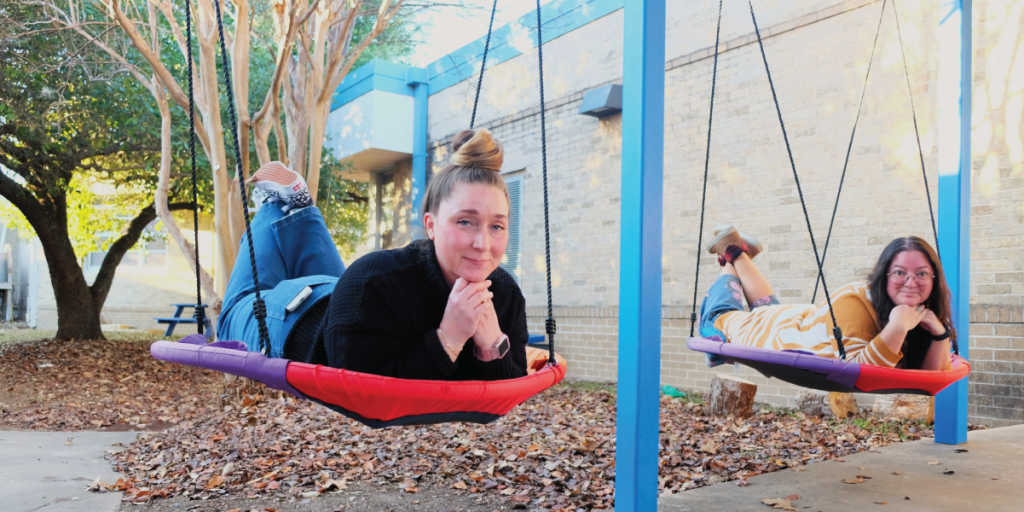
Krysta and Lisa tap into their inner child in the Odom schoolyard.
Accardi: Richardson and I balance each other really well. When one of us is dreaming big, the other is figuring out how to make it happen in real life. We’re not afraid to try something new, even if it means making mistakes along the way or learning as we go.
Richardson: Accardi pushes me, she holds me accountable, she inspires me, she works so hard, and does it happily for the benefit of our school community. Having a partner who is equally invested has helped me to stay motivated and avoid burnout.
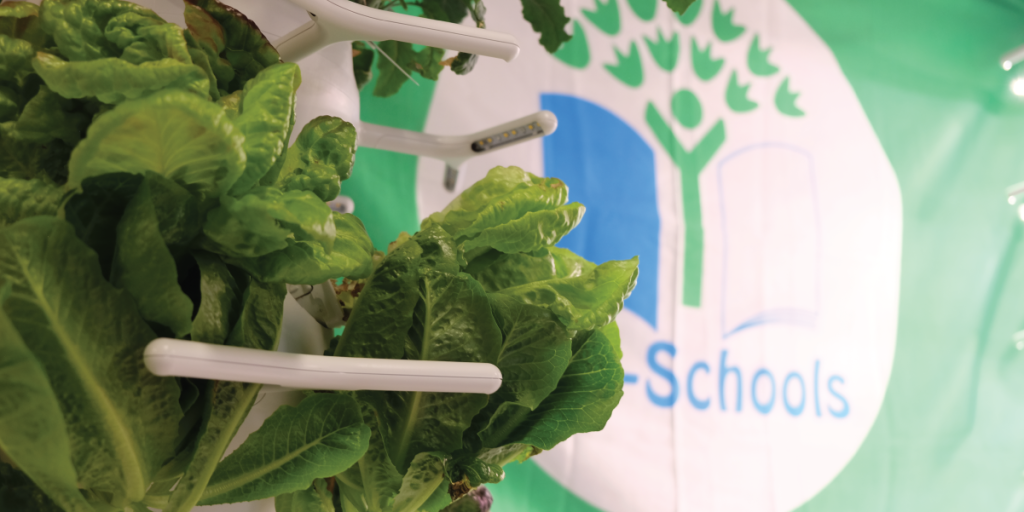
Odom’s Eco-Schools Green Flag is proudly displayed in the lobby, between hydroponic planters that are maintained by Krysta and Lisa.
What’s been most rewarding about getting involved in this way?
Richardson: Again, it’s the kids.
Accardi: Totally. The biggest reward is knowing we’re giving students more than state testing-related knowledge. We’re giving them ownership, dignity, and the belief that they can make things better.
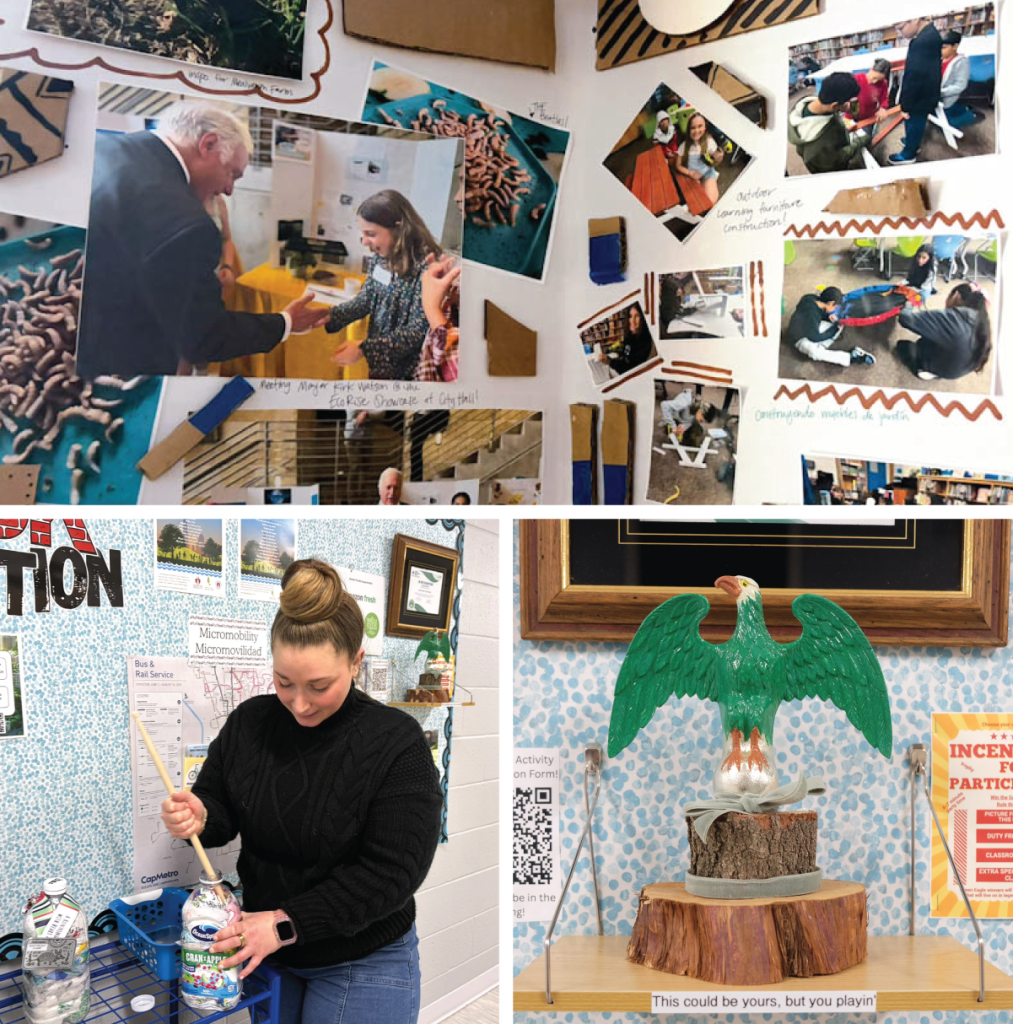
Top: A display in the library highlights students’ Eco-Rise projects over the year, including showing Mayor Kirk Watson a mealworm farm started on campus. Bottom, left to right: Krysta adds trash to her Eco Brick, which will be used to create garden beds; the Green Eagle trophy that will be presented to students for exceptional sustainability efforts.
Richardson: Yes, I see their growth over the years. I see their passion for environmentalism grow from some vague background issue to something they can recognize and take action on. So much of childhood is spent having decisions made for you and on your behalf, so being able to empower students to go through a full iterative cycle and create something that will impact their community for the better really changes their perspective, the way they carry themselves, and the story they tell themselves of their accomplishments. They leave with concrete knowledge that their input, ideas, labor, and creativity all matter and have been taken seriously by innumerable adults. It’s so powerful.
Accardi: And they are the lessons that will stay with the student beyond the classroom.
What’s been the toughest part?
Accardi: The toughest part has definitely been routines and time.
Richardson: There’s just never enough time to do everything we want.
Accardi: Time is especially tricky, and to be honest, it’s the reason why most teachers shy away. Between teaching, supporting students, and all the everyday responsibilities that come with a school day, sustainability work often happens after school or is squeezed into whatever moments we can find. There are days when progress feels slow simply because there aren’t enough hours to give everything the attention it deserves.
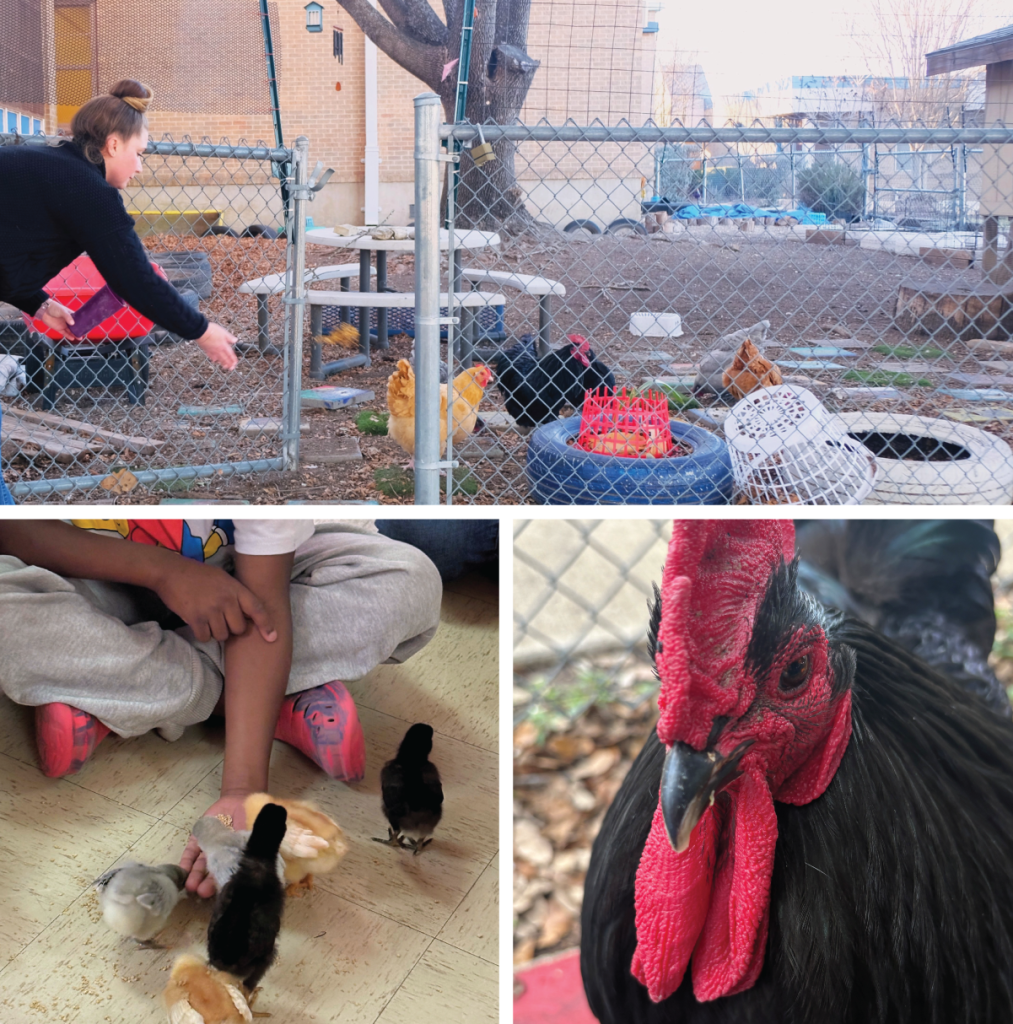
Top: Krysta feeds Odom’s chickens. She has a special bond with the rooster, named Tupec. Bottom, left to right: A student feeds the newborn chicks; a close-up on Tupec.
Richardson: I feel like I’ve entered a stage of life where exhaustion is a daily companion. It’s worth it because it’s for the students, it’s for my kids, and it’s for our community.
I’ve also come to find it so rewarding to curate resources, activities, and programs for our neighborhood. Doing what we do has turned me from a people-watcher into a people-talker. I am not a social person, so it’s often been a challenge, but forcing myself to get engaged—as an EcoRise ambassador tabling or presenting at conferences, navigating grants and being a joint-use site with the City of Austin, or just asking for opinions and experiences from my neighbors in the way they engage with the space—has forced me to change and grow. It still gives me monumental anxiety, and I oftentimes feel the depth and weight of it in my bones, but just pushing through it and imagining that everyone is also struggling and longing for the quotidian connection, I usually walk away with new perspectives, resources, and stories. I die inside while talking to large crowds or at events, but it’s pushed me and helped me grow into someone who is more ready to advocate for my students and my community. I’ll never regret that.
You’ve successfully received a number of grants to support your work, including Bright Green Future Grants from our office. Can you share a bit about the process of finding and applying for those grants? Do you have advice for others looking for ways to fund their projects?
Accardi: Apply for everything, and don’t be discouraged when you get rejected.
Richardson: Yes! I‘ve applied for a great many grants, and most I haven’t gotten. It really probably comes down to a numbers game. You just have to shoot your shot, and when you do, do it authentically. Usually, I can close out a grant and feel pretty good about getting it if I cried while writing it. When I get so worked up about the urgency, the need, the bone-deep deserving of our students and community to have access to resources that many take for granted, when I come up with a plan to really deliver the best, it just pours out of me. I love it. I feel like my lifelong love of reading, information, and general nerdiness has transformed into a small-potatoes-worth of talent in writing.
Being able to turn words into resources has been incredibly fulfilling for me. I use databases to find grants (shoutout to AISD’s Austin Ed Fund for theirs!) with upcoming deadlines, I see if there are any that suit our needs for a project, and then go for it. Usually, I have a really solid idea first, and then I try to shop for a grant that suits it. Our most successful grants are those that are more than just a thing to buy, but something we can build programs around, reuse, or reshape our campus’ behaviors and mindsets in more sustainable ways—something engaging that will build deep learning. I could talk about grants all day!
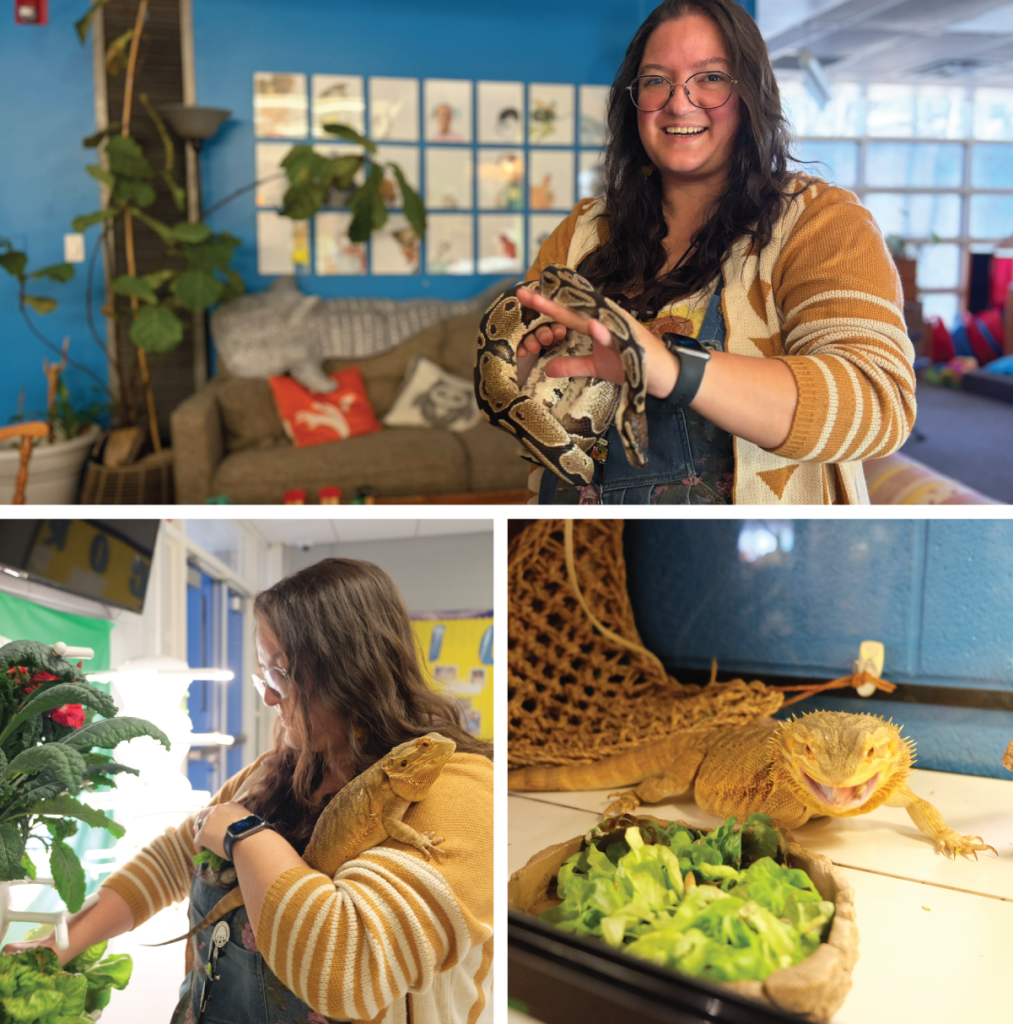
Top: Lisa holds the library snake, Pyper the Ball Python. Bottom, left to right: Lisa brings bearded dragon Lizzie Borden from the library to the hydroponic lettuce used in her daily meal; Lizzie picks around her lettuce for some fresh protein-packed mealworms grown as part of an Eco-Rise project.
You’re so passionate about connecting young people to understandings of science and the environment—from Odom Elementary to your neighborhood. Has working with young people changed your own understanding of the climate change movement?
Richardson: Oh abso-freaking-lutely. I had a very surface-level participation and understanding of the climate change movement. Since kicking off my librarianship and especially since my time at Odom, we’ve really been able to enhance our academic understanding and approach to delve further into our microcontributions to our environment.
Accardi: I agree. Plus, students are naturally curious and optimistic. When you give them tools and opportunities to make a difference, they jump in without hesitation. They don’t ask if “our work is too small to matter.” They just do the work and trust that eventually the project gets done. It reinforces the idea that environmental stewardship isn’t about having all the answers, it’s about modeling green values and small changes make lasting impressions.
Richardson: That’s exactly it! For example, this year, we were preparing for the block outside our school to become a Play Street through Austin Transportation & Public Works. We needed to gain access to our outdoor water fountain after several years of disuse. Our campus's majestic live oak tree had overgrown the fountain and made it impossible to use. I have to give a huge shoutout to the Austin Parks and Recreation Forestry team for safely trimming it! During this trimming, we recovered a nest that had incorporated an alarming number of straw wrappers. Our school breakfast recently made the switch to juice boxes that have straws, and kiddos will often take them outside during recess. This nest is now heavily featured in all things sustainable on our campus as a reminder to our students that every single decision can make a difference.
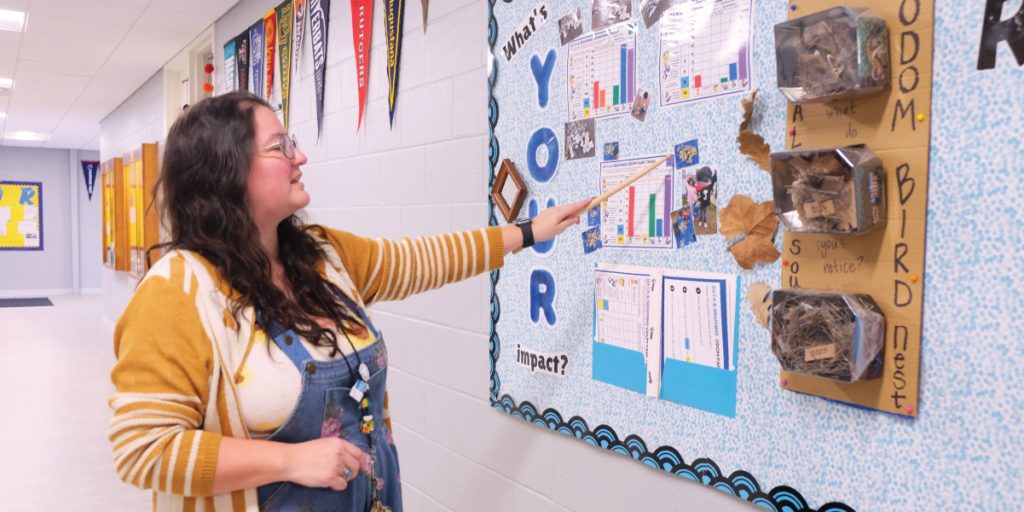
Lisa points out the trash audit results on a bulletin board outside the library. Bird nests that have been found across campus are displayed next to them. Many of them include plastic straw wrappers and other debris.
For that baby bird, one less juice box outside may have meant a healthier life, and being able to show the kids that their decisions have far-reaching impacts on our native wildlife has been very impactful for both them and me.
What advice do you have for others?
Accardi: While you can do a lot, you can’t do it all alone. Find your people, even if it’s just one or two.
Richardson: Go to the library! Volunteer at the school down the street. Vote. These kids are the coolest, and we’re lucky to know them. Spend time with the kids in your life and understand how to make sure their voices are heard, so that they can see the ways they can have an impact on their world. Listen to kids. They’re hilarious and profound.
Accardi: And don’t be afraid to dream big!
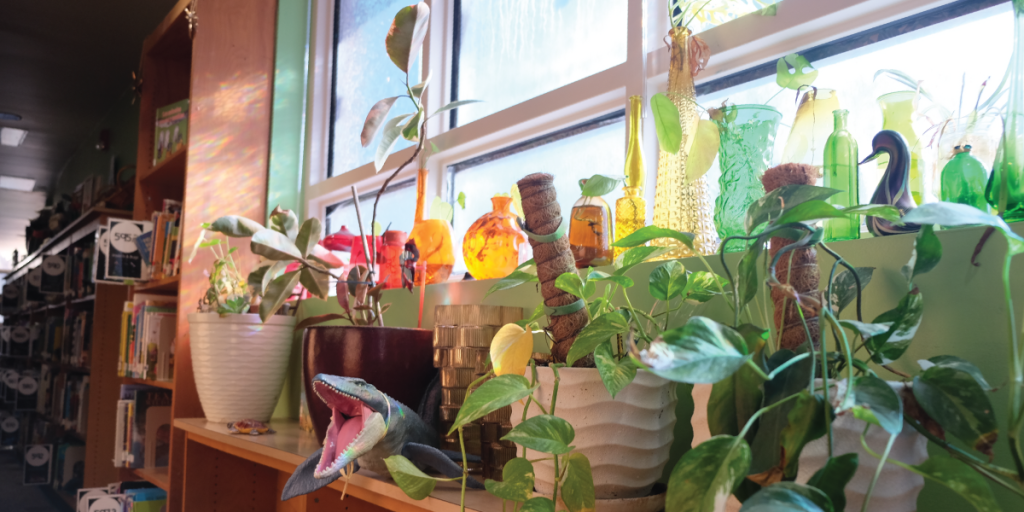
Lisa’s propagation and nature shelf in Odom’s library.
Is there a book, documentary, or other piece of media you would recommend for folks wanting to learn more about these topics?
Ricardson: As a librarian myself, I’ll use this as an opportunity to point you to your local library! Librarians are amazing, and you will absolutely make their day by wanting to learn more about absolutely anything! Most branches also have seed libraries and awesome resources—you should check them out (pun intended)! Also, shoutout to Libby. You should download the app if you haven’t… FREE BOOKS! Plus, you can stack library cards, so get out there and Catch ‘Em All!
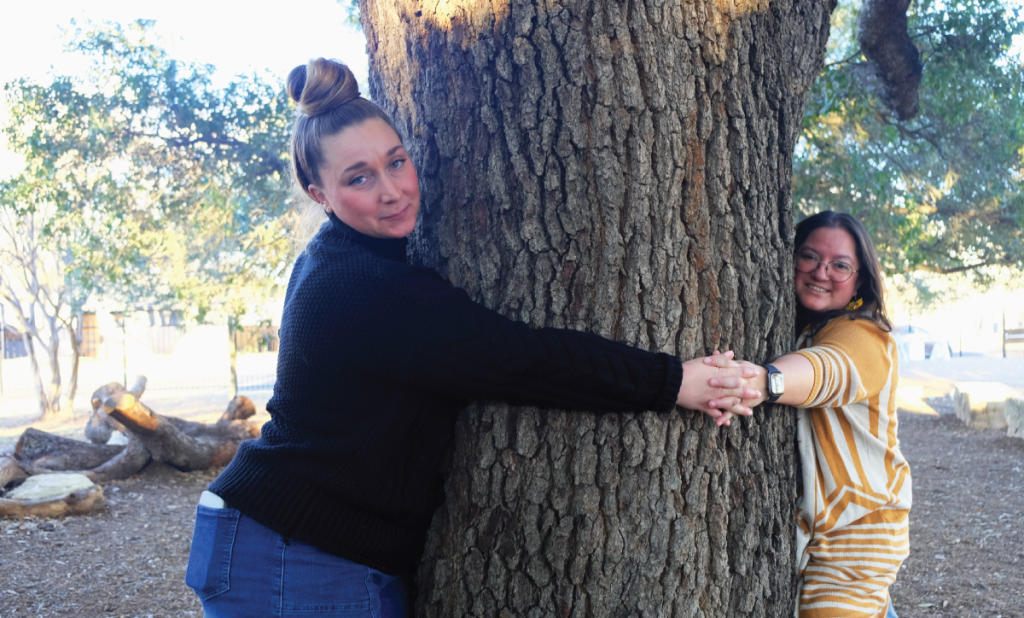
Krysta and Lisa hug the giant live oak tree on Odom’s campus.
Want to learn more about Odom’s efforts? View videos made by students as part of their EcoRise efforts. Want to learn more about how you can support a vibrant and sustainable Austin? Visit the Austin Climate Equity Plan to discover more ways you can take action toward our community’s net-zero future!
Share your Net-Zero contributions with us on X or Facebook, and use #NetZeroHero. If you know a Net-Zero Hero (or heroes!) who should be recognized for their efforts, send your nomination to climate@austintexas.gov.