
Plans and Reports
Adopted Plans
Austin Strategic Mobility Plan
The Austin Strategic Mobility Plan (ASMP) guides Austin's short- and long-term transportation projects, programs, initiatives, and investments. This includes driving, walking, bicycling, rolling and taking public transportation.
Supporting Plans
The 2023 Bicycle Plan, Urban Trails Plan, and Sidewalks, Shared Streets, and Crossings Plan all support the Austin Strategic Mobility Plan by providing more detailed guidance for walking, biking, and trail connections. Small-area plans, like the Austin Core Transportation Plan, do the same at the neighborhood or district level. Together, they help put the ASMP's goals into action.
Austin Bicycle Plan
The 2023 Bicycle Plan outlines the citywide bicycle network and priorities for creating safer, more comfortable routes for people biking. It supports the Austin Strategic Mobility Plan by guiding investments that expand and connect bike facilities across Austin.
Sidewalks, Shared Streets, and Crossings Plan
This plan guides where and how the city improves sidewalks, crossings, and shared streets to create safer, more accessible places for people walking and rolling. It helps implement the ASMP’s goals for a complete, connected pedestrian network.
Urban Trails Plan
The Urban Trails Plan identifies a network of off-street, all-ages-and-abilities trails that improve mobility, recreation, and access to destinations. It advances the ASMP by providing key low‑stress connections for people walking, biking, and using micromobility.
Small Area Mobility Plans
Small Area Mobility Plans apply the goals of the Austin Strategic Mobility Plan to specific districts or corridors. They provide focused strategies for improving safety, access, and travel choices in areas with unique transportation needs. These plans guide targeted street improvements, mobility programs, and network connections to support a more efficient, people‑centered transportation system at the neighborhood scale.
Austin Core Transportation Plan
The Austin Core Transportation Plan (ACT Plan) outlines key strategies to improve how people move in and around downtown. It focuses on safer streets, better walking, biking, and transit options, and more efficient use of limited street space. The plan applies the Austin Strategic Mobility Plan's goals to the unique needs of the city's core.
Central-Northeast Austin Transportation Plan
The Central‑Northeast Austin Transportation Plan (a Small Area Mobility Plan) focuses on improving how people travel within Windsor Park, University Hills, and Pecan Springs/Springdale Hills. It includes strategies for near‑ and long‑term mobility improvements and links these projects to funding via the City's Capital Improvement Program.
I-35 Central Small Area Mobility Plan
The I-35 Central Small Area Mobility Plan provides a long-term vision for improving mobility, connectivity, and access in the areas surrounding the I-35 Capital Express Central project. The plan looks beyond the highway itself to identify improvements the City can make to the surrounding street network. It brings together previous planning efforts, planned projects, technical analysis, and community input to identify opportunities to improve walking, biking, transit, crossings, and connections throughout the study area.
ADA Transition Plans
The City of Austin’s ADA Transition Plans for Pedestrian Crossings and Urban Trails identify physical barriers—such as inaccessible ramps, missing signals, steep trail segments, and inadequate lighting—and propose improvements to enhance accessibility across the network. Finalized in 2026, these plans outline priority upgrades and long-term strategies to ensure safer, more inclusive mobility options for all users.
Read the Pedestrian Crossings ADA Transition Plan
Read the Urban Trails ADA Transition Plan
Curbside Management Plan
The Curbside Management Plan (CMP) is a citywide, policy-informed framework that guides how curb space will be allocated, regulated, and adapted over time. The CMP establishes a consistent approach to balancing competing demands at the curb—such as parking, passenger loading, freight delivery, transit access, micromobility, and pedestrian activity—while advancing the City of Austin's adopted goals related to safety, equity, mobility choice, and environmental sustainability.

Transit Enhancement Infrastructure Report
The Transit Enhancement Program improves mobility and access by partnering with CapMetro, engaging directly with transit riders, and upgrading the built environment to support reliable, safe, and accessible transit service.
This report recommends 37 transit improvement projects totaling $53 million, shaped by input from more than 1,400 riders and bus operators through in-person outreach, surveys, and mapping tools. These improvements are paid for by the 2020 Austin Mobility Bond.
2025 Mobility Management Center Report
Table of Contents
- Overview
- Benefits
- Daily MMC Operations
- Special Events Management
- MMC Timing Adjustments
- Left-Turn Treatment Analysis and Implementation
- Detection
- Summary
Overview
The Mobility Management Center (MMC) provided an estimated $9 million in benefits to the traveling public in 2025.
The Mobility Management Center (MMC) operates the City of Austin's arterial street network. Using Smart City technologies, the MMC works to ensure that traffic signals operate safely and efficiently for people traveling by all modes (walking, biking, transit, and driving). The MMC prepares for and responds to expected and unexpected events, and continuously works to improve the City's traffic infrastructure performance. The MMC also supports a variety of initiatives within Arterial Management and other partner departments.
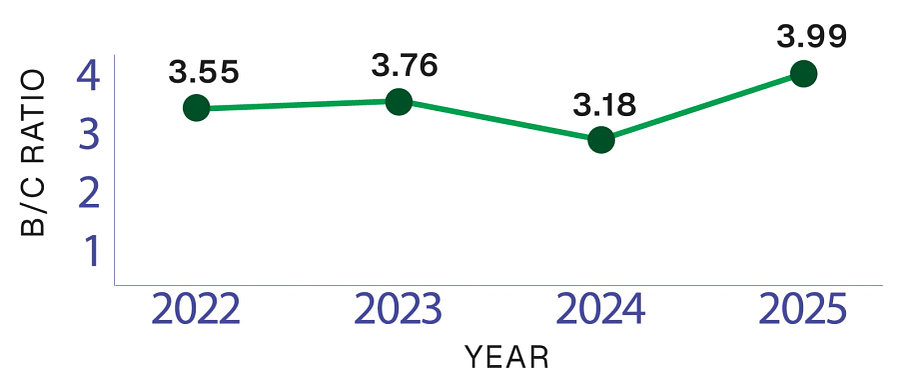
This includes the Annual Signal Retiming (ASR) program, Rest-in-Red deployment, general contractor equipment management and deployment, Preventive Maintenance, and more. This report summarizes the major accomplishments of the MMC in 2025, both quantitative and qualitative. This report also estimates the value of the benefit the MMC provides to the traveling public and reports a 2025 benefit-cost (B/C) ratio of 3.99.
Estimated overall benefit for 2025: $9,092,200
Project Team & Full-Time Staff
In addition to the core MMC staff of four general managers, one detection program manager, and three operators for basic operations, the Kimley-Horn and Maldonado Burkett teams provide comprehensive coverage for major and minor events. The core team also includes on-site support, as needed, at the Combined Transportation and Emergency Communication Center (CTECC) and One Texas Center (OTC). This provides tight coordination between the MMC and partner agencies, both internal and external to the City of Austin, furthering the City's "one system" management goal for the region.
Kimley-Horn also leverages a vast array of firmwide staff resources with specialized skills for unique assignments, including grant writing, traffic signal grounding, pole foundation details, communications master planning, and more. Austin Transportation and Public Works (TPW) staff can continue to rely on our national experts to solve technical challenges as they arise.
MMC Schedule
- Monday - Friday 6 a.m. - 8 p.m.
- Saturday 9 a.m. - 6 p.m.
- Sunday 10 a.m. - 6 p.m.
Benefits
The Austin MMC exists to improve traveler safety and mobility for all transportation modes across the City.
Whether adjusting signal timing for construction, managing event traffic, remotely troubleshooting issues, or analyzing operations to enhance safety, the MMC improves the lives of people traveling in Austin every day. In 2025, the MMC reported approximately $9 million in benefits to the traveling public. We have summarized the categories of MMC activities that generated these benefits below and describe them in greater detail throughout this report.
Some of the benefits of the MMC are measurable and supported by data analysis:
- MMC Daily Operations
- Special Event Management (Major & Minor)
- MMC Timing Adjustments
Savings to the City of Austin
Delay & Staff Time Savings
- $5,944,100 - MCC Daily Operations
- $2,298,600 - Special Events Management
- $849,500 - MMC Timing Adjustments
Daily MMC Operations
In 2025, the MMC saved Austin drivers approximately $5,944,100 through its core operations and activities.
Our team is ready for unexpected situations that require rapid response. The MMC responds at various levels during crises. During periods of inclement weather, the MMC uses standardized emergency management workflows to quickly and efficiently prioritize repairs and manage field technicians, restoring signal infrastructure to normal operating status as fast as possible.
In 2025, the MMC used inclement weather response procedures for 14 events, totaling 28 days. This included managing 272 total flash events, averaging 21 signals per event. Crashes can also cause extensive closures on major arterials, creating delays for road users. The MMC adjusts signal timings to keep detour traffic moving using special "flush plans" to clear roadways.
- 12,211 Service Requests
- 78% remotely processed and resolved Service Requests
- 459 remotely reset flashing signals
- 456 MMC remotely adjusted normal timings
- 2,138 managed lane closures
Special Events Management
In 2025, the MMC adjusted signal timings for 760 special events, resulting in estimated savings of more than $2.29 million for roadway users.
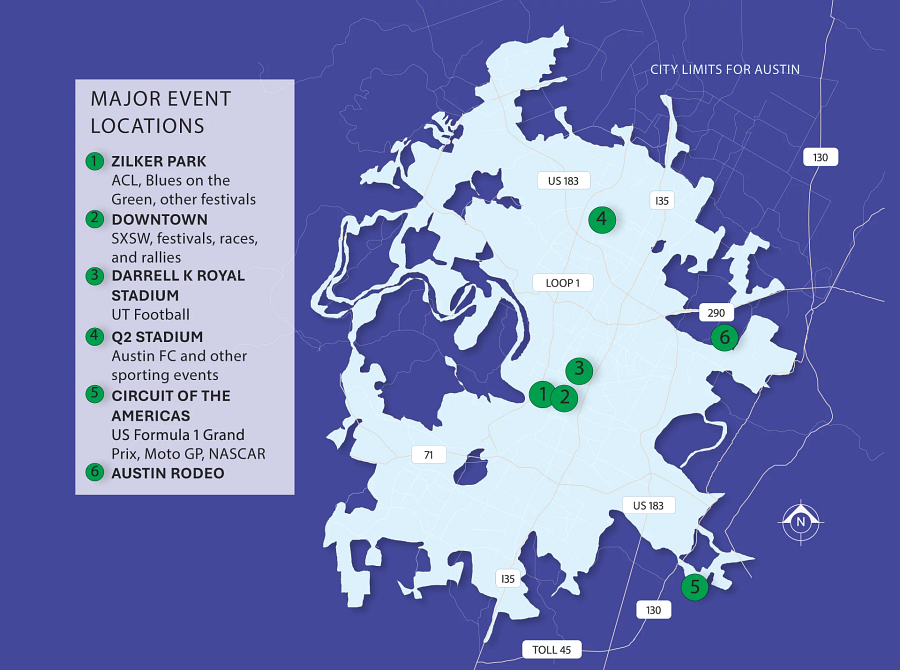
Austin is a hub of major events, and the MMC manages traffic for each to create a seamless experience for residents and visitors alike. In 2025, the MMC extended hours to actively manage and adjust signal timing for more than 760 events, including both major and minor events.
Major events are attended by more than 20,000 people, while minor events are attended by fewer than 20,000 people.
Major and minor events are managed by MMC staff, overriding standard time-of-day plans. These plans are tailored to the ingress and egress of a special event to expedite patron entry and exit. In 2025, the MMC overrode time-of-day plans for special events 2,241 times.
By the Numbers
- 7,011,089 - Estimated total attendees of events managed by the MMC
- 2,241 - Central Commands (times the MMC overrode local timings to make adjustments)
- 58,955 - Estimated total hours of driver delay reduction
- 760 - Total events managed
- $808,600 - Major event delay savings
- $1,490,020 - Minor event delay savings
MMC Timing Adjustments
Construction Management
The MMC continues to not only respond to incidents as they occur, but also to mitigate or reduce the need for public reporting. To accomplish this, the MMC is using a variety of tools at both the intersection and system-wide levels. Together, micro- and macro-level management will reduce delays and congestion for the traveling public, particularly as impacts from major construction projects like Project Connect, Mobility35, and various bond-funded improvements increase.
Tracking both highway and arterial construction projects is no small task. The MMC coordinates with various City departments and other agencies to stay informed on construction schedules and detours. MMC coordination includes reviewing construction plans to evaluate possible signal operations and adjustments, notifying right-of-way partners of inadequate or incorrect traffic control configurations, and alerting signal inspection teams to damaged field infrastructure. This ensures traffic signals operate safely and are optimized to reduce delay for the traveling public.
The MMC implemented and observed 58 construction programs affecting 64 signals along arterials and highways. In addition, the MMC actively adjusted signal timing for at least 76 Congestion Management Customer Service Requests (CSRs) to track construction-related activities or closures. The MMC is also active in notifying the public in advance of these major closures and projects via X, Dynamic Message Signs, Waze, and other technologies.
Proactive Management
No adjustment was too small for the MMC to consider. In 2025, the MMC continued proactive micro-scale management, continuously evaluating individual intersections using Smart City data from multiple vendors and sources. Smart City data uses crowdsourced travel metrics to find locations where delays and stops increased most significantly each week throughout the City. MMC staff then investigated each of these issues to proactively remedy problems as they arose, often resolving problems before the public noticed.
In 2025, the MMC evaluated 37 issues; by adjusting signal timing or repairing defective equipment, all of which were addressed before public complaints.
By proactively adjusting signal timing, the MMC saved Austin drivers $849,500 in 2025.
- 456 - Times MMC adjusted signal timing
- 64 - Signals with temporary construction timing
- 479 - Posts on X in 2025
Left-Turn Treatment Analysis and Implementation
The MMC evaluated 108 intersections and 200 left turns, with City Signal Engineers implementing 10 intersections and 32 left turns in 2025.
The MMC partnered with Vision Zero to improve safety by evaluating and changing left-turn phasing throughout the City.
The MMC studied crash history, intersection geometry, speed limits, and other factors to determine the appropriate left-turn phasing for each traffic signal, in accordance with the City's new left-turn guidance.
As the program has progressed, implementation can be slowed by the need for field hardware upgrades or other prioritized signal upgrades. The MMC remains committed to evaluating and recommending left-turn improvements citywide.
- 42% reduction for all crash types
- 77% reduction for left-turn-related crashes
- 12-second average increase in delay per left-turning vehicle
Data comes from a 2024 study.
Detection
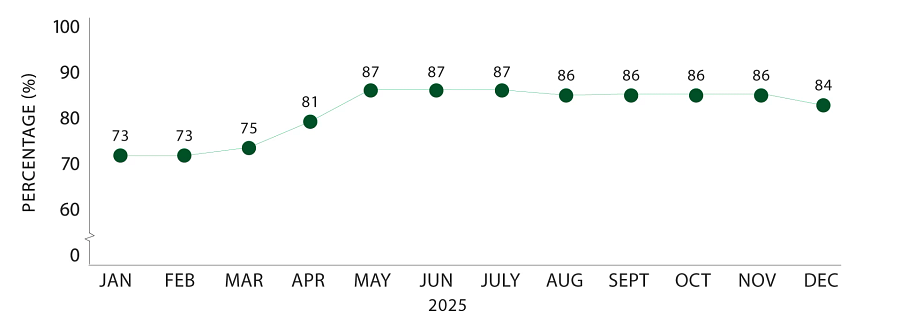
The MMC repaired detection at almost 33% of all signals in the City in 2025.
Through 2025, the City of Austin Transportation and Public Works Department made a financial commitment to fund a dedicated Detection and Re-Cabling Crew (Detection Crew), coupled with a dedicated staff member at the MMC tasked with managing the program.
The MMC staff establishes the priority of the installations and repairs of detection performed by the Detection Crew and contractors. The MMC and the Detection Crew meet weekly to discuss current and upcoming work and to brainstorm creative solutions for challenging intersections. This team repairs equipment, tests innovations, coordinates upgrades, and activates new signals.
In 2025, the City worked to deploy new traffic signal technology to better detect vehicles and bicycles at intersections that needed enhanced detection capabilities or total detection replacements. This new technology includes dynamic adjustment to improve performance during poor visibility, and various performance and safety analytics.
Further information and benefits related to the Detection program can be found under the Resources and Methodology section on the next page.
Percent Intersections Intersections with All Detectors Working
Summary
Benefits
- $5,944,100 - MMC Daily Operations
- $2,298,600 - Special Events Management
- $849,500 - MMC Timing Adjustments
Total Benefits: $9,092,200
Costs
$2,276,100 - Estimated Overall Cost
Benefit/Cost Ratio: 3.99
Mobility Management Center Reports
Current Report