
June 16, 2026
June 16, 2026
Net-Zero Hero: Tere O'Connell

I’m helping to make Austin Net-Zero by recovering architectural materials and finding new homes for them to reduce waste and preserve Austin’s material heritage.
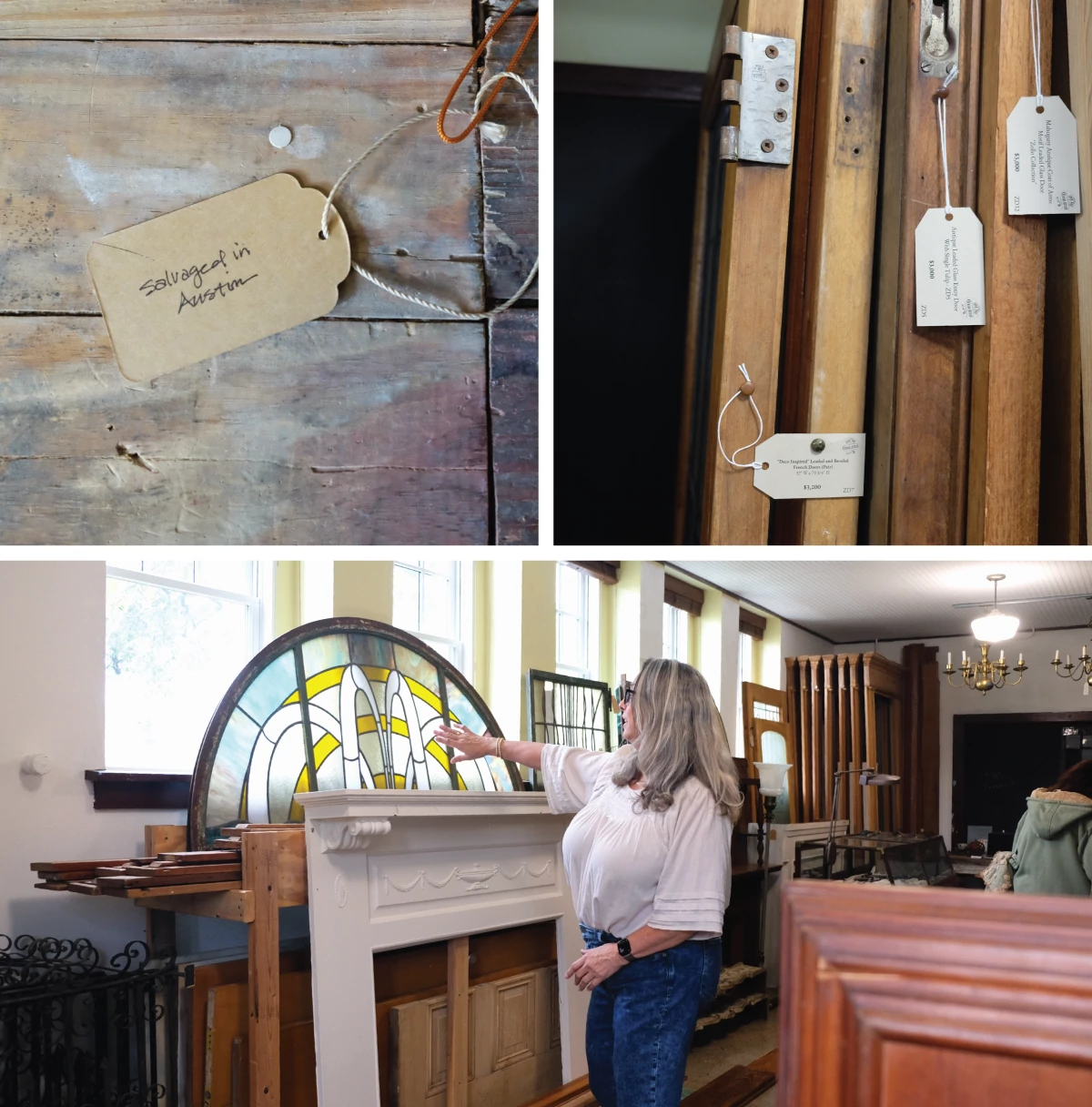
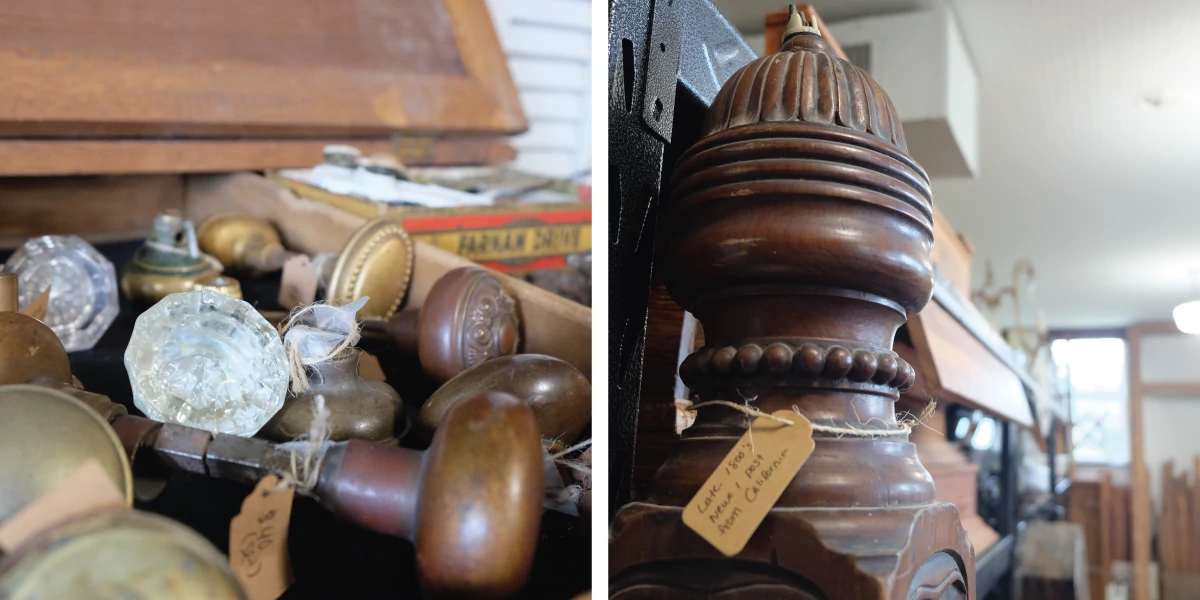
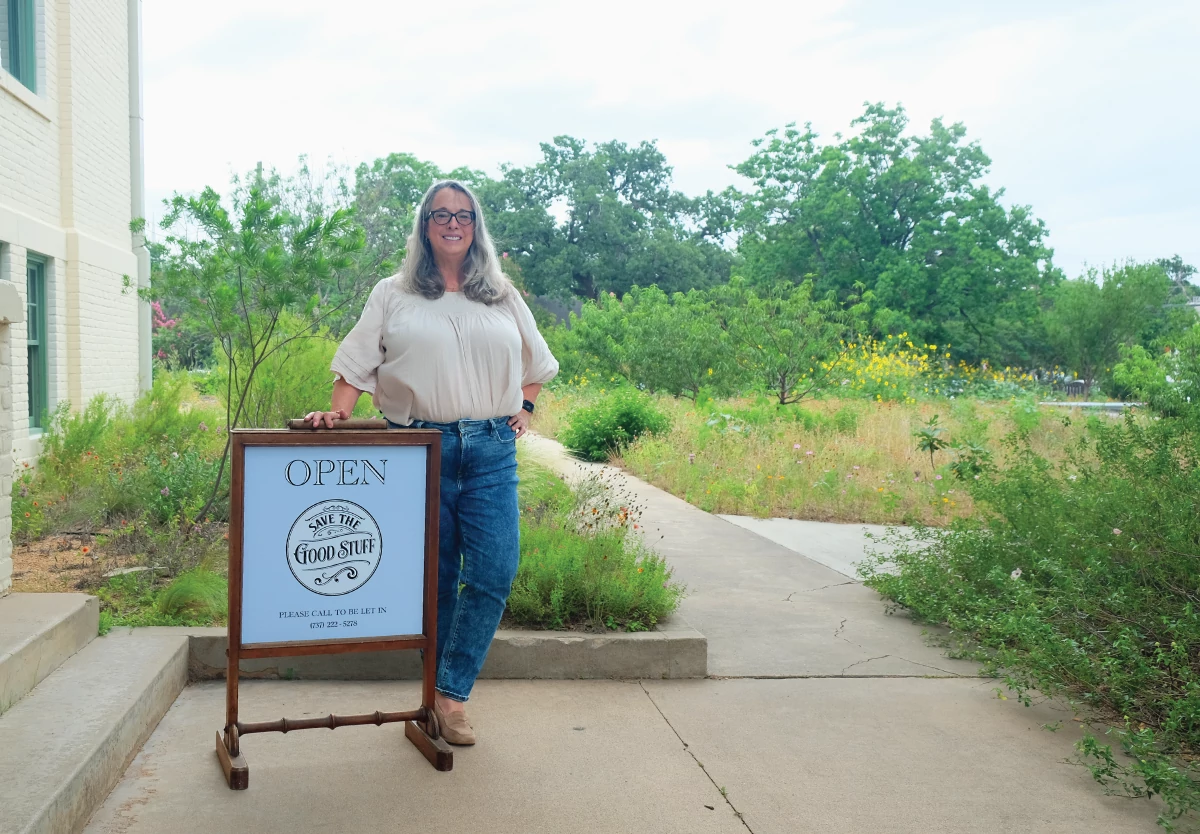
Meet our newest Net-Zero Hero: Tere O’Connell. Tere has spent her career as a restoration architect working to protect the buildings that give Austin its character. In her role, Tere saw firsthand how much craftsmanship and history ended up in landfills as historic buildings across Austin met wrecking balls. Tere decided to do something about it and founded Save the Good Stuff, a local salvage operation that rescues architectural materials from buildings being renovated or demolished. From Victorian mantles to century-old longleaf pine, Tere helps ensure these pieces aren’t lost for good, and instead helps them find new, beloved homes across Austin.
We sat down with Tere to learn more about founding Save the Good Stuff, what keeps her motivated, and why she resonates with the idea that ‘the greenest building is one that is already built.’
What inspired you to take action?
As a restoration architect and through years of involvement with the Historic Landmark Commission and Preservation Austin, I’ve become increasingly aware of the pace at which historic buildings and their materials are being lost. Creating Save the Good Stuff has allowed us to recover materials from buildings scheduled for demolition, offering a practical way to take action and make a meaningful difference.
How did you do it?
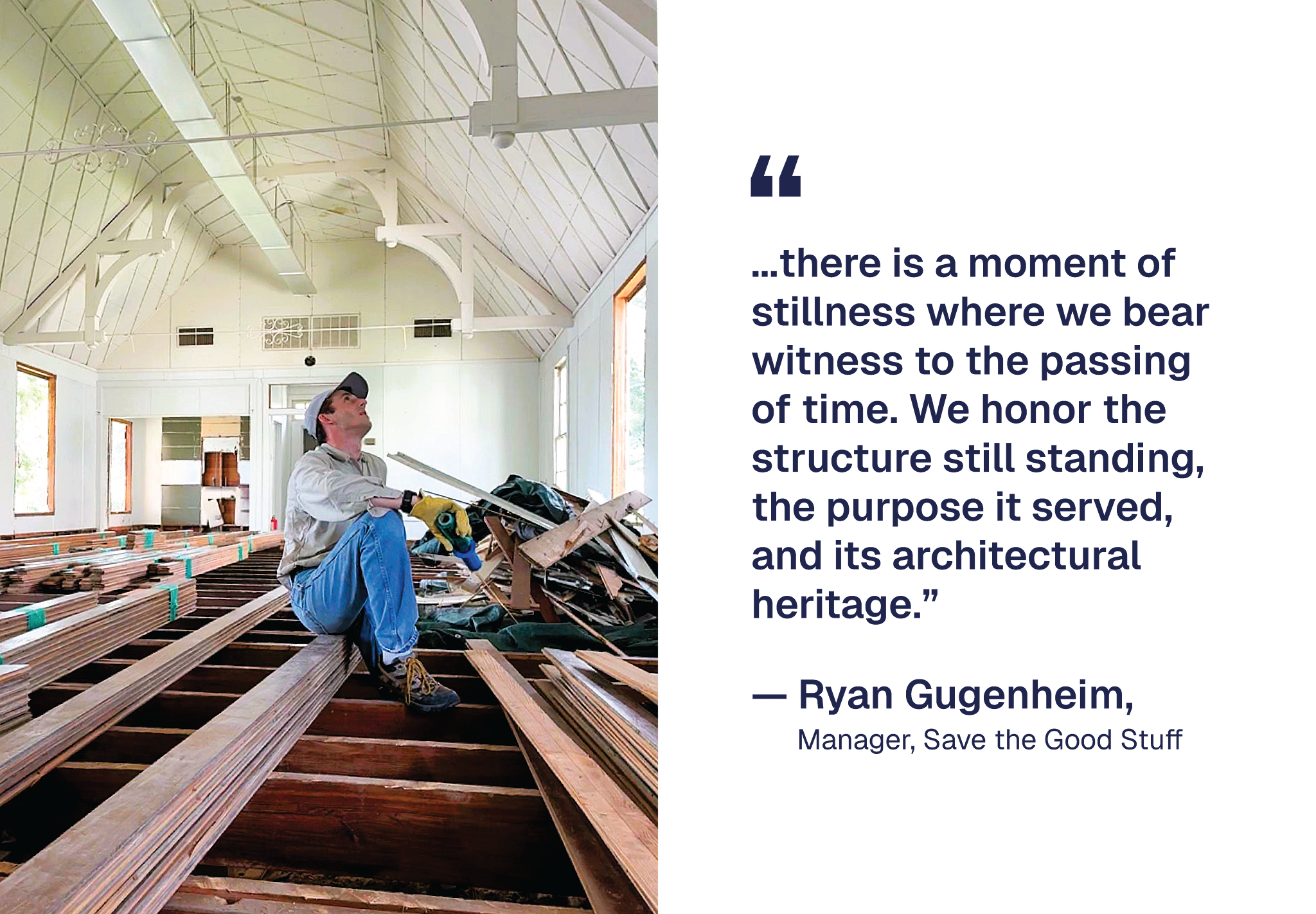
The effort began when a couple of generous supporters entrusted me with a large collection of beautiful architectural materials that had been in storage for several years. Recognizing that this work would require more than an individual effort, I began building a team. Through Preservation Austin, I met Ryan Gugenheim, whose prior experience running a brick-and-mortar salvage shop has been instrumental in shaping and growing Save the Good Stuff. Since bringing Ryan on, we’ve been able to expand both our team and our operations, steadily increasing our capacity and impact to what they are today.
What’s been most rewarding about getting involved in this way?
Saving beautiful and irreplaceable materials from the landfill is deeply rewarding in itself, but what has been most meaningful is the level of community engagement. Whether through social media, visits to the shop, or the reuse of salvaged materials, each interaction helps keep Austin’s architectural history alive and in circulation.
What’s been the toughest part?
The toughest part has been balancing opportunity with capacity. We can’t take everything, and we have to be mindful of what can be salvaged and reused effectively. That selectivity is necessary, but it also means accepting that not everything can be saved.
Ryan’s keen eye and experience are invaluable in this process—he closely tracks vulnerable properties and has a strong understanding of what holds value and what people are looking for.
Can you share some of your favorite salvage stories? What’s a unique piece you feel proud to have played a hand in saving?
We were able to save and find new homes for five Victorian fireplace mantels that came out of a single home. It took time to find the right buyers, but they were stunning pieces featuring detailed woodworking, old-growth wood, and original glass. They were absolutely worth saving, and we can celebrate knowing each one has moved on to the next chapter in its story.
Some of the most meaningful experiences come from times when preservation is still possible despite loss. It was difficult to see the demolition of places like the Z Tejas restaurant on 6th Street and the Austin Chronicle building on 40th at IH-35. We were grateful for the opportunity to salvage doors, lighting, and other details before they disappeared. Those moments feel especially meaningful.
Equally important are the people we meet—the strong response from the Austin community and their enthusiasm for reuse have made the work both rewarding and fun.
Is there a book, documentary, or other piece of media you would recommend for folks wanting to learn more about these topics?
The Greenest Building, a 2012 documentary by Jane Turville, makes a compelling case that the most sustainable building is the one that already exists. It clearly illustrates the environmental value of reuse over demolition and new construction.
On the national stage, Architect Carl Elefante’s advocacy—particularly his reminder that ‘the greenest building is one that is already built’—has been deeply influential in reframing preservation as a key part of climate strategy. His new book, Going for Zero: Decarbonizing the Built Environment on the Path to Our Urban Future is a must-read.
For those interested in learning more about Austin specifically, I would encourage reading any architectural history of the city—particularly Austin, Texas: An American Architectural History by Roxanne Williamson, which traces the evolution of Austin’s built environment and highlights both what has endured and what has been lost.
Stewart Brand’s How Buildings Learn is also a good read—it explores how buildings evolve over time and why adaptability and longevity matter.
Aaron Lubeck’s Green Restorations: Sustainable Building and Historic Homes is a particularly useful guide for anyone working with older buildings. It walks through ways to improve energy efficiency while respecting historic character, reinforcing the idea that rehabilitation—done well—is both practical and sustainable. It’s a helpful reminder that preservation and performance don’t have to be at odds.
More broadly, books on architectural history and preservation help build an appreciation for the craftsmanship, materials, and cultural value embedded in older buildings—something that becomes essential once you begin to see what’s at risk of disappearing.
What advice do you have for others?
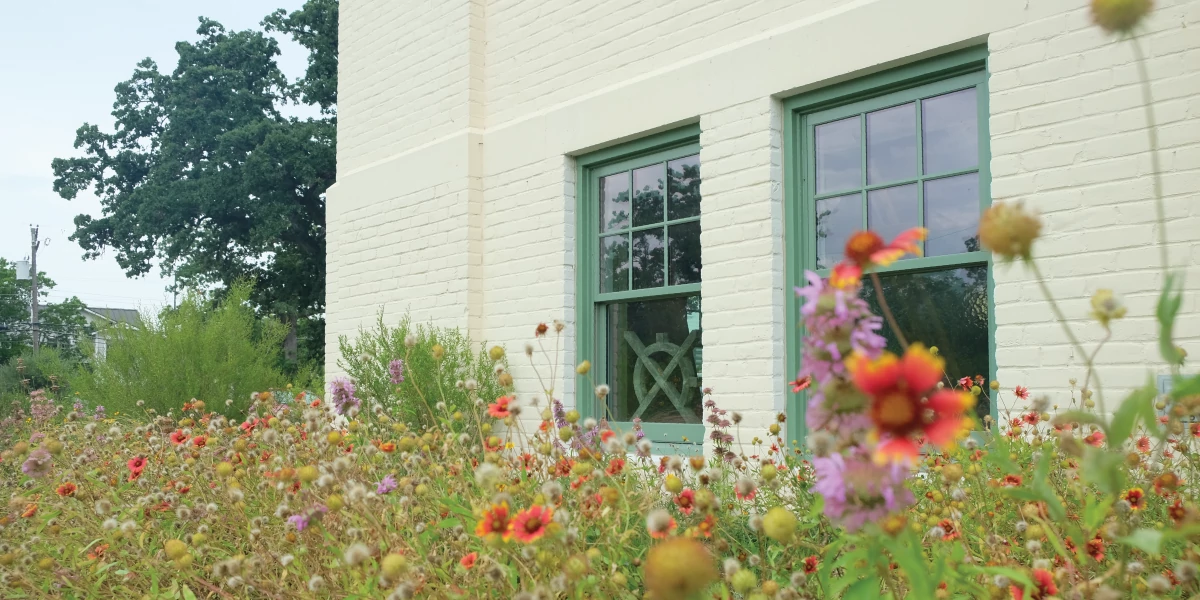
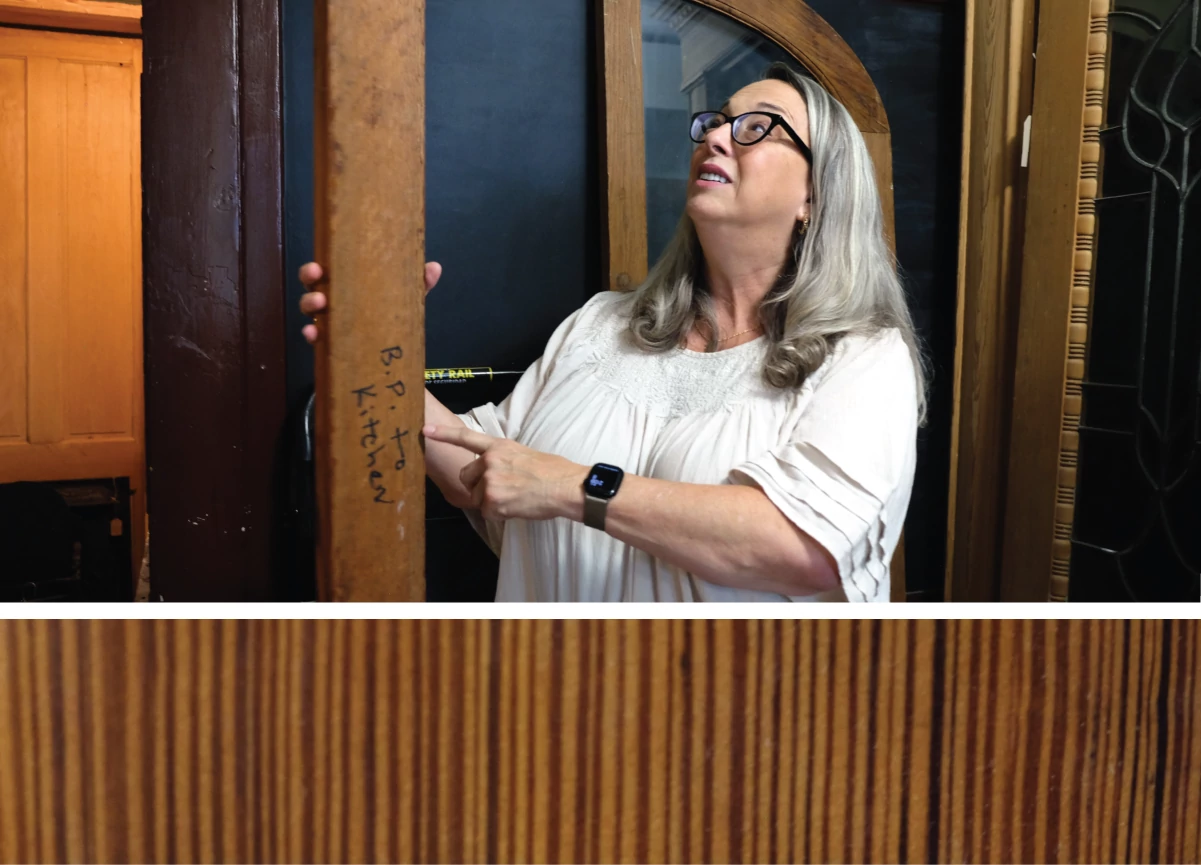
There’s real value in understanding what you already have before replacing it. Consider incorporating salvaged materials from other buildings as well. Many historic materials—like old-growth longleaf pine, hand-forged iron, carved wood details, and historic windows—were made with a level of craftsmanship and durability that is difficult to replicate today. In many cases, 100- to 150-year-old wood is significantly stronger and more stable than new-growth material. Historic windows, in particular, can often be restored and improved for energy efficiency without losing their character.
With thoughtful repair and reuse, whether in place or through salvage, these elements can continue to serve for generations. Recognizing their value and choosing to preserve and recirculate them helps carry their legacy forward while reducing environmental impact.
Dive deeper
Save the Good Stuff is open Monday-Friday from 10 a.m.-5 p.m. Follow them on Instagram for their latest updates. Want to see the work of Save the Good Stuff out in the community? Tere encourages everyone to visit Terrible Love Wine, opening later this summer. Founded by the team from Terrible Love Coffee, an Austin Green Business Leader, Terrible Love Wine has worked with Tere to incorporate several salvaged items from Save the Good Stuff into their new space.
Buildings in Austin are responsible for about 50% of our emissions. More sustainably managing construction materials is one strategy to lower that figure. Visit the Austin Climate Equity Plan to discover more ways you can take action toward our community’s net-zero future!
Know a sustainability superstar?
Nominate them as a Net-Zero Hero by emailing Climate@AustinTexas.gov.