


Need some extra greenery for your holiday decorating? There might be something useful right in your own yard. Many native and adapted landscape plants are suited to cutting. Even though this is more of a harvesting activity than an official pruning, it is a good idea to follow some guidelines.
Guidelines:
- Use a pair of sharp pruners; cuts made with sharp, properly adjusted tools heal faster.
- Harvest from mature plants with plenty of vegetation to spare.…

Do you describe your house as a little house in the woods? Does your house back up to a greenbelt or natural area? If you answered yes, or even sort of, then it’s time to get Firewise. A big part of making your property and our community Firewise is for each of us to learn more about how fires get started and travel, how best to prevent them from spreading, and by having a plan in place if there is a wildfire in your area. Through risk assessment, education, demonstration projects, and planning, we can all become Firewise and ult…
One of the simplest, most effective ways to help trees and plants survive in tough Austin conditions is mulch. Mulch is a material used to cover soil around landscape plants. Good mulches include wood chips, leaves, grass clippings, and compost. Mulch helps plants in lots of ways.
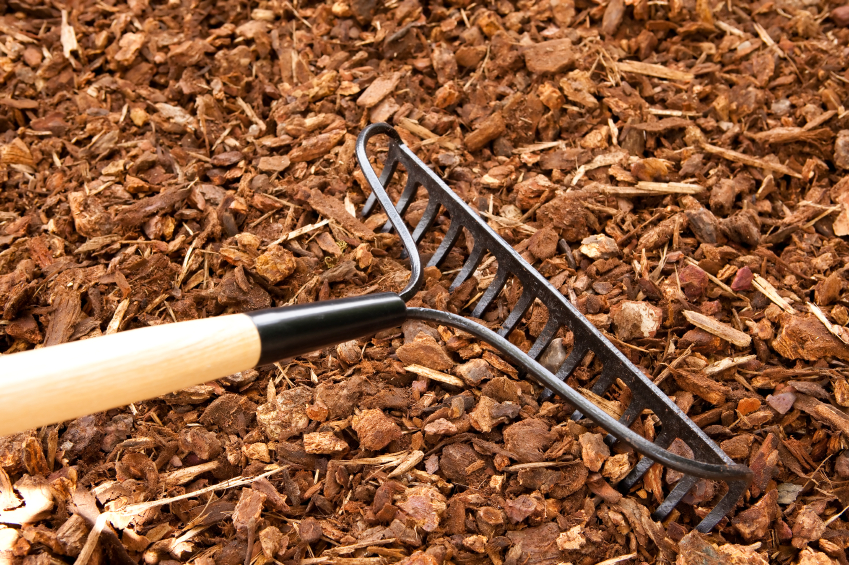
Coarse wood chips are the best mulch for tree health
Benefits of Mulch
Plants send roots into the soil to collect the resources they need to grow. Adding mulch pro…
How Tree Roots Work Part II: Digging Deeper | How Tree Roots Work Part III: Mycorrhizae
When we see a tree in the landscape, we rarely think about what’s happening below ground. We know those tree roots are there, but we can’t see them beneath the soil surface. Tree roots tend to grow in the top 2-3’ of soil, and the smallest roots grow in only the top 6” of soil. Those small roots are the ones that take up water, nutrients, and oxygen. How do they manage to grow so close to the soil surface? Well, these small, fine roots grow we…

Summer is an active time for bugs, some of which can be pests. One such pest is the spider mite, which thrive when it’s hot and dry. They puncture the plant leaves and suck the juice out leaving little white or yellow speckles. These tiny bugs (but not technically insects or spiders), can be hard to see.
…

Have you noticed that it is hotter in the city than out in the country? Urban centers, abundant with concrete and dark materials, absorb and then radiate heat back into the air late into the night. You may have noticed that rural areas surrounding Austin tend to be significantly cooler! This phenomenon is known as the urban heat island effect, and the extra heat we experience in our cities can be a serious problem for our health, the environment, and our energy use.
…