

How Tree Roots Work Part I | How Tree Roots Work Part III: Mycorrhizae
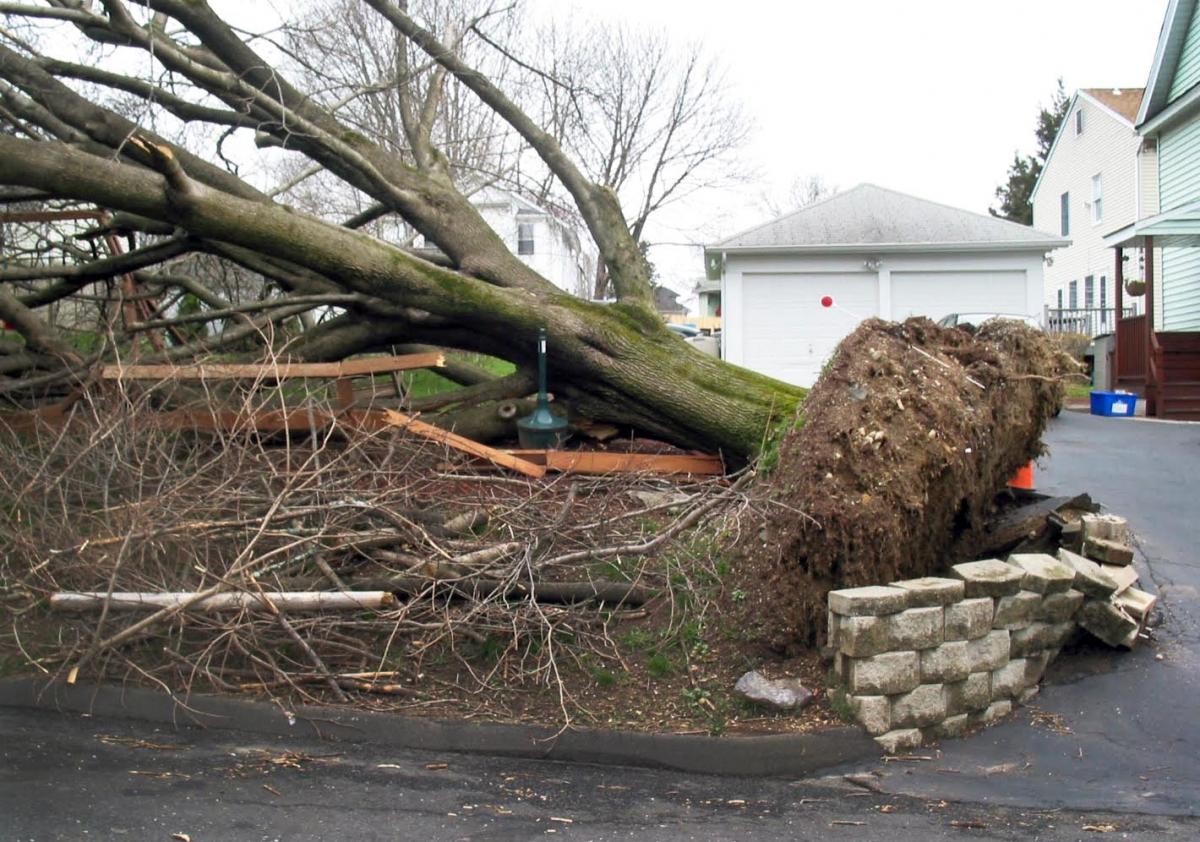
Image Courtesy of the International Society of Arboriculture.
Severing roots along one side of the stem often leads to the tree falling the other direction.
There are two main types of tree roots: anchoring roots and…
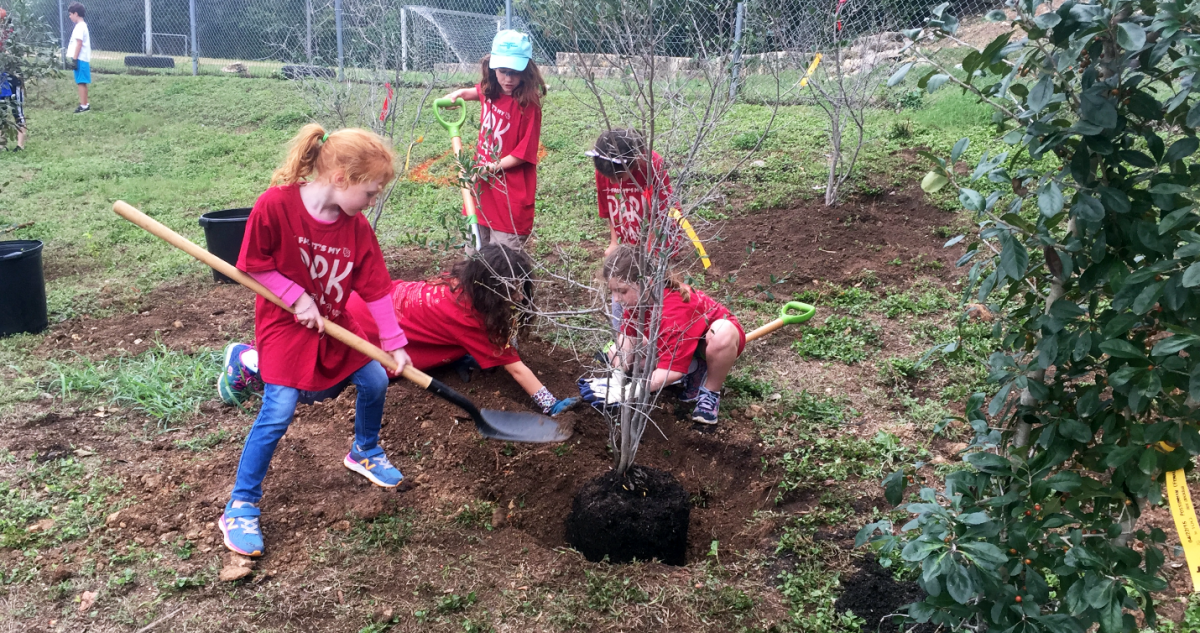
| Project Name | Bryker Woods Elementary Tree Planting |
| Year | 2016 |
| Address | 3309 Kerbey Lane, Austin, Texas 78703 |
| Category | Tree Planting, Education |
| Award | $3, 785 |
| Project Lead | Bryker Woods Elementary PTA |
Twenty-six trees were planted…
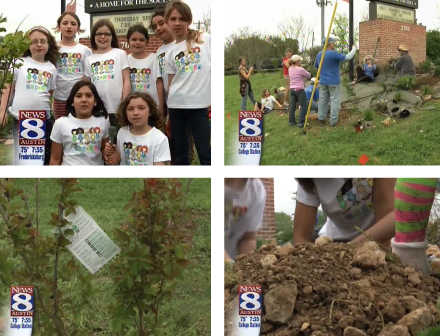
On April 1, 2010, eleven 7-9 year-old Brownie Girl Scouts planted a landscape near the public right of way at 2701 South Lamar in Austin, Texas which was designed to soak up carbon dioxide and urban heat. The girls learned about planting trees and caring for the environment.
The Urban Forest Grant supplied funding to purchase trees, mulch, compost and a small irrigation system for the landscape project. Other funding for the project came from cookie sales and parent donations.
| Project Name | Breathe Green… |
Healthy red oaks change leaf color in autumn in Central Texas. Image Credit: Bill Oriani, Flickr
Oak wilt is one of the most destructive tree diseases in the United States, and it is killing oak trees in central Texas at epidemic proportions. We’ve covered an introduction to oak wilt in our Oak Wilt 101 article. Now we take a deeper dive into the topic of red oaks and oak wilt.
…

In the summer, bugs become pests when they start to attack our plants. Unfortunately for our friendly bugs, it's common practice to indiscriminately kill all bugs, even when they're actually beneficial. Sorry pollinators, fireflies, and lady bugs! So when a bug does cause a problem, using the lowest impact way to try to manage it makes sense for our friendly bugs, the ecological health of our landscapes, and our water quality.
Prevention
- Plant a diversity of species marking it harder f…
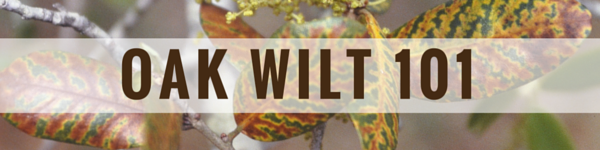
Oak wilt is one of the most destructive tree diseases in the United States, and it is killing oak trees in central Texas at epidemic proportions. Whether you're new to Austin or just getting to know your trees it's important to know the basics, and to know when to call in the professionals to protect your trees.
…

Austin is known for its love of trees and tree protection policies, and those efforts were acknowledged in a report, Austin’s Urban Forest, released in February by the United States Department of Agriculture (USDA) Forest Service. The Report, which is the first of its kind, is the product of the Urban Forest Inventory and Analysis Program (UFIA). UFIA is an urban forest monitoring program and produces estimates of the quantity, health, composition, and benefits of urban trees and forests. The Report is a summary and analysis of the field work and data…
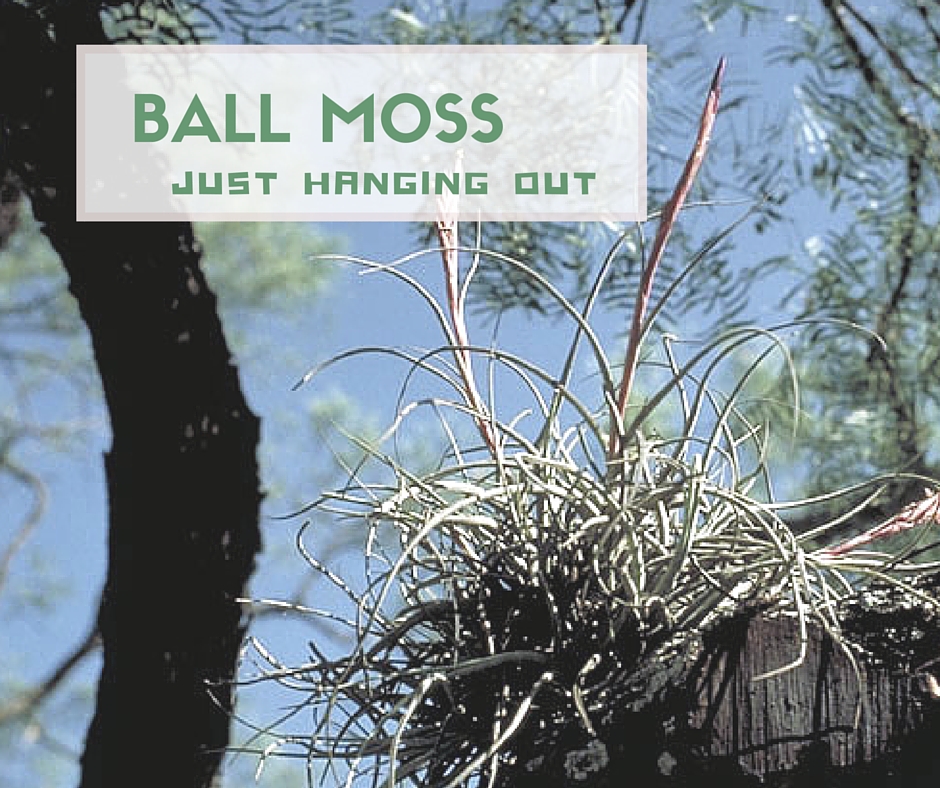
What is ball moss?
Ball moss is a small epiphyte commonly found clinging to limbs of live oaks and other trees in southwest Texas. Ball moss is not a moss, but a true plant with flowers and seeds. It is a member of the bromeliad family, which also contains Spanish moss and pineapple. Epiphytes are plants that attach themselves to limbs, tree trunks, power lines, fences, and many other structures with pseudo-roots. Unlike true roots, they do not absorb water and minerals; they merely attach the plant…
When most people think of Austin they think of live music, breakfast tacos, and time spent enjoying the outdoors like hiking near Walnut Creek, swimming in Barton Springs or paddleboarding on the lake. Water is a key part of what makes Austin the place we love. Unfortunately much of what we do on the land impacts our waterways.
The Watershed Protection Department protects lives, property and the environment of our community by reducing the impact of flood, erosion and water pollution. One of the ways they do this is by giving community members a way to get involved. …

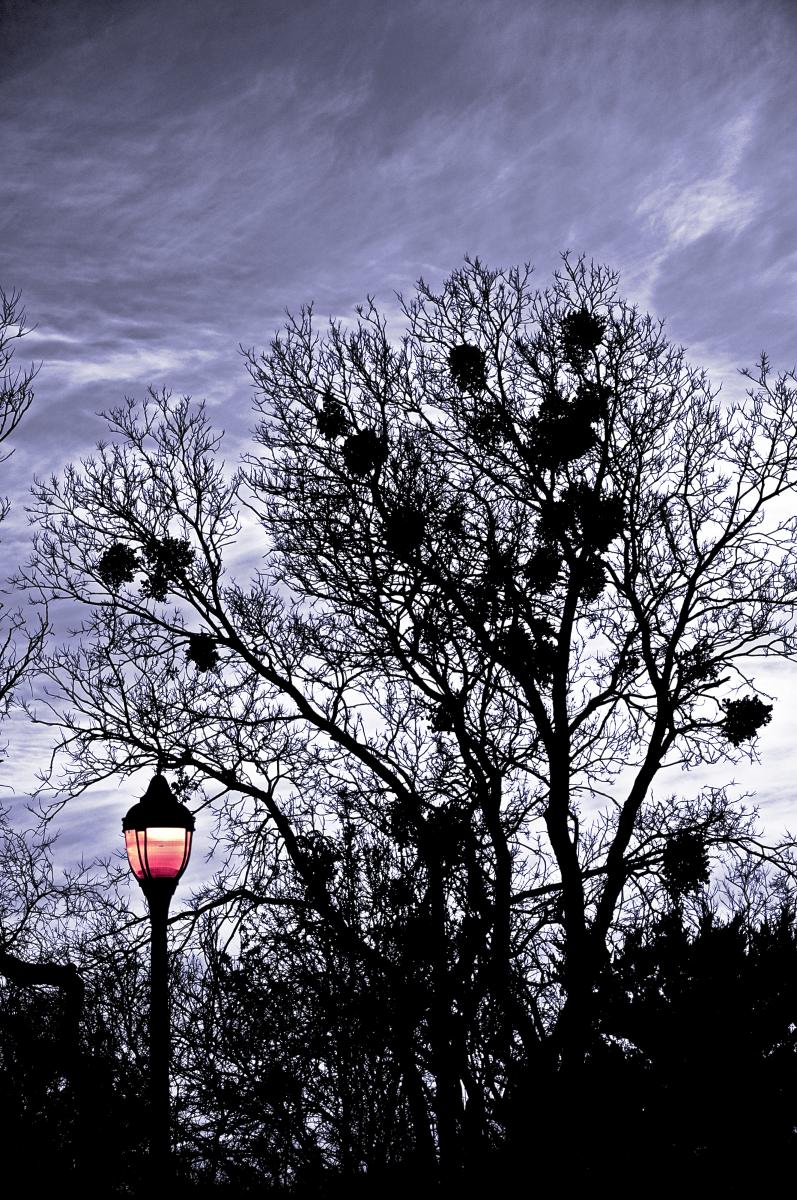
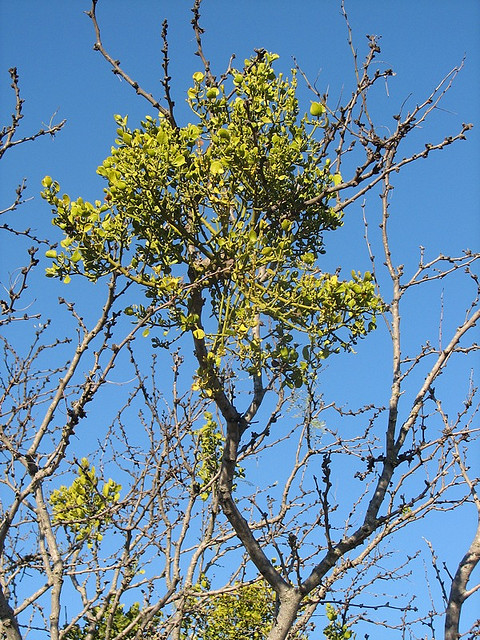
Photo Credit:…