

November 1, 2026
November 6, 2026
November Updates

A monarch butterfly enjoys the nectar of flowers at a Roots & Wings event hosted by Zilker Botanical Gardens.
Cool Weather Greetings!
Please ensure you are distributing this blog to all your gardeners. City of Austin webpages, including this blog, are available in 14 languages other than English by using the tab on the top right corner of the webpage.
In this edition of the Community Gardens Program Blog, we have important community garden permit information and a special shout out, Orchard Maintenance Plan reminders, the Annual Potluck RSVP link, how to get involved with the Food Plan, a quickly upcoming grant opportunity, and as always a pollinator of the month.
Community Garden Permit Update Support
If you need support getting your garden’s Community Garden Permit by the end of May 2027, email Lindsay.loftin@austintexas.gov
Special shout out to North Oaks Community Garden for being the first community garden to update their Community Garden Permit this fiscal year!
Fruit Tree Requirement, Orchard Maintenance Plan
Fruit trees are wonderful additions to a Community Garden. Orchard Maintenance Plans (OMP) create a valuable record of fruit trees and the tasks required for continued maintenance. OMPs include a map showing which kinds of fruit trees are located around the garden and detailed instructions for how to care for the trees each year. Most importantly the OMP designates who is ultimately responsible for the care of the trees.
All gardens with at least one fruit tree are required to fill out/update an annual Orchard Maintenance Plan. If your garden is planning on planting fruit trees in the coming year you will need to submit and receive written approval for your OMP before you begin planting.
To obtain an Orchard Maintenance Plan template, please email Louis, the Community Gardens Program Culture and Arts Education Specialist, at communitygardens@austintexas.gov or directly at louis.keller@austintexas.gov.
City of Austin Community Garden Program Annual Potluck November 21
Please share this with your fellow community gardeners.
Location: North Austin YMCA Community Garden,1000 W Rundberg Ln, Austin, TX 78758
Date: Saturday, November 21
Time: 12:30 PM-2:30 PM
RSVP as soon as can using this form
It’s time for our once-a-year event that brings all city permitted community gardeners together. Bring your nutritious and delicious dishes to share with everyone! We are excited to see as many friendly faces as possible and to share a communal meal.
This event is for all garden plot holders in the City of Austin’s Community Gardens Program. Bring your own plate, cup, eating/serving utensils, chair/blanket. Please label your food accurately to accommodate for the different food allergies and sensitivities.
The Austin/Travis County Food Plan Implementation Collaborative:
Austin’s community centered food plan was adopted by the Austin City Council and Travis County Court Commissioner in 2024. The aim of the food plan is to build a sustainable, equitable, resilient food system. There are monthly meet ups involving local organizations, citizens, and city officials, that help organize how to implement such a big plan.
You can check out the summary of the Food Plan here:
English | Español | Tiếng Việt | 中文 (简体) | 한국어 | العربية | हिंदी | Français
To get involved use this Google form:
Austin/Travis County Food Plan Collaborative - Sign Up for Updates
Meetings are language accessible and the sign-up form is available in 7 languages. To request additional languages, contact Amanda.Rohlich@austintexas.gov.
Grant Opportunity (Up to $15,000)
Food Plan Implementation Grant
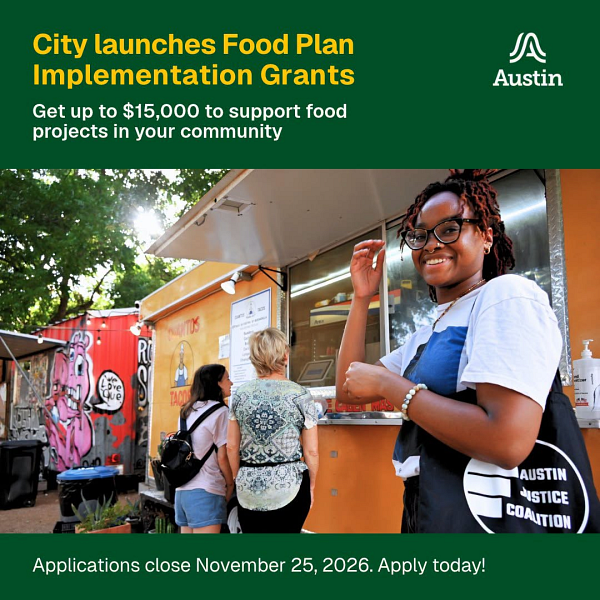
Food connects all of us. From where we shop to what’s on our plates, we each play a part in Austin’s food system. The Food Plan Implementation Grants offer up to $15,000 to fund community-led solutions to our biggest food challenges.
Apply by November 25, 2026. Projects must align with at least one goal in the Austin/Travis County Food Plan and meaningfully serve the Austin-Travis County area.
Learn more and apply: Food Plan Implementation Grants | Austin-Travis County Food Plan
These grants are made possible through funding from the Milan Urban Food Policy Pact (MUFPP). Austin received the Governance Award at the 2025 MUFPP Global Forum.
Roots & Wings 2026 Recap
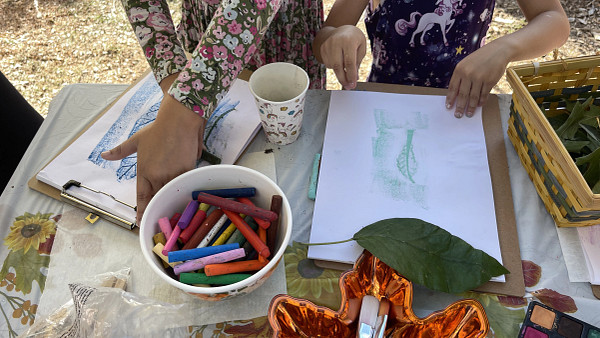
There were so many amazing Roots & Wings Events in October! Way to go to each garden and person who helped make all of these ecological celebrations a special moment for many people across Austin!
We hope everyone had a good time hosting or attending these events. If your garden would like to host an event next year, you can reach out to Roots and Wings organizers here: Roots & Wings Festival Interest Form.
Pollinator/Plant Relationship of the Month:
Leafcutter bees
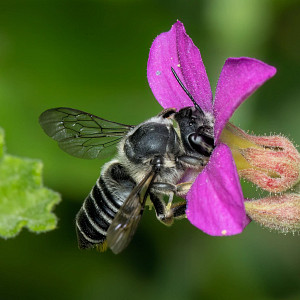
Bees in the Megachile genus are known as leafcutter bees, because the females use their sharp mandibles to cut oval shaped pieces of petals and leaves to build their solitary nests as they tunnel into dead twigs, wood, or into the ground. These bees come in many different body sizes and colors. Most other bee species carry pollen on the setae hairs of their hind legs, but a distinguishing trait of leafcutter bees is that they carry pollen on the hairs of their abdomens. The hairs on leafcutter bees make up a structure called the scopa. The scopa has an electrostatic charge to help pollen cling to the abdomen. Leafcutter bee’s bodies have a flattened widely shaped appearance with tapering at the ends. The females are larger and have fewer hairs on their faces. Think of the males as having mustaches to distinguish them.
Leafcutter bees pollinate a wide range of native wildflowers as well as food garden plants including onions, carrots, blueberries, and more. If you see leaf cutter bees in your garden, do not worry about your plants. These bees are solitary and do not form large colonies. Any “leaf cutting” will go unnoticed in a garden, but the pollinating and fruiting of your vegetables will be obvious! A strong resilient garden has many kinds of pollinators.
Photo by Mika Geiger Leafcutter, Mortar, and Resin Bees from Barton Hills, Austin, TX, USA on July 24, 2026 at 12:40 PM by Mika Geiger. a few of these foraging on pyramid bush in the butterfly garden area · iNaturalist.
If you want a pollinator (any type of pollinator, not just bees) featured in our blog, send us your pictures and pollinator ID from your community gardens to communitygardens@austintexas.gov.
For more information on the Community Garden Program, or follow ups from the blog, contact communitygardens@austintexas.gov.