
March 15, 2017
February 10, 2026
The Role of Red Oaks in the Oak Wilt Cycle
.png?crop=yes&w=1152&h=555&itok=PK7qHEwJ)
Oak wilt is one of the most destructive tree diseases in the United States, and it is killing oak trees in central Texas at epidemic proportions. We’ve covered an introduction to oak wilt in our Oak Wilt 101 article. Now we take a deeper dive into the topic of red oaks and oak wilt.
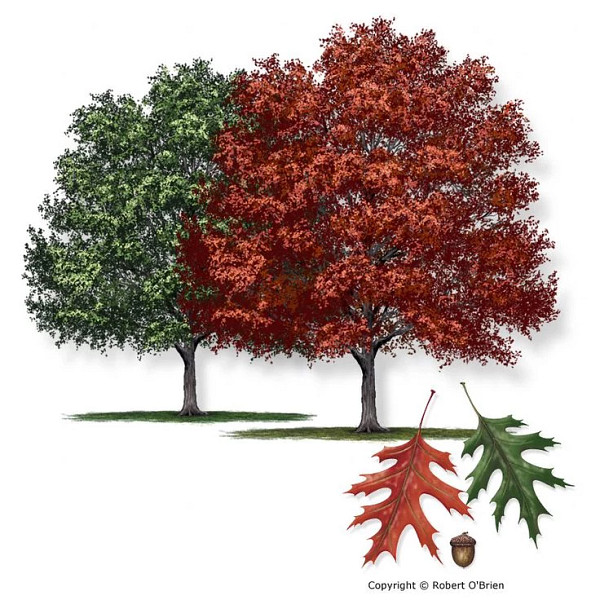
Illustration of a shumard oak by Robert O'Brien.
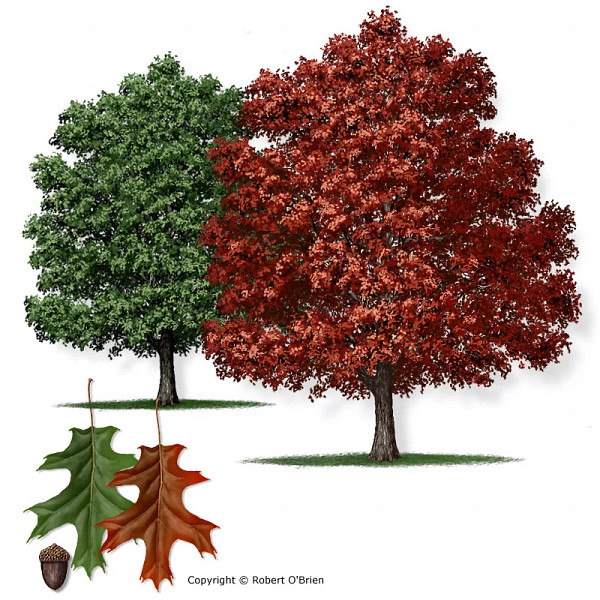
Illustration of a spanish oak by Robert O'Brien.
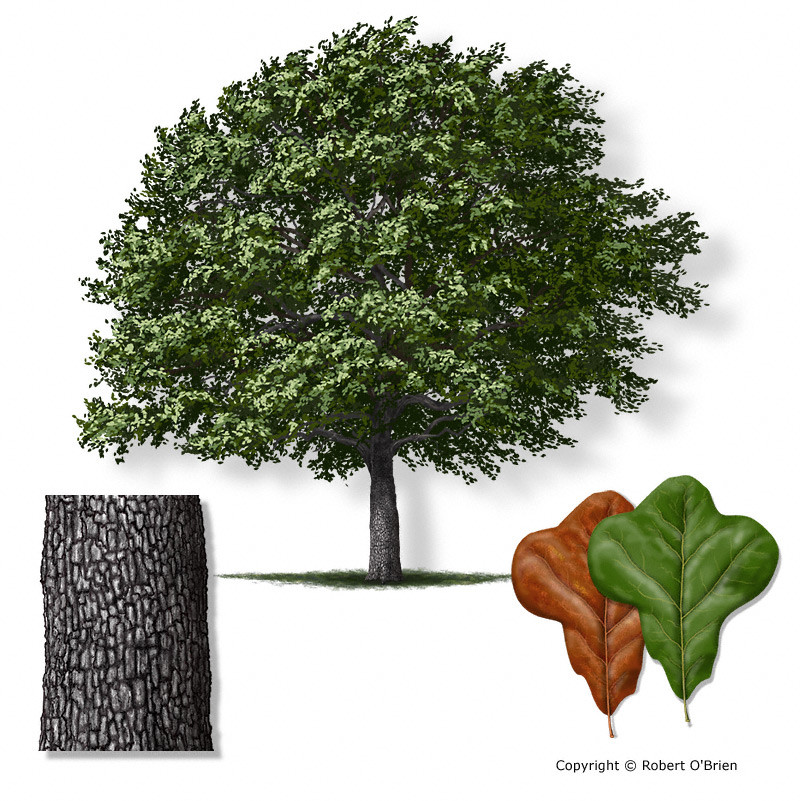
Illustration of a blackjack oak by Robert O'Brien.
Red oaks play an important role in the establishment of new oak wilt infection centers.
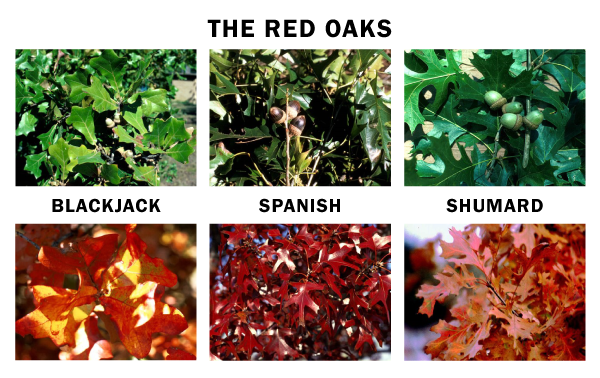
During summer months infected red oaks may exhibit bright autumn-like coloration.
Shumard, spanish, and blackjack oaks are the red oaks that are most susceptible to oak wilt. Spore producing structures (fungal mats) can, under the right conditions, form beneath the bark of diseased red oaks. The conditions required for the formation of fungal mats are more likely present in red oaks that become infected in late summer or fall. These trees will maintain sufficient moisture to form fungal mats during the following spring months (generally mid-February through late-June).
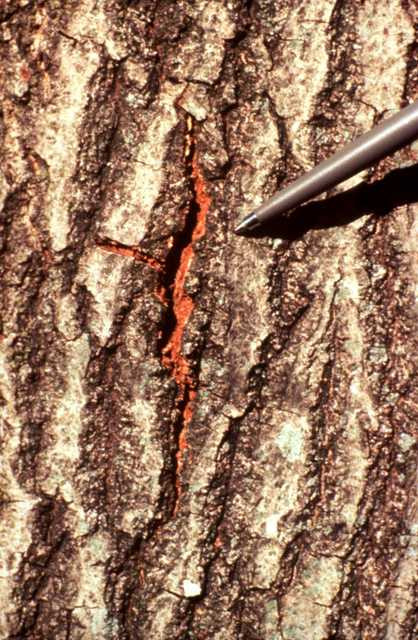
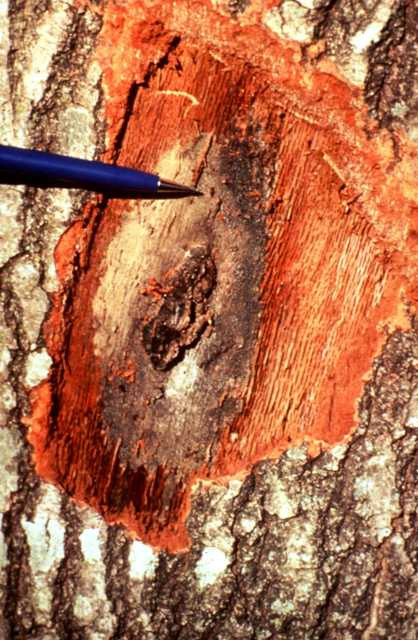
Image of an oak wilt fungal mat seen through a crack in the bark and a fungal mat exposed.
Fungal mats are sweet smelling, and attract sap feeding, nitidulid beetles, which are very small and feed on the spores produced on these mats. The sap feeding beetles will fly away covered with spores seeking their next meal of tree sap. If that meal happens to be a fresh wound on a live oak or another red oak the spores will dislodge, infecting the tree, and ultimately resulting in the formation of a new center of oak wilt disease.
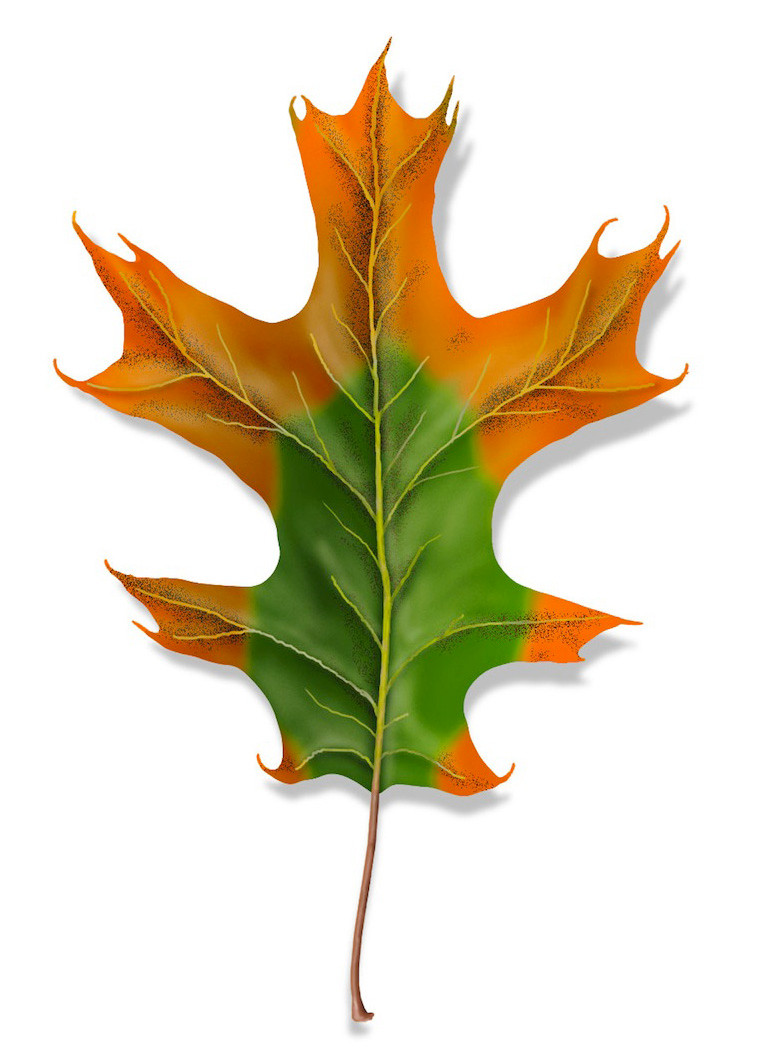
Typical foliar symptom in a red oak. Illustration by Robert O'Brien.
Foliar symptoms for infected red oaks are generally less distinct than the veinal necrosis that occurs on Live oaks, and can often be very similar to the symptoms a red oak will exhibit when struggling from drought or bacterial leaf scorch.
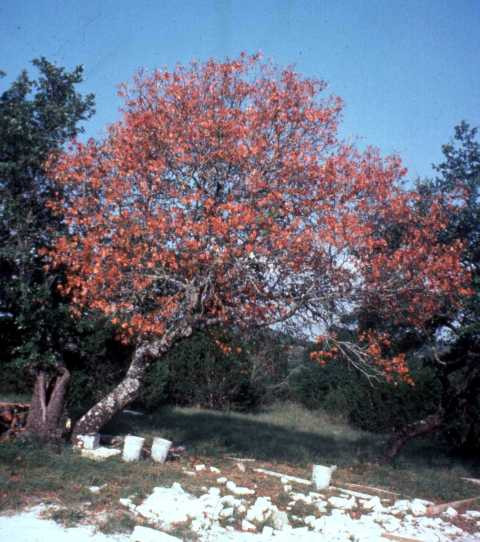
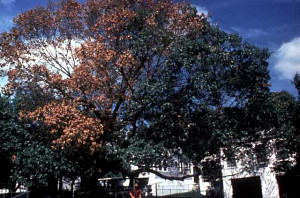
Red leaves and discoloration in summer are an indicator the tree may have oak wilt. Photos courtesy of Texas Oak Wilt.
Fungal mats can form on diseased oak from early February through June. During summer months, infected red oaks may exhibit bright autumn-like coloration in contrast to typical greenery that surrounds them. Mature leaves may also turn pale green or bronze, starting at the leaf margins and progressing inward.
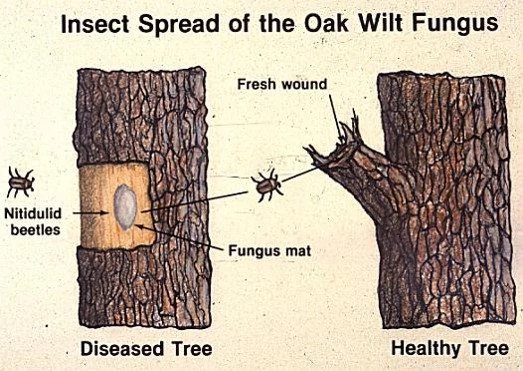
Illustration of a beetle moving from an infected tree to a tree with an open wound.
It is rare for individual red oaks, not located in or near a confirmed oak wilt mortality center, to become infected with oak wilt. Much like live oaks, individual red oaks become infected either from a grafted root connection from another infected red oak (or very rarely from interspecies root grafts with an infected live oak), or from the previously mentioned sap feeding beetles carrying spores. Infected red oaks seldom survive, and generally die within a few months of the initial appearance of symptoms. If a red oak contracts oak wilt, there is always the potential for fungal mat formation, which can lead to the long distance spread of the disease.
Prevention is an essential part of the management of oak wilt in Austin.
Three factors included in a successful oak wilt prevention plan are avoiding wounds to oaks in February through June, sealing all wounds on oaks regardless of season, and unfortunately, the destruction of diseased red oaks to prevent further spread of the disease. An overview of each prevention method is covered in Oak Wilt 101.
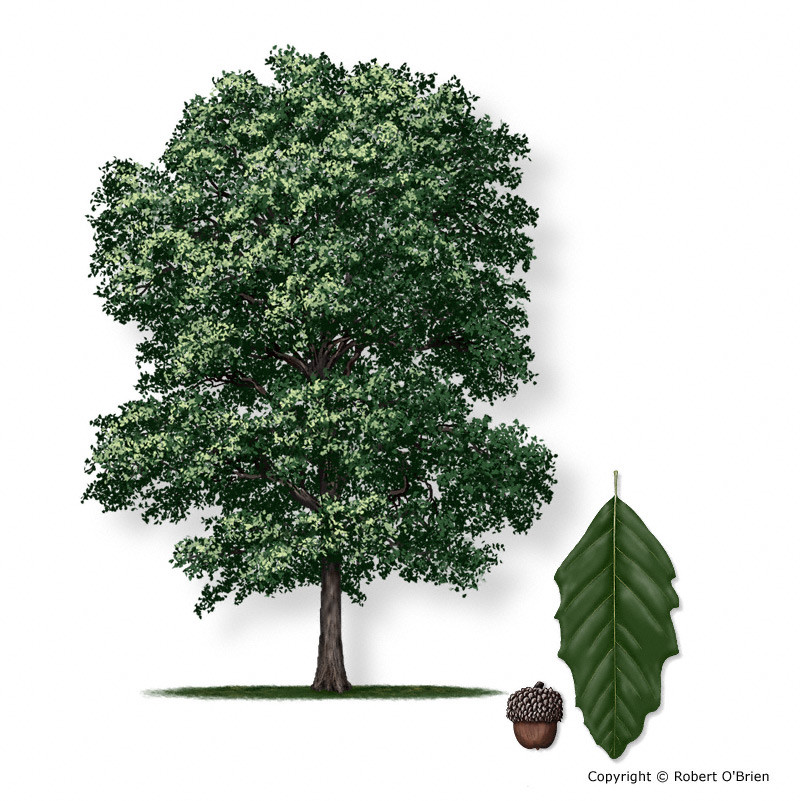
Post oak, Chinquapin oak, Bur oak, Monterrey oak, or Lacey oak are least susceptible to oak wilt. Image: Monterrey oak, Illustration by Robert O’Brien.
If you’d like to plant an oak on your property consider a Post oak, Chinquapin oak, Bur oak, Monterrey oak, or Lacey oak which are all part of the White oak group and are least susceptible to oak wilt. You can learn more about these and many other types of trees at Grow Green’s searchable database. Consider tree diversity on your property and in relation to the trees surrounding your property when choosing your trees. Diversity of tree species is our best defense against a changing climate when it comes to the overall health of Austin’s urban forest.
Concerned your tree may have oak wilt? Don’t wait to act.
If a tree does have oak wilt quick action may save the other oaks on your property and in your neighborhood. You can learn more about oak wilt and find a list of certified arborists at Texas Oak Wilt. If you think a street tree or park tree may have oak wilt please call 311 and report it to the City of Austin. Get the 311 mobile app and report it with a picture. Understanding the danger of oak wilt infestations and taking action means we can all help protect and nurture Austin’s urban forest.
Article by Chris Dolan, past program coordinator for the City of Austin's Oak Wilt Suppression Program.
Learn more about Oak Wilt with our Oak Wilt 101 article, and at Texas Oak Wilt.
This information is sponsored by the City of Austin. Learn more about trees and resources at the Tree Information Center!