
November 18, 2026
November 18, 2026
Net-Zero Hero: Rachel Caldwell Hill

I’m helping to make Austin Net-Zero by nurturing community practices of craft, care, and storytelling.
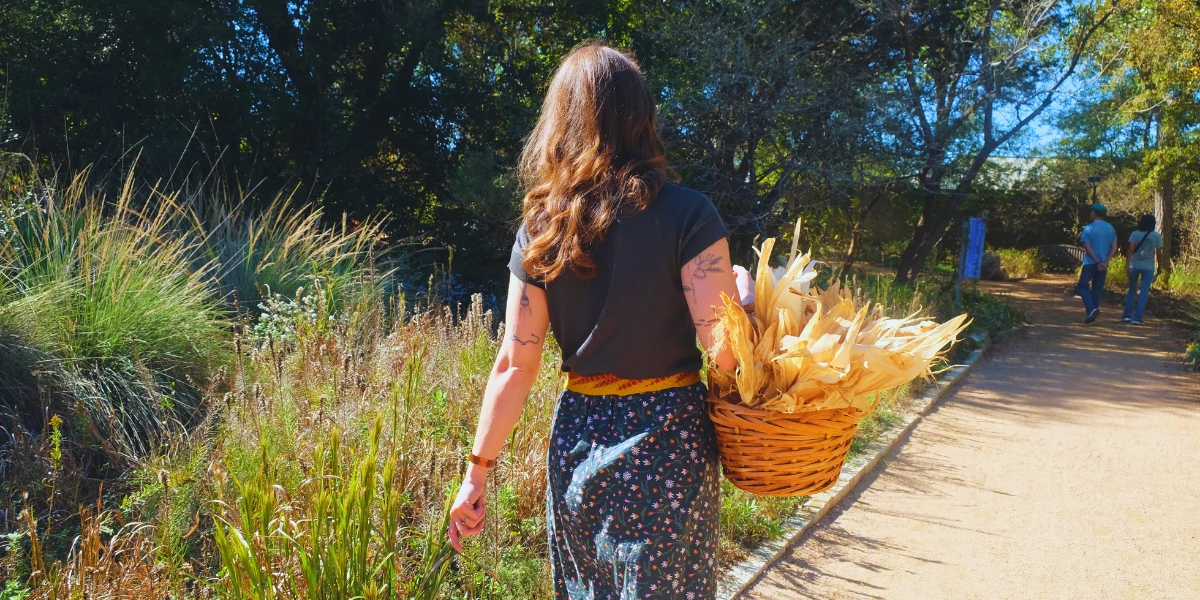
Meet our newest Net-Zero Hero: Rachel Caldwell Hill, an intermedia artist, Master Naturalist, and citizen of the Cherokee Nation. Rachel weaves together her many talents to shine a light on Austin’s Cherokee roots and support Central Texans in connecting to land and community. She serves as the District 5 Commissioner on the City of Austin’s Native American and Indigenous Quality of Life Commission, is on the board of the Central Texas Cherokee Township, and was a Texas Folklife Fellow. Beyond these roles, Rachel creates zines to share history and connect people to place. She runs Indigenous crafting, weaving, and cyanotype workshops, leads tree and bird identification walks, and grows and tends heirloom Three Sisters gardens that support community seed banking and food access. After leaving a career with Texas Parks and Wildlife, Rachel is now pursuing a PhD in UT’s Sociocultural Anthropology and Native American and Indigenous Studies programs.
We were honored to spend an afternoon with Rachel at the Lady Bird Johnson Wildflower Center, where she was preparing for Discovery Day: Indigenous Landscapes. In honor of Native American Heritage Month, we spoke with Rachel about her Cherokee heritage, its impact on her work today, and ways that Central Texans can connect to this rich and lasting culture.
What inspired you to take action?
Growing up in the cross-timbers of North Texas, I was raised by a Cherokee mother and nurse father who instilled in me a deep respect for place, service, and community. We grew where we were planted, cultivating gardens and nurturing connection with people, the land, and their stories throughout my childhood.
When I moved to Austin as an adult, it was natural to connect with other Cherokee citizens and the diverse ecosystems that support us. Inspired by my parents' example and the Cherokee community value ᎤᎵᏍᎨᏗ ᏕᏣᏓᏰᎸᏎᏍᏗ (ulisgedi detsadayelvsesdi) — treat each other’s existence as sacred or important — I sought opportunities to honor the culture and vitality of humans and nonhumans in Austin and throughout Central Texas.
How did you do it?
After moving to Austin, I connected with the Central Texas Cherokee Township (CTCT), a non-profit Native American group affiliated with the Cherokee Nation. Brought together because of our history, heritage, and support of Cherokee lifeways, the CTCT and its members encouraged me to further utilize my skills as a photographer and Texas Master Naturalist to support our community programming. I had learned many valuable interpretation skills while working for Texas Parks & Wildlife, so I greatly appreciated the support and opportunity to engage with culture, history, and practice within my community. In 2024, I began pursuing my PhD in Sociocultural Anthropology and Native American and Indigenous Studies at the University of Texas in Austin. Since then, I have continued to seek ways to treat knowledge and relationships as sacred and important.
What’s been most rewarding about getting involved in this way?
The connections with people and place are by far the most rewarding gifts. For example, I completed a Texas Folklife Fellowship in finger weaving with my Cherokee mentor, Doug, and have now taught hundreds of people of all ages to weave at museums, cultural centers, and botanical gardens. I’ve collaborated with community-led initiatives and installations on extreme heat to create arts-based workshops exploring the impact of urban heat island effects and movement.
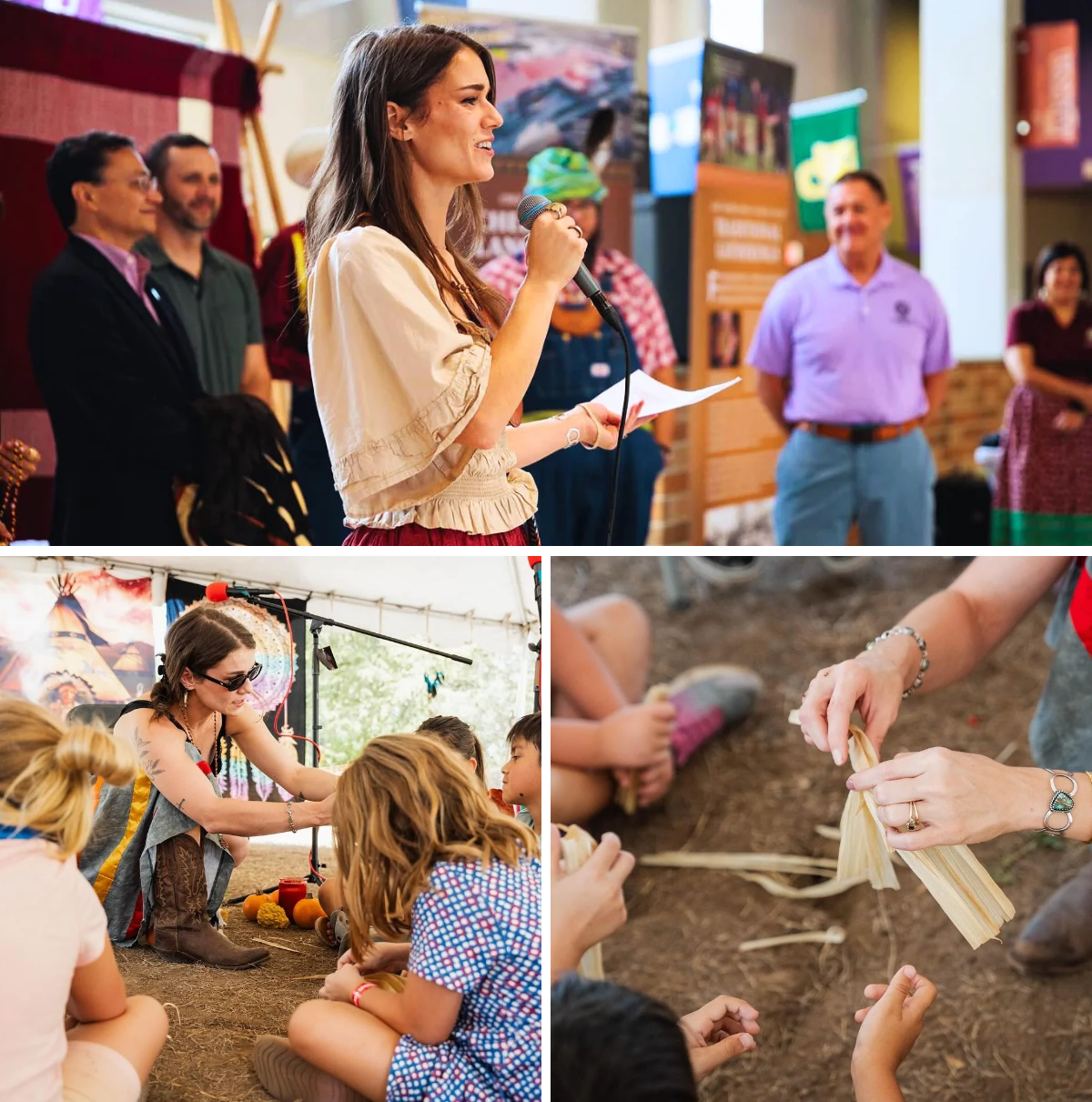
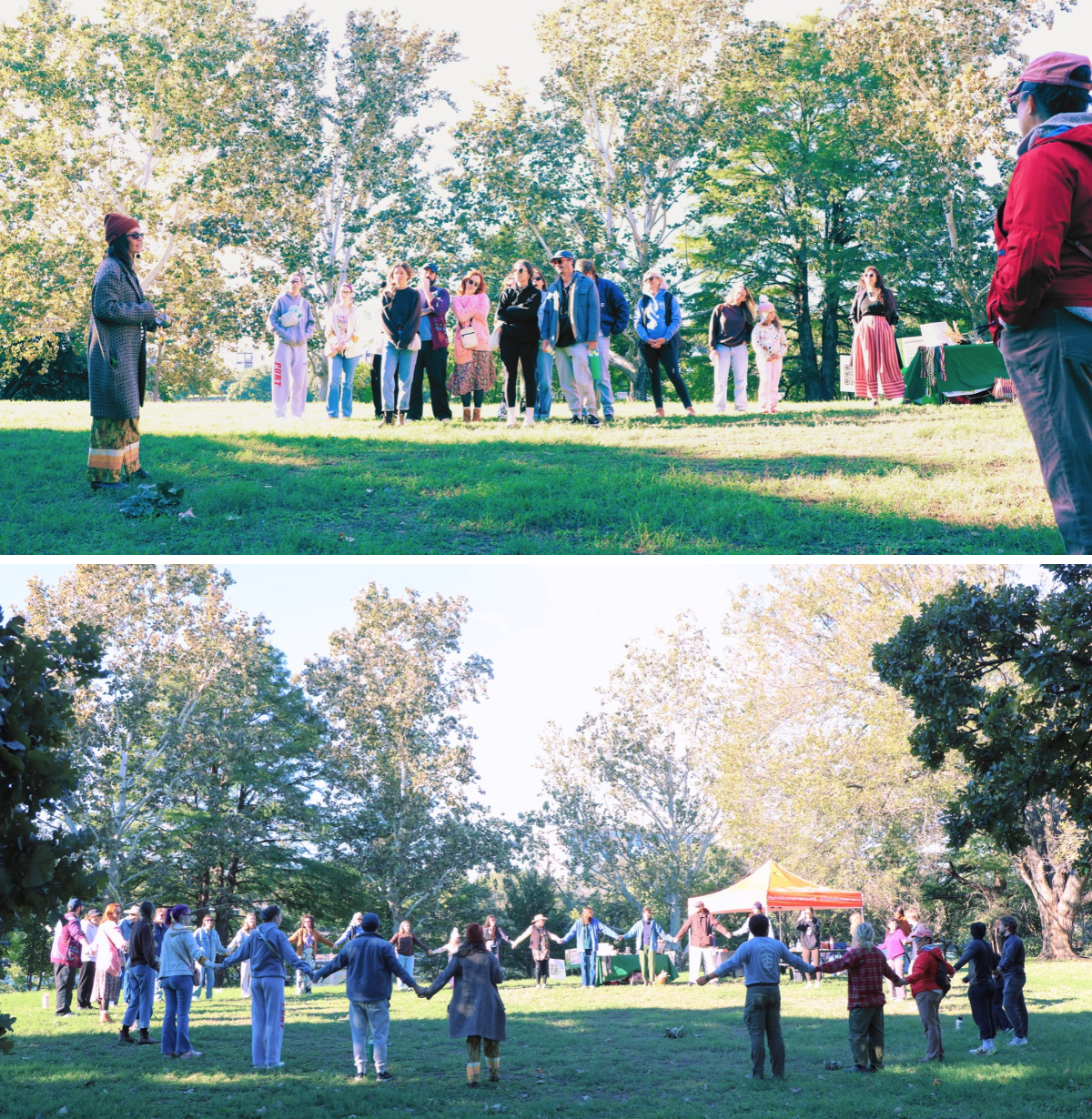
With support from the UT Scholars Lab and the City of Austin, I also created a guided StoryMap tour of native and noteworthy trees on the Butler Hike-and-Bike Trail surrounding Lady Bird Lake. This tour combines biological, ethnobotanical, and creative research to connect visitors with plants by exploring how Indigenous peoples interact with local trees and rely on their relationships with the land for food, medicine, livelihood, social life, and more. To celebrate the tour's publication, I collaborated with The Trail Conservancy, Austin Climate Action and Resilience, and the CTCT to host a guided walk exploring a portion of the Butler Trail during this year’s Roots & Wings Festival. At the event, folks danced, learned more about noteworthy species near the Festival Beach Food Forest, heard a few Cherokee stories, and left with custom Tree Identification Zines I designed for the project. It’s been rewarding to experience so much dialogue and to steward these relationships and knowledges with as much reciprocity as I can.
What’s been the toughest part?
Acclimatizing to unknown or novel terrain is always difficult, for Cherokees and for the heirloom plants we are trying to grow. It’s been difficult to grow gardens and community from scratch, especially when it feels like the topsoil and infrastructure aren’t necessarily sustaining those practices. Our communities, both in Texas and the broader Cherokee Nation, are vital in bolstering and preserving both my work and the CTCT’s.
Texas is 96% private land, and many folks don’t have access to gardens, let alone the resources it takes to maintain them. Community gardens and partnerships, like those between CTCT and PEAS, a local school garden program, ensure people have access to the land and relationships I believe are necessary for creating livable futures. Working together allows us to feed people, feed land, and feed our collective imaginations about what those futures might look like.
Can you tell us more about the values of the Cherokee Nation and how they show up in your current conservation work?
As Cherokee ethnobotanist Dr. Clint Carroll asserts, the Cherokee language is always an action-based way of describing relationships. Our values are instructional, providing the guidance and descriptions needed to live well. When I think of ᎤᎵᏍᎨᏗ ᏕᏣᏓᏰᎸᏎᏍᏗ (ulisgedi detsadayelvsesdi), I am reminded of the instruction to honor the life that exists in all things past, present, and future.
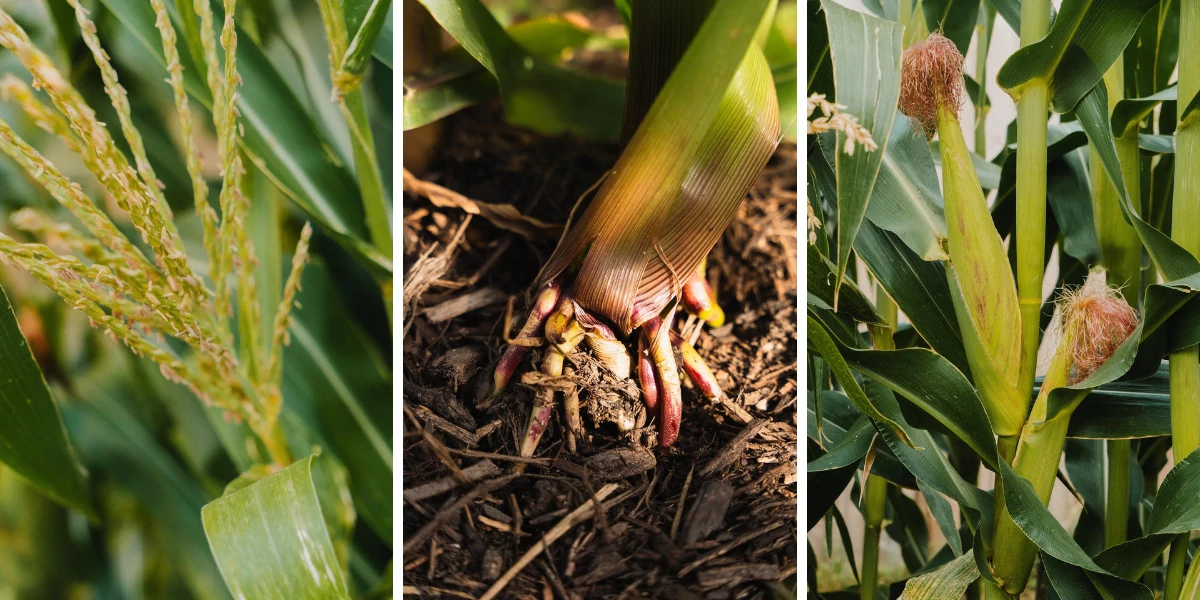
For instance, this Cherokee value structures my approach to heirloom Three Sisters gardening and seedbanking. In the community gardens and backyards I work with throughout Central Texas, cultivation begins not with the seeds, but with the soil. Approaching the soil as a living thing that needs food, water, care, and occasional shelter requires us to situate our practices and understand exactly what nutrients are present and necessary to sustain growth. We’ll begin harvesting rainwater, testing the chemical makeup of our garden, and introducing necessary organic amendments and cover crops the season before we intend to plant to ensure vital nutrients like nitrogen are present for planting.
I grow Cherokee heirloom seeds alongside Texas native species and other culturally significant foodstuff in my backyard, and use the garden's seeds and fruits to support community seed banking and food access initiatives throughout the area. I host craft, plant identification, and photography workshops to explore our relationships with place and ecology, and try to approach every project and interaction as a student and a servant.
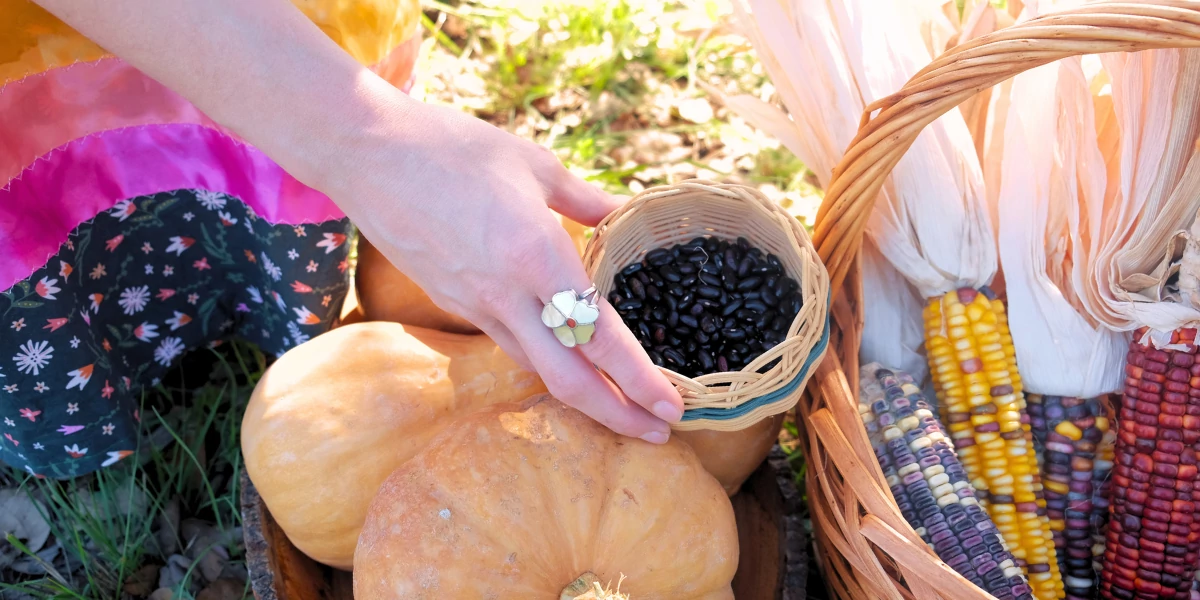
Cherokee community values remind me that there is always something to learn, and always a way to show care and honor connection. They remind me that community responsibility and action are always more powerful than the individual, and that our nonhuman kin are inherently part of this community in the past, present, and future.
November is Native American Heritage Month. Are there ways that you would encourage fellow Central Texans to get involved and learn more about local Indigenous cultures and history?
Another Cherokee community value is ᏕᏣᏓᏩᏛᎯᏙᎮᏍᏗ (datsadawatvhidohesdi) — visit one another with love; locate and find one another. There are many ways to steward this instruction and responsibility to connect. I want to mention the City of Austin’s Native American and Indigenous Quality of Life Commission. Established in May 2026, the board serves as an advisory body to the City Council on issues of concern to Austin's Native American and Indigenous community, including cultural preservation, economic development, education, health, and wellness.
Connecting with your district’s Commissioner is a great place to start. I am the District 5 Commissioner, and I encourage folks to reach out to their district representatives and connect with local community initiatives supporting Indigenous lifeways. Austin is the traditional homelands of the Tonkawa, Jumano, Lipan Apache, Coahuiltecan, and Comanche, and it’s important to learn more about their histories, ancestral relationships with the land, and their living cultures today.
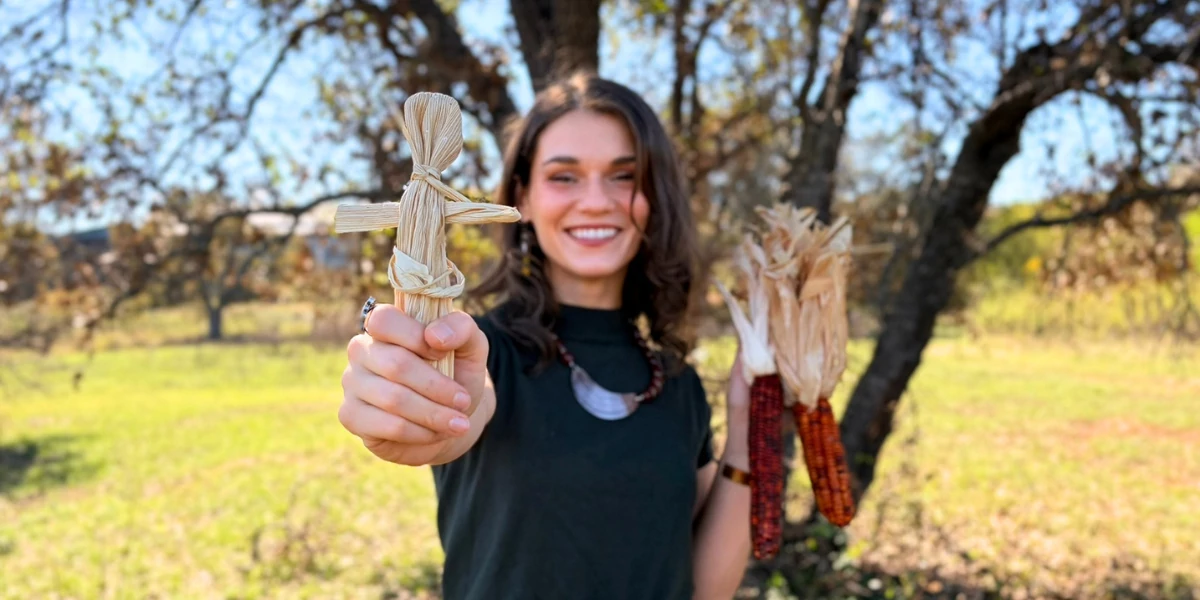
Locally, you can help with one of the Central Texas Cherokee Township’s community gardens, attend a craft workshop at the Native American Cultural Center, or visit the Austin Powwow — hosted every year on the Saturday before Thanksgiving. Public resources like the Austin History Center, the Lady Bird Johnson Wildflower Center, and Austin Climate Action and Resilience’s Think Tree Tours are also great places to start!
Is there a book, documentary, or other piece of media you would recommend for folks wanting to learn more about these topics?
So many! Of course, there’s Braiding Sweetgrass by Robin Wall Kimmerer. Cherokee Earth Dwellers by Christopher B. Teuton and Hastings Shade also holds a lot of Indigenous wisdom. While not Native American-focused, I also highly recommend The Mushroom at the End of the World by Anna Tsing.
For a podcast, I enjoy A Talk on the Wild Side by the Caesar Kleberg Wildlife Research Institute at Texas A&M Kingsville.
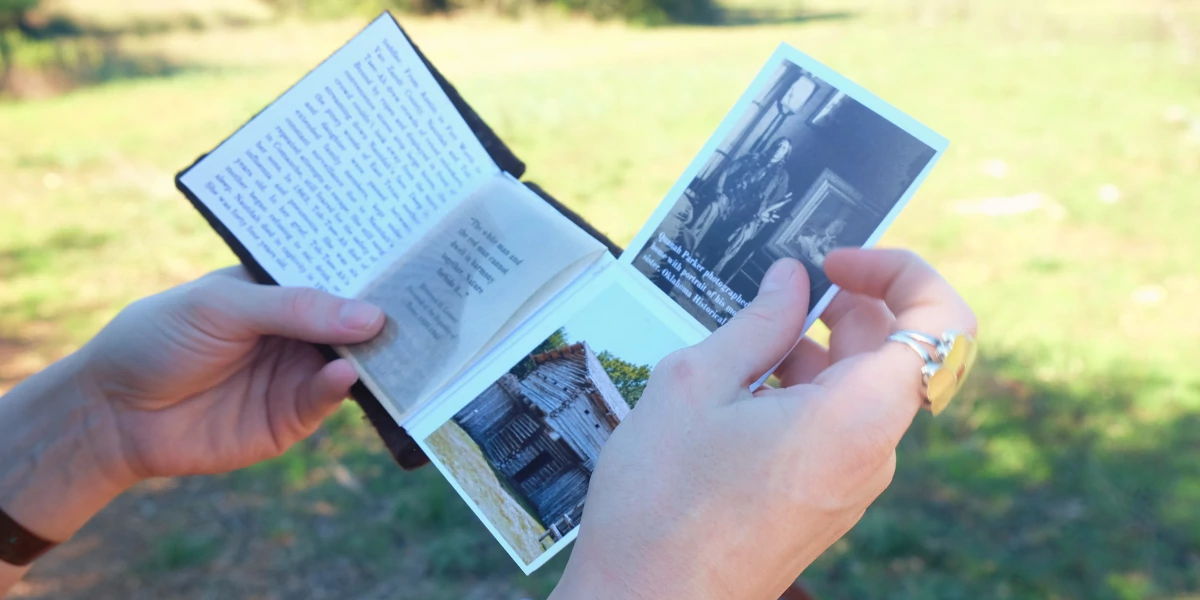
Locally, I also want to recommend Austin Zine Friends. Their work supports a variety of zines, many of which provide digestible information on climate, ecology, and the region's history. I’ve made zines on Three Sisters, fungus, tree identification, and more, and I'm always happy to share my work if you see me out and about, too!
What advice do you have for others?
Even if you’re not Cherokee or Native American, I think we should all try to embody the values of ᎤᎵᏍᎨᏗ ᏕᏣᏓᏰᎸᏎᏍᏗ and ᏕᏣᏓᏩᏛᎯᏙᎮᏍᏗ. Treat each other’s existence as sacred and important, and visit one another with love. Research whose ancestral lands you are residing on, connect with their living cultures, and practice rematriation wherever and whenever possible. Understand that plants, animals, and elemental forces have always been part of our communities and that it is our responsibility to care for them like they’re kin. Eat local, and grow your own food (with friends!) as often as you can. Ultimately, I think the goal is never to let hope for yourself and hope for the community starve.
Dive deeper
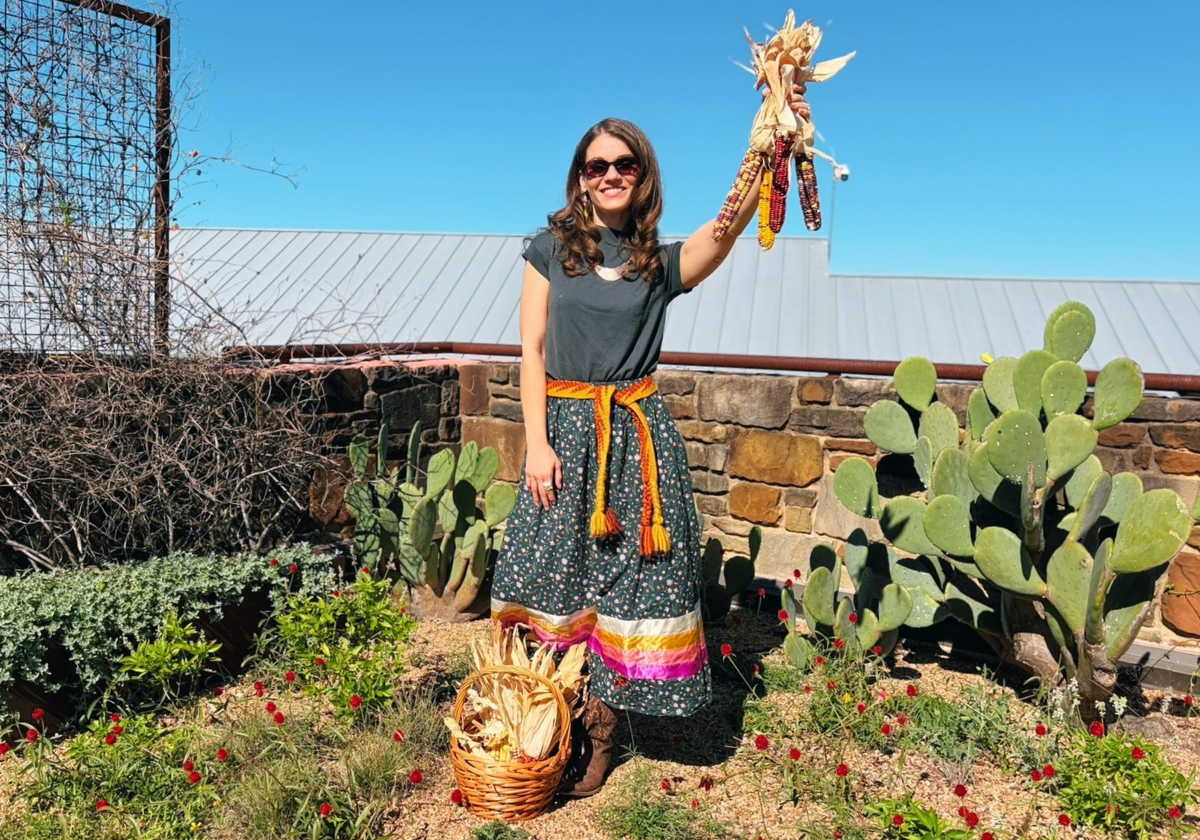
Looking for ways to celebrate Native American Heritage Month? You can find Rachel and the Central Texas Cherokee Township at the Austin Powwow on Saturday, November 21, 2026, or take the self-guided Ethnobotanical Tree Tour of Butler Trail anytime this month. To discover more ways to take action toward our community’s net-zero future, visit the Austin Climate Equity Plan.
Know a sustainability superstar?
Nominate them as a Net-Zero Hero by emailing Climate@AustinTexas.gov.