

January 8, 2026
Health Officials Urge Caution as Austin Undergoes Allergy and Flu Season

AUSTIN, Texas – Coughs and sneezes are taking over Austin as our community is in the midst of both Cedar allergies and the flu season. Health officials encourage the public to treat them both seriously and understand the subtle differences.
Knowing the difference between allergies and respiratory illnesses is important so that sick people don’t accidentally spread viruses to others who may be vulnerable to severe illness or hospitalization, such as infants, the elderly, or those who are immunocompromised or pregnant. When in doubt, remember:
- Get vaccinated.
- Stay home if you’re experiencing symptoms.
- Cover your coughs and sneezes.
- Wear a mask.
- See a doctor if symptoms persist.
“Post-holiday gatherings are when we see many people experiencing symptoms, including runny noses and coughs, which could come from allergens, the flu, COVID-19 and/or RSV. This is unfortunately peak allergy season as well,” said Austin-Travis County Health Authority Dr. Desmar Walkes. “Our recommendations for each are similar. If you’re feeling sick, stay home, wear a mask if you’re out of the house, wash your hands often, and speak with a doctor if the symptoms worsen. Timely treatment is important, and people should seek medical advice promptly. Allergies and viruses can both be treated by healthcare providers.”
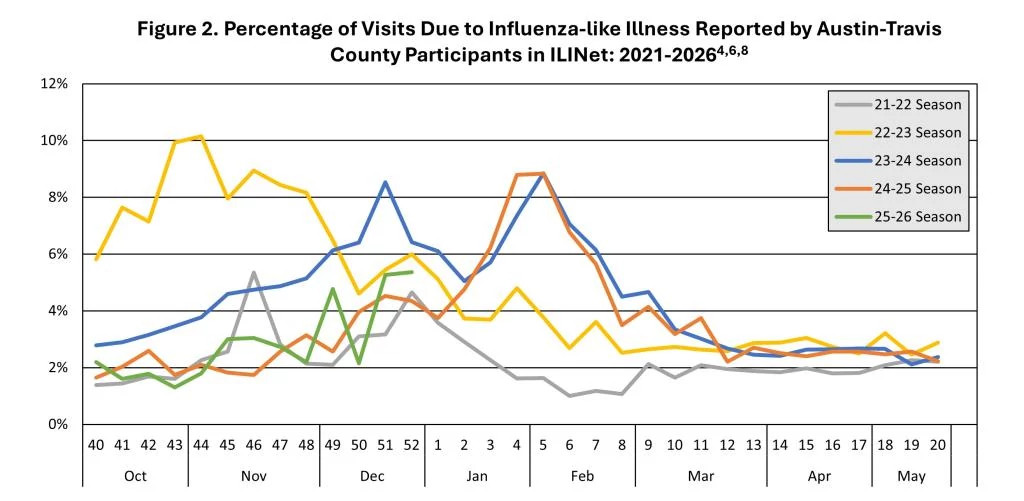
More people in Austin and Travis County are visiting clinics and hospitals with influenza-like illnesses. This trend aligns with data observed for the state of Texas and the United States as a whole.
Symptoms
Symptoms of allergies and respiratory viruses can be similar.
- Stuffy nose.
- Coughing or sore throat.
- Runny nose.
- Sneezing.
- Partial loss of smell or taste.
- Fatigue.
While allergies and respiratory viruses may share symptoms, there are subtle differences:
- Allergies do not cause fever, while respiratory viruses often do.
- Allergies typically cause itchy eyes, whereas respiratory viruses are less likely to do so.
- Allergy symptoms often improve with antihistamines, while RSV symptoms do not.
Treatment
If you experience symptoms for more than a few days or they worsen, contact your healthcare provider and schedule an appointment. Doctors will be able to determine the cause of your symptoms and prescribe the appropriate treatment.
Vaccinations
Vaccines for COVID-19, flu and RSV are available at pharmacies and doctors’ offices. Vaccines are also available at Austin Public Health’s Shots for Tots and Big Shots clinics.