

May 13, 2026
May 13, 2026
PARKners for the Planet: Pease Park Conservancy's Eco Stewardship

Welcome to PARKners for the Planet, a new blog series on Austin Parks and Recreation partners doing ecological restoration in our parks! We’ll spotlight some of the PARKners working to care for Austin’s green spaces. Want to get involved? Learn more about the Community PARKnerships Program and Parkland Stewardship.
On a cool and overcast Friday in March, Kingsbury Commons at Pease District Park is coming to life. A few kids clamber across the climbing structure on the playground. Parents with strollers settle in at one end of a long stone picnic table. A passing jogger heads east to the footbridge over Shoal Creek.
About 300 yards northwest, a Texas Conservation Corps (TXCC) crew gears up and heads into the wilderness of the Windsor Hillside.
“Starting saw!” calls Topaz, and a chainsaw sputters on. Anisa watches nearby with a bottle of Garlon 3A, ready to paint each fresh stump with growth-inhibiting herbicide.
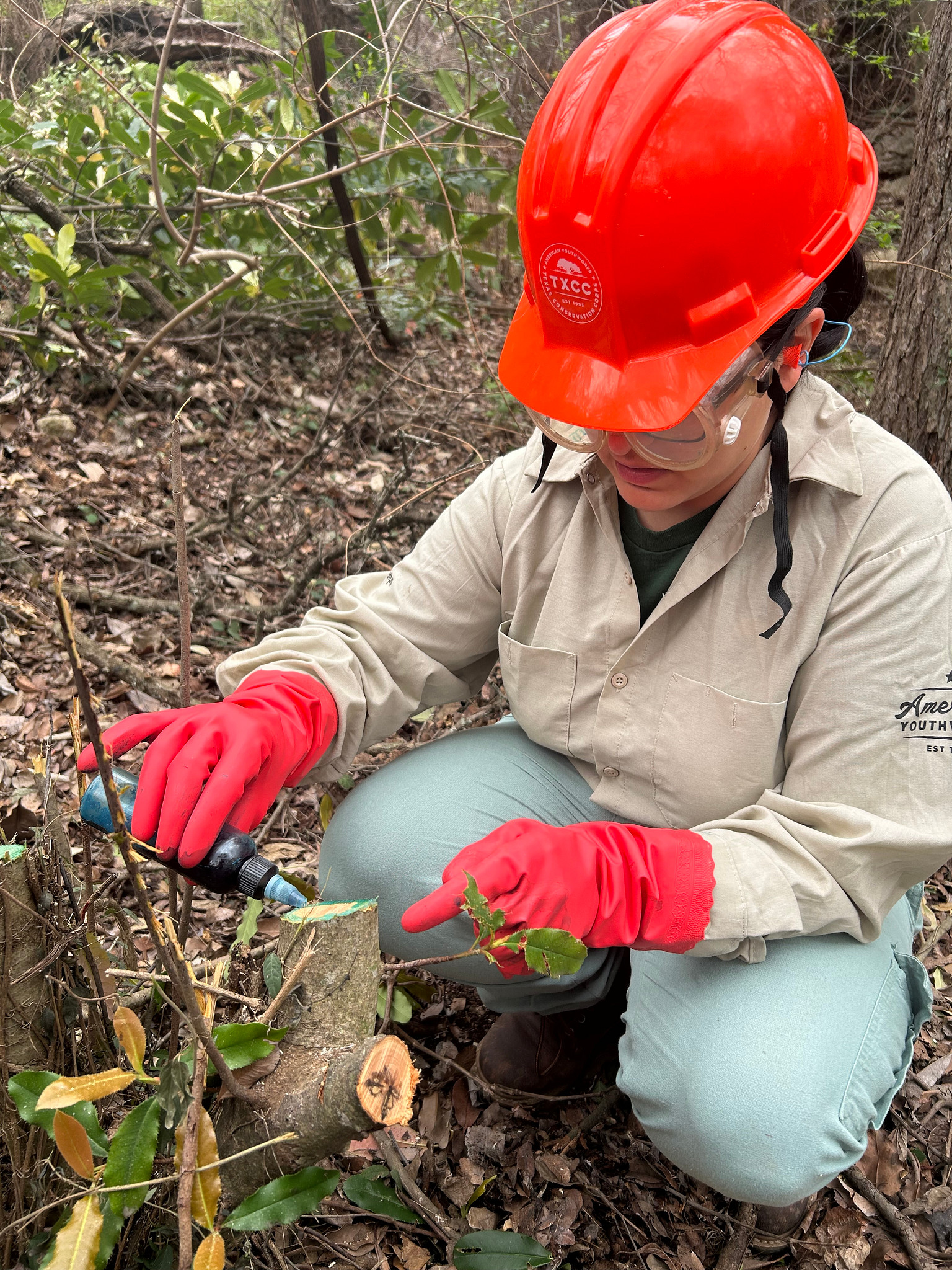
When Pease Park Conservancy (PPC) first proposed the ecological restoration of Windsor Hillside to the City of Austin in January 2023, more than 80% of plants in the 226,593 square foot area were invasive species like cat’s claw, chinaberry, Japanese ligustrum, and Chinese tallow. The slope also has a high risk of erosion with a steep average grade of 13.7%.
The vision is to keep Windsor Hillside natural but make it healthier and more biodiverse. “It’s going to be wild,” Bret says. “No beds, no borders or anything like that. It’s about removing invasives and planting natives.”
PPC took on the ecological restoration of this area of Pease Park knowing that it would take at least 5 years.
“We have to remove invasive species in phases,” explains Nate, a TXCC crew leader. He and his crewmate Moss are hauling yesterday’s cut brush up to the curb of Windsor Rd and stripping off the berries. Later, Bret will run the brush through a woodchipper and spread the mulch on the hillside. “Getting rid of everything all at once causes a shock to the ecosystem. In a way the space has acclimated to the invasives—the birds, animals, and soil are reliant on invasives. That’s why different crews are coming out and removing only a certain amount, spread out, so we’re not creating too much of a disturbance.”
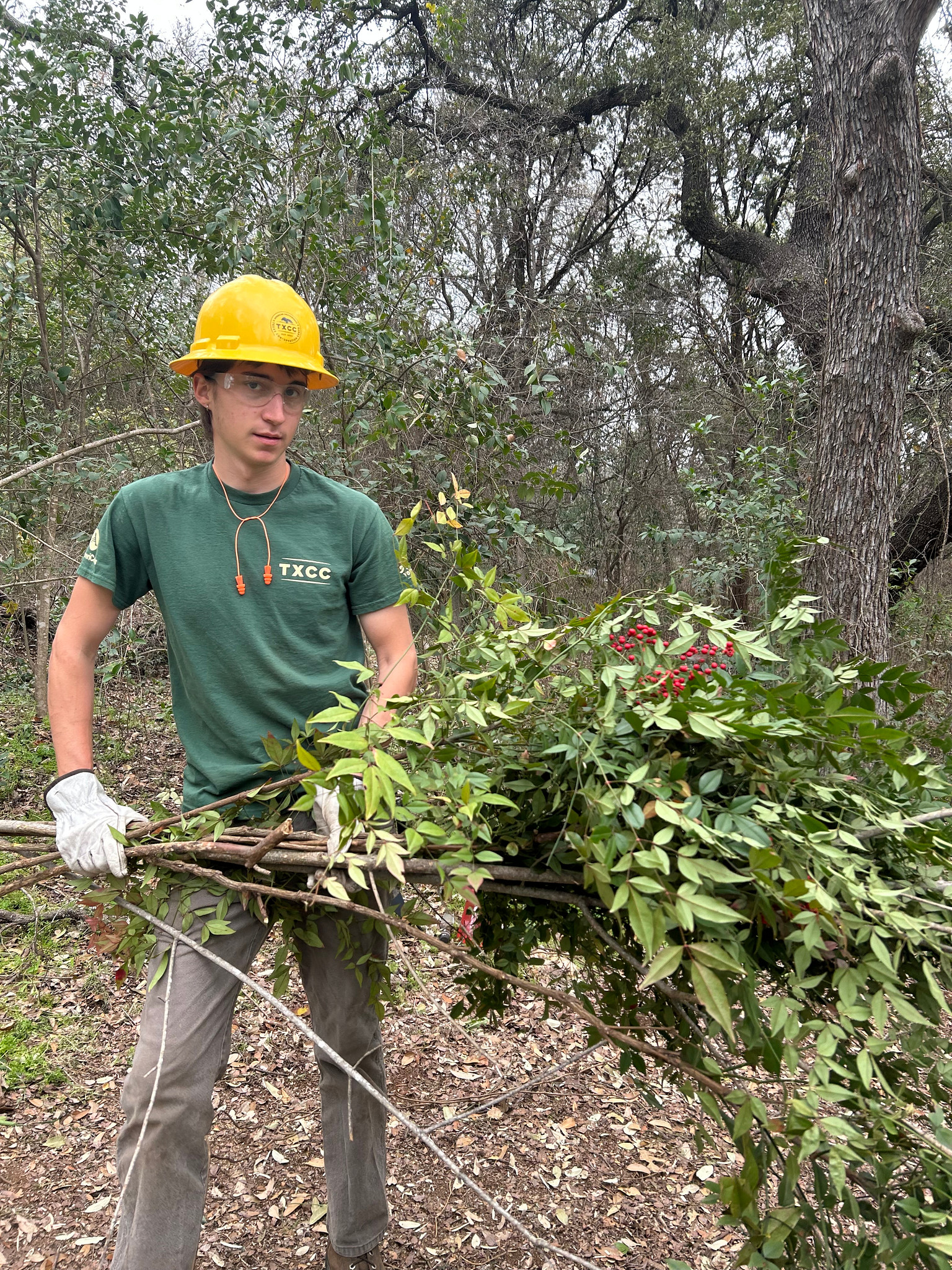
PPC has hired TXCC crews for invasive species management in from spring 2024 through fall 2026, working on projects like invasive removals detailed above as well as new plantings, seeding, and installing additional drip irrigation. Volunteers also plant native species seasonally and have added more than 200 understory plants and trees to the area. PPC staff manage a drip irrigation system and water by hand to give these plants the best chance for survival.
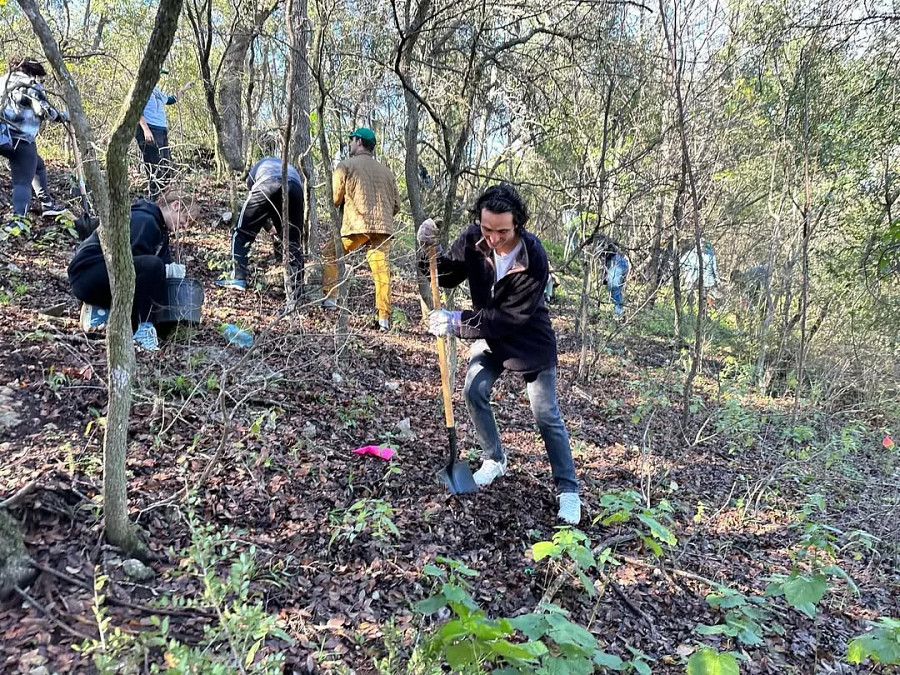
Volunteers plant saplings and spread seeds in Windsor Hillside. Removing invasive species and establishing new native plants gradually transforms the area without destabilizing the steep hill. Photos courtesy of Pease Park Conservancy.
“We go with native species that would do well here with the rocky soil,” says Park Operations Director Bret. As he crosses the southern end of Windsor Hillside, he points out new understory greenery and mulch-ringed saplings: pigeonberry, white mistflower, oaks, cedar elms, youpon holly, and Eve’s necklace. He pauses to admire a roughleaf dogwood: “That’s doing really well.”
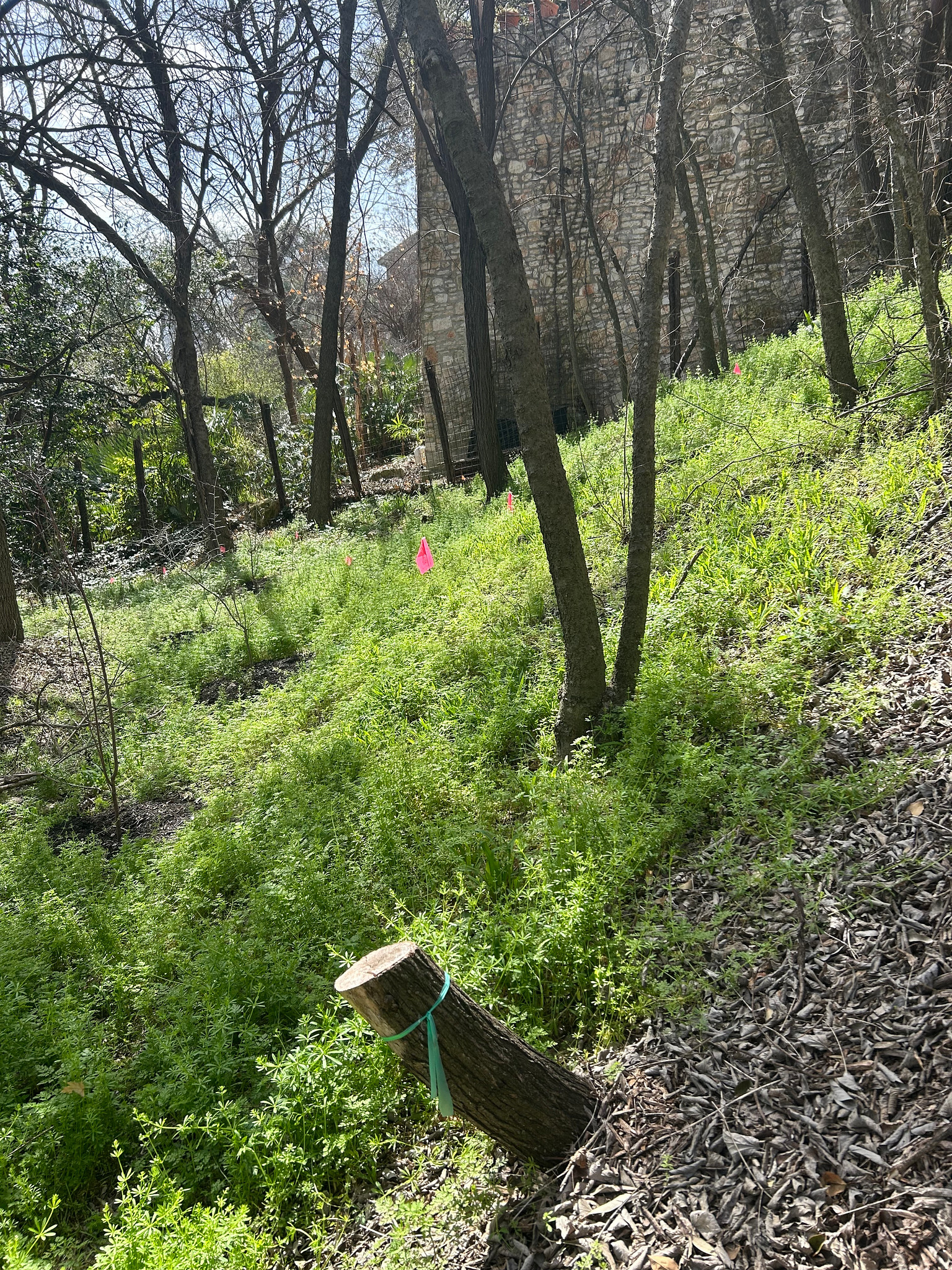
City of Austin funding ecological restoration of public land is limited. Partners like PPC extend the City’s capacity for this important work.
“The removal of invasive species supports native plant communities and the health of those communities,” says Leslie Lilly, Environmental Conservation Program Manager with Austin Watershed Protection. “It supports different ecological processes that include soil stabilization, wildfire habitat, soil health, driving diverse native plant communities. All of that in turn supports our native wildlife.”
Further, this work supports the goals in the Climate Equity Plan, specifically those listed in the Natural Systems section such as restoring city-owned natural areas, managing natural lands for resilience, expanding green workforce development programs, and increasing community tree planting. Learn more about the plan and implementation efforts here. Austin Parks and Recreation appreciates PPC’s invaluable ecological restoration of Pease Park. Learn more about this work and how to get involved on PPC’s website.