

Historic Designation
Historic preservation stewards important places, promotes awareness of diverse local heritage, and helps shape a more sustainable, equitable, and livable city. Historic designation can help further these goals. For more information on the benefits of designation, see the Why Designate section below.
Types of Historic Designation
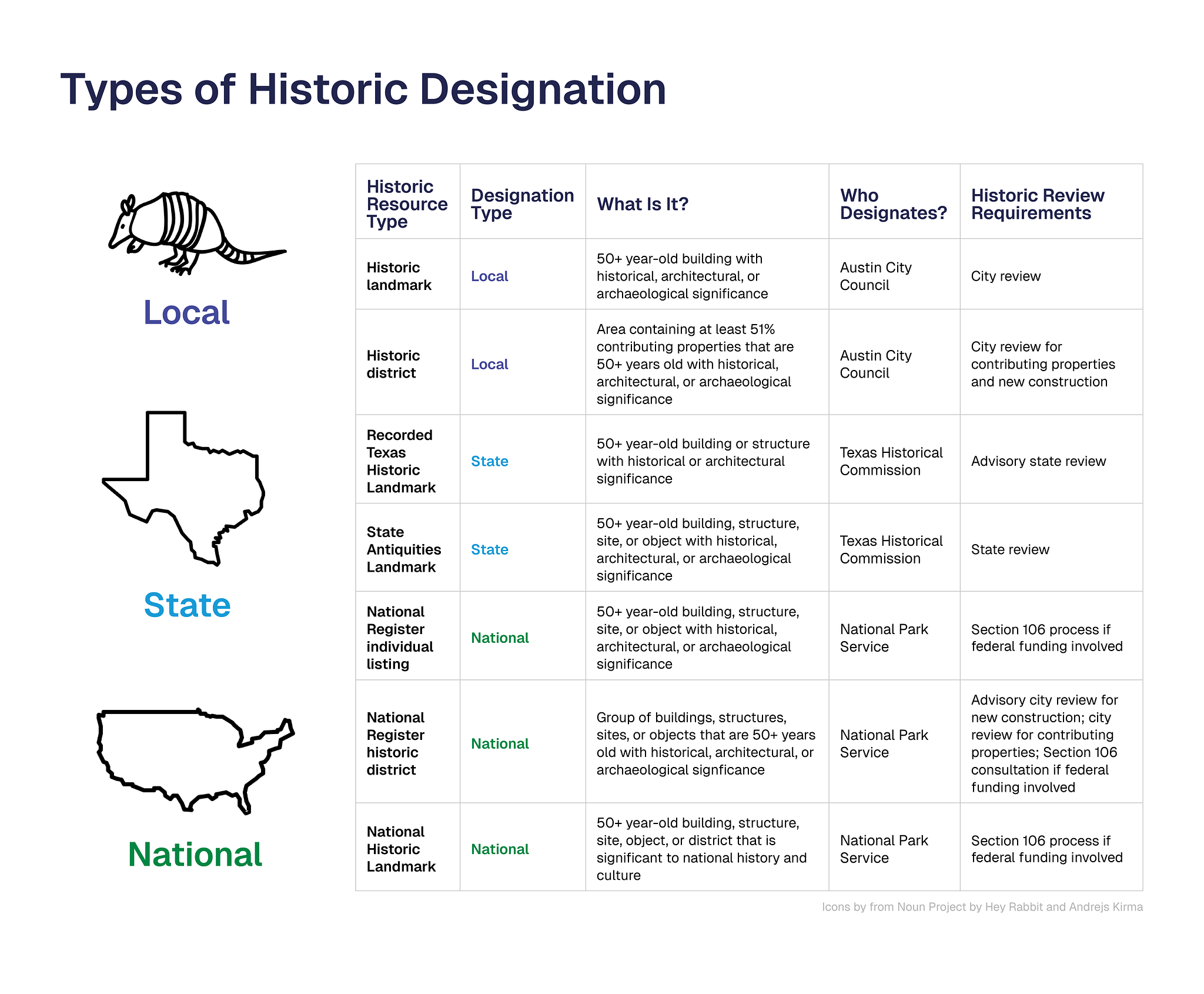
A place can be historically designated at the local, state, or national level. Local designation is the most effective way to protect significant buildings and neighborhoods. It must be approved by Austin City Council. See our historic designation types chart (view full size image here) and expand the accordion boxes below to learn more about the different categories of designation.
- Local Designation
Historic landmarks are individually significant for their history and architecture. To be eligible for landmark designation, a building must be at least 50 years old, retain historic integrity, and meet at least two of five criteria for significance. For more information, visit the Historic Landmarks page.
Local historic districts recognize and protect distinctive older neighborhoods. To be eligible for local district designation, an area must not have been substantially changed since most buildings were constructed and have support from a majority of property owners or land area owners. For more information, visit the Historic Districts page.
- State Designation
At the state level, properties can be designated as Recorded Texas Historic Landmarks (RTHLs), State Antiquities Landmarks (SALs), and Historic Texas Cemeteries. Visit the Texas Historical Commission’s Texas Historic Sites Atlas Map for more information.
- National Designation
Properties can be listed in the National Register of Historic Places for local, state, or national significance. Properties can be individually listed or listed as part of a district. Visit the National Park Service for more information.
In Austin, properties in 18 National Register historic districts are subject to advisory historic review. The Historic Properties Viewer shows National Register historic districts, and the Texas Historic Sites Atlas Map includes all properties listed in the National Register.
Why Designate?
Historic designation helps preserve historically significant places for Austinites today and into the future. Historic places foster a sense of community, help us connect with history, and root Austin’s cultural heritage and identity. Local designation offers the strongest protection by requiring approval of exterior changes. Incentives are available for designation and stewardship of historic places.