

Only Flush Toilet Paper
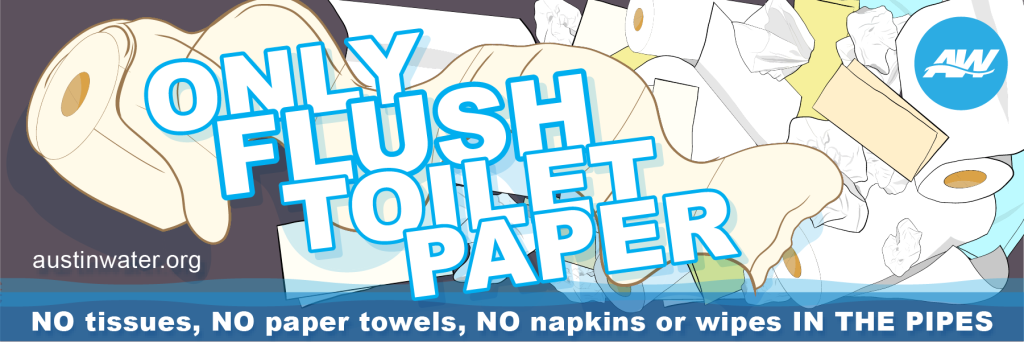
Flushing anything other than human waste and toilet paper can result in sewage back-ups, expensive damages to your home plumbing system, and cause problems to the sewer and water treatment system. That's why it's important to treat toilets properly, and flush only your personal contributions to the water treatment plant.
- What Can I Flush?
It's simple - only flush the '3 Ps': Pee, Poop & Toilet Paper.
Toilet paper is the only paper product engineered to be compatible with the sanitary sewer system. Flushing anything other than human waste and toilet paper can result in sewage back-ups, expensive damages to your home plumbing system, and cause problems to the sewer and water treatment system.
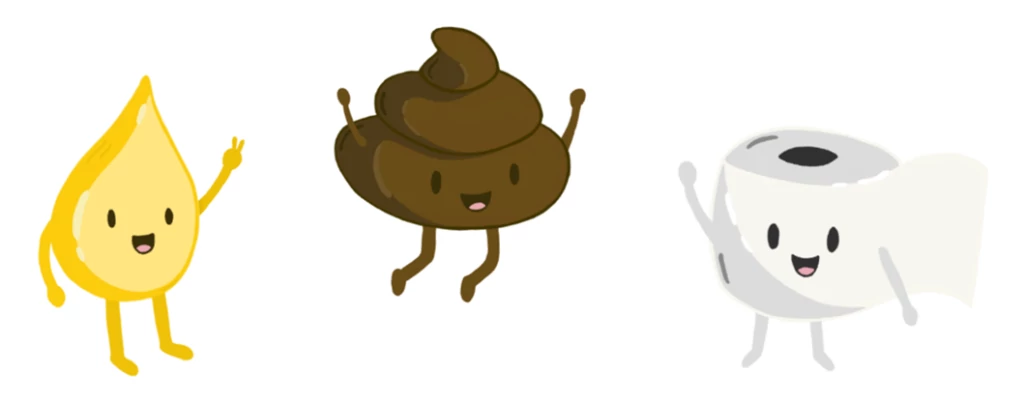
- What Should I Not Flush?
Never flush anything other than human waste and toilet paper. The following are examples of items that, when flushed, can clog your toilet, cause significant damage to pipes, create sanitary sewer overflows and impede wastewater treatment equipment. Please dispose of these items, even those labeled “Flushable”, in the trash can.
- Disposable Wipes (even if marked “Flushable”)
- Wipes are typically made with synthetic materials, plastics or polyester, that won't break down or take a significant amount of time to do so.
- Feminine Hygiene Products
- Feminine hygiene products are designed to absorb liquid and, items like tampons, can increase in size as water is absorbed. In addition, these items often include materials that are non-degradable.
- Paper Towels
- Paper towels are typically made from wood pulp, which is much denser and stronger than the fibers used to make toilet paper. They are designed to be absorbent and strong, even when wet, and do not breakdown quickly.
- Dental Floss
- Dental floss does not break down in water and though it is small by itself, it can tangle with other items to create a big clog.
- Cotton Face Pads, Cotton Balls or Ear Swabs
- Cotton face pads, cotton balls or ear swabs can grow as they absorb water and can clump together in pipes.
- Condoms
- Condoms are not designed to break down in water.
- Diapers
- Diapers are made of super-absorbent materials designed to wick away moisture. These absorbent materials also expand when they get wet, which means diapers can swell in size once flushed.
- Cooking Grease & Food Scraps
- Cooking grease, fat, oil and food particles can stick to the insides of pipes and harden like cement. For more information, see how you can "Stop the Grease Blob".
- Medication (Pills or Liquid)
- Medicines, whether prescription or over the counter, flushed or poured down the drain can end up contaminating the water supply and can negatively affect fish and other aquatic wildlife.
- Dead Fish
- Dead fish may carry diseases or parasites that could contaminate the water supply.
- Cat Litter
- Cat litter can stay in your pipes as most toilets don't use enough water to move the litter along properly.
Remember, just because something can be flushed, doesn’t mean it should be flushed.
- Disposable Wipes (even if marked “Flushable”)
- Austin Area Clog Examples
The below are Austin-area examples of items that have been flushed causing clogs that required extra time and equipment to clear or untangle. These issues can be prevented by only flushing the '3 Ps': Pee, Poop & Toilet Paper. Everything ese should be disposed of in a trash can.
Bee Caves/Thousand Oaks Lift Station: This piece of equipment usually takes a technician about 15 minutes to service the unit. But due to the size of this clog and the entanglements, it took four (4) technicians, a truck and a crane working throughout the entire day to extract the tangled mess of rags, wipes, and other non-flushable items.
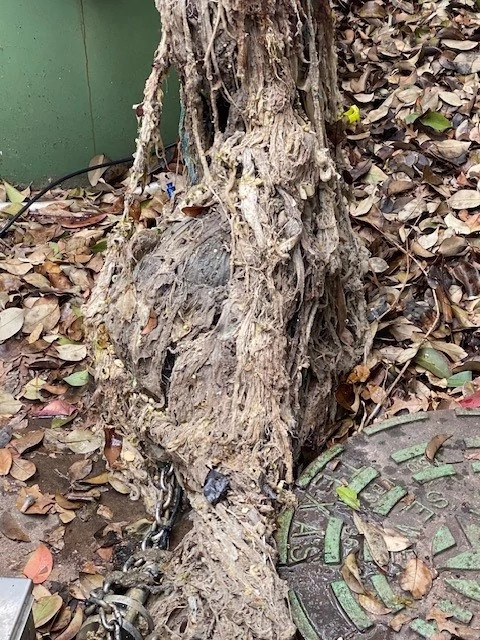
Austin Water pump located at Pearce and Ross Road:
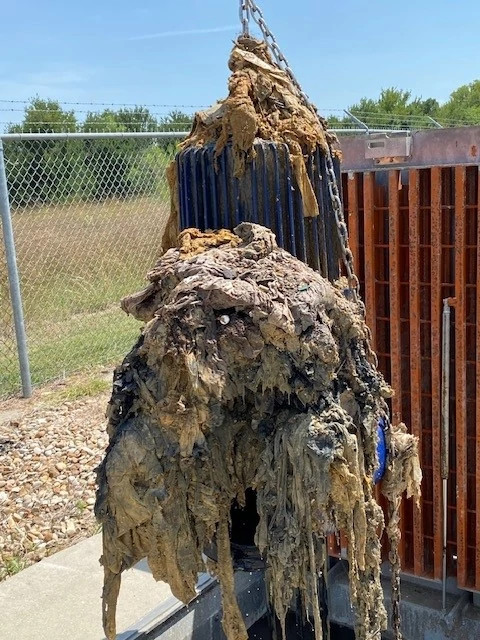
Dessau Lane/Howard Road Sewer Screen: The station required an emergency cleaning as it was clogged with so many wet wipes, diapers, napkins, & other non-flushable items plus grit in the bottom that the pumps were having difficulty keeping up. Because the rags were wrapped around the lifting chains, which helps Austin Water personnel extract the equipment (this piece of equipment is 45ft deep), it became a very involved process requiring more personnel to pull the pump up out of the shaft, untangle and clean the pumps before putting them back into service.
.jpg)
Sanitary Sewer Overflow Near W. Slaughter Lane/Menchaca Road: This overflow was attributed to a grease blockage; however, during the clean-up process, a number of paper towels, wipes, and other items that shouldn’t be flushed were also found.
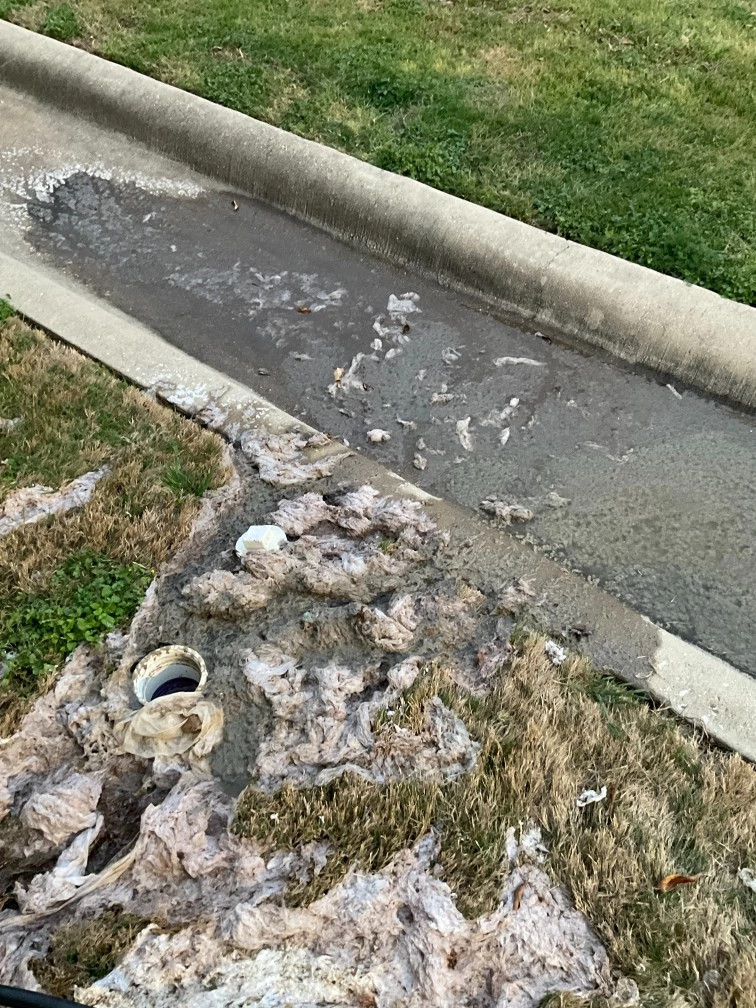
Dessau Wastewater Treatment Plant (WWTP): Large amount of accumulated grit, flushable wipes, and rags in a wastewater treatment basin. The grit is comprised of sand, gravel, plastic, and other inorganic material flushed into the wastewater system. The weight of the flushable wipes has caused some of the City's aeration equipment to break.

Dessau Wastewater Treatment Plant (WWTP): An Austin Water employee in a hazmat suit hand cleaning a wastewater treatment basin. The large blob consists of hardened fat, oil, grease (FOG), flushable wipes, plastic, and other inorganic material flushed into the wastewater system. This photo captures the challenges faced systemwide for FOG and flushable wipes.

- The Wipes Crisis
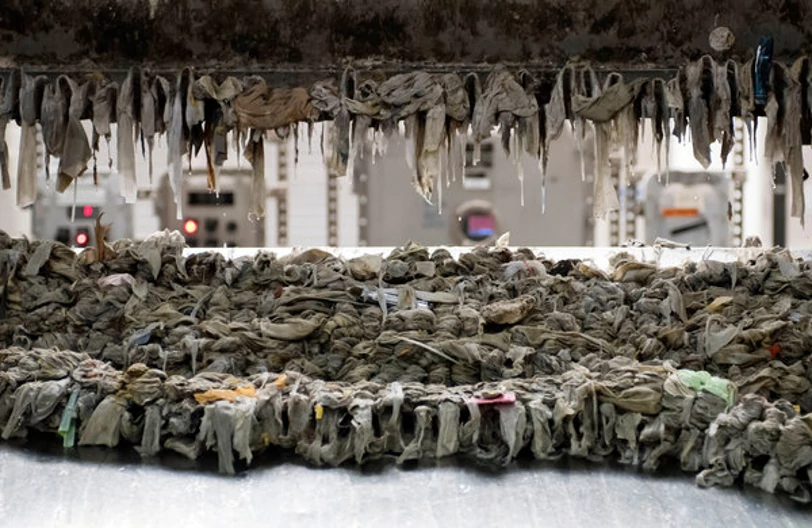
Wipes, paper towels, and other paper products do not break down like toilet paper and can get caught in sewer lift stations and in equipment at the wastewater treatment facility. These items can damage equipment and must be removed manually.
Wipes, including those marked flushable, present significant issues. According to a 2019 study conducted at Ryerson University in Toronto that examined 101 single-use wipes products –including 23 wipes products labeled as “flushable” by the manufacturer - none of these productsfell apart or dispersed enough to safely pass through an average home’s plumbing system to the public sewer, and through the sewer system for 30 minutes, without “a risk of clogging or causing damage to infrastructure.”Also in 2019, the National Association of Clean Water Agencies (NACWA) conservatively estimated that wipes result in about $441 million a year in additional operating costs at United States clean water utilities, including over $25 million a year in Texas alone. These costs can be passed along to the consumer in the form of higher water bills.
Moreover, the North Texas Municipal Water District estimates that 5,000-8,000 pounds of wipes are flushed into their wastewater system annually. They estimate this adds an additional $70,000- $100,000 annually to maintain their service area.
As sales of wipes in the United States continues to grow - per a Research and Markets report released in 2022, the United States’ wipes market size was valued at $5.58 billion in 2021 and is expected to reach $8.03 billion by 2027 – Austin Water reminds you to put all wipes, paper towels, and other paper products in the trash. Remember, only flush the ‘3 Ps’ - pee, poop & toilet paper.
- At Home Experiment: Toilet Paper vs. Wipes
In this easy at-home experiment, you will see the speed with which common products break down and begin the process of decomposition. This will help you see why toilet paper is the only product that should be flushed down the toilet.
Materials
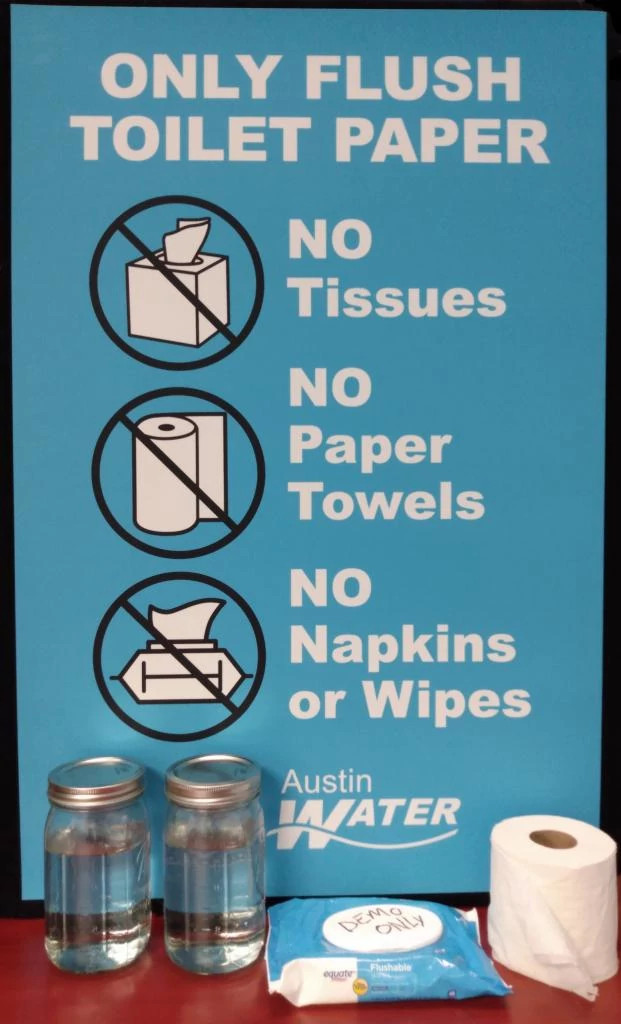
- Clear containers with a lid, such as Mason jars.
- You will need one jar for each material you want to test.
- If your jar does not have a lid, a stir
stick can be used instead.
- Testing Materials (Be sure to use toilet paper and at least one other material, but test as many materials as you would like!)
- various brands of toilet paper
- flushable wipes
- non-flushable baby wipes
- non-flushable cleaning wipes
- facial tissue
- paper towels
- cotton balls
- Optional- Tape and pen to label the jars
Procedure
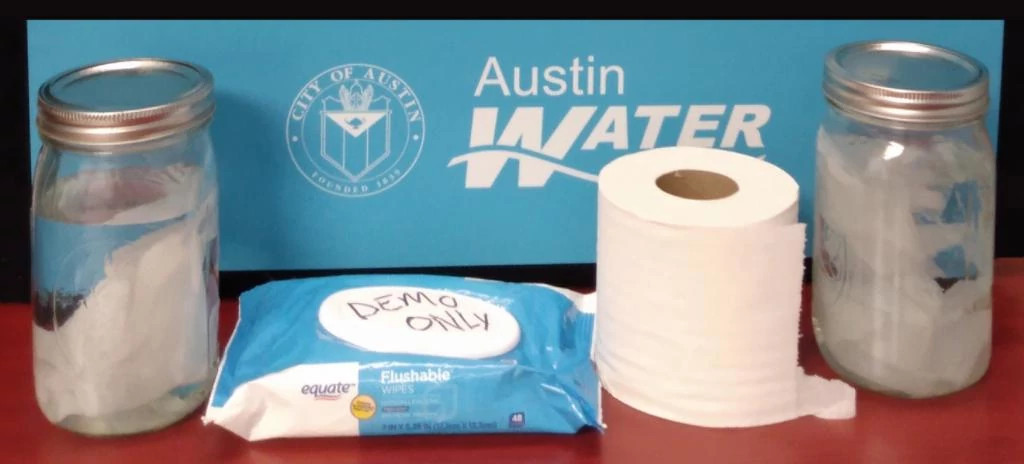
- Fill each jar with tap water and put in one piece of each testing material per jar. Be sure the lid is properly secured.
- Shake the jar for 15 seconds to agitate the contents (or stir for 15 seconds if your container does not have a lid), simulating a flush. Be sure to shake/stir each jar with roughly the same vigor and time.
- Observe and describe the changes in the materials and ask yourself:
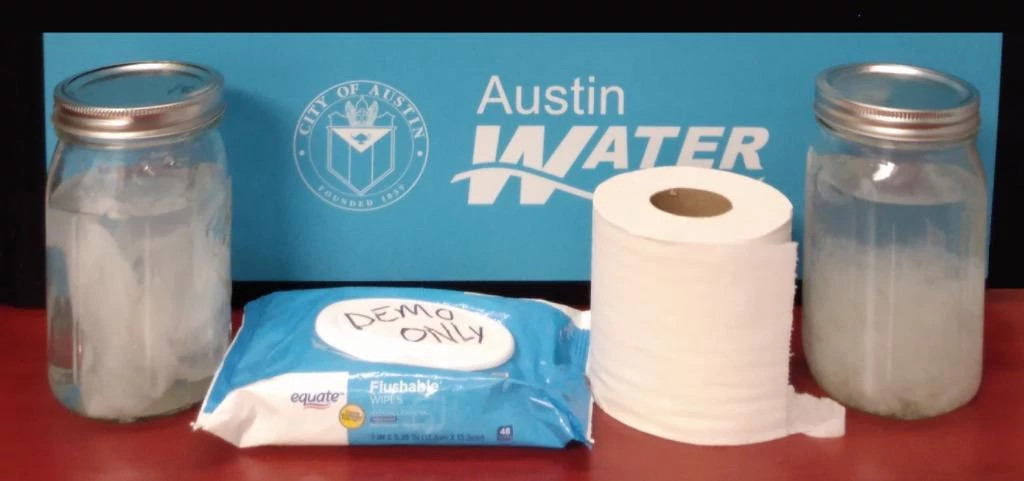
- a. Which testing material(s) comes apart most easily?
b. Which testing material(s) don’t come apart easily or at all?
- If desired, keep the testing materials in the jar over a longer period (even weeks) to observe the level decomposition.
When completed, be sure to dispose of the testing material other than the toilet paper in a waste basket (not a toilet).
- Clear containers with a lid, such as Mason jars.
- Pharmaceutical Disposal
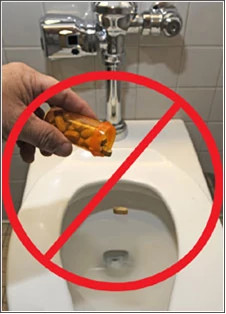
Medicine take back options are the best way to safely dispose of unused or expired prescription and nonprescription medicines. This is because pharmaceuticals flushed or poured down the drain can end up contaminating our waters as water treatment plants are unable to fully remove these compounds before they reach the environment. In addition to the environmental benefits, proper pharmaceutical disposal can also reduce addiction and stem overdose deaths.
Travis County Constable Precinct 5 has a permanent pharmaceutical disposal kiosk located in the lobby. Disposal of pharmaceuticals (pills or patches) at this site is both free and anonymous.
Location: 1003 Guadalupe St., Austin, TX 78701
Hours: Monday thru Friday 8:00 a.m. to 5:00 p.m. (short-term parking is available in the parking lot)
Other authorized disposal sites in the Austin area can be located using the Controlled Substance Public Disposal Location Search provided by the U.S. Department of Justice.
As an alternative to the more permanent disposal sites, twice a year, the U.S. Drug Enforcement Administration (DEA) hosts a National Prescription Drug Take Back Day. Since the start of the DEA Take Back Day Program (30 events), 1,598,159 pounds of drugs have been collected from the state of Texas alone! For more information, visit https://takebackday.dea.gov/.
For more information about proper pharmaceutical disposal, visit Austin Resource Recovery’s Drugs, Medicines and Pharmaceuticals Disposal webpage.
- Community Outreach Events
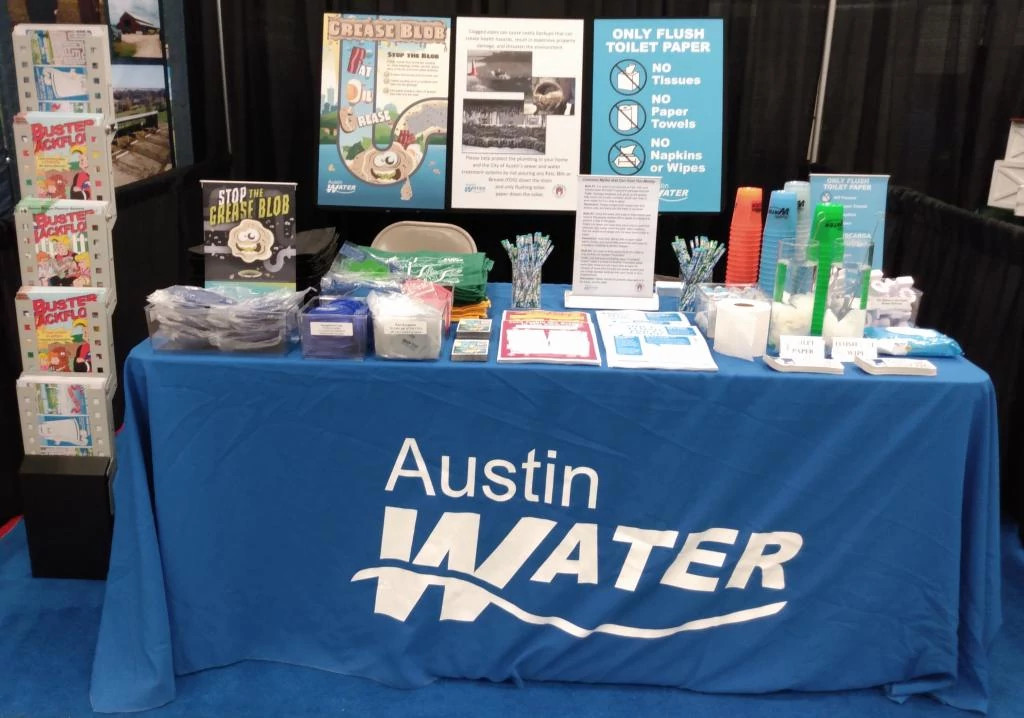
The Austin Water Utility Compliance Services Division (UCSD) regularly participates in community events to educate the public about how to “Stop the Grease Blob” and to “Only Flush Toilet Paper”.
At these events, the UCSD offers free items to help you dispose of fats, oils and grease (FOG) at your residence and free educational materials for children.
If you are interested in having the Austin Water UCSD participate at your event, please email event details to elizabeth.coy@austintexas.gov.
Note: A request does not guarantee availability.
Community Outreach Photos
Please view photos from past events in the Austin Water UCSD Community Outreach Flickr Collection.