

Carver Museum Exhibits
ON VIEW
Seeing Further | May 14, 2026 - October 10, 2026
The George Washington Carver Museum and Cultural Center is honored to present Seeing Further, a solo exhibition by Hakeem Adewumi.
In this semi-autobiographical exhibition, Adewumi brings together photography, sound, and found objects to explore layered expressions of Black memory, lineage, and liberation. This body of work encourages audiences to encounter fragments of ancestral life as they surface within the present as living, evolving forms. Seeing Further invites viewers into the personal histories, visual references, and lived experiences that have guided the artist toward a new and unfolding interpretation of Juneteenth.
The exhibition is on view from May 14, 2026 to October 10, 2026 during normal museum hours. Free and open to all.
And Still I Speak | February 7, 2026 - Ongoing
| The Carver unveils its 2026 Black History window installation, And Still I Speak, a collection of photographs from a century ago featuring unnamed figures from Austin's Clarksville, one of the country's first freedman's communities established west of the Mississippi River. |
CORE EXHIBIT
History, culture and art exhibits curated to educate and inspire. The Carver Museum has a core exhibit, two rotating art galleries, and four permanent exhibits honoring African-Americans in Austin and beyond.
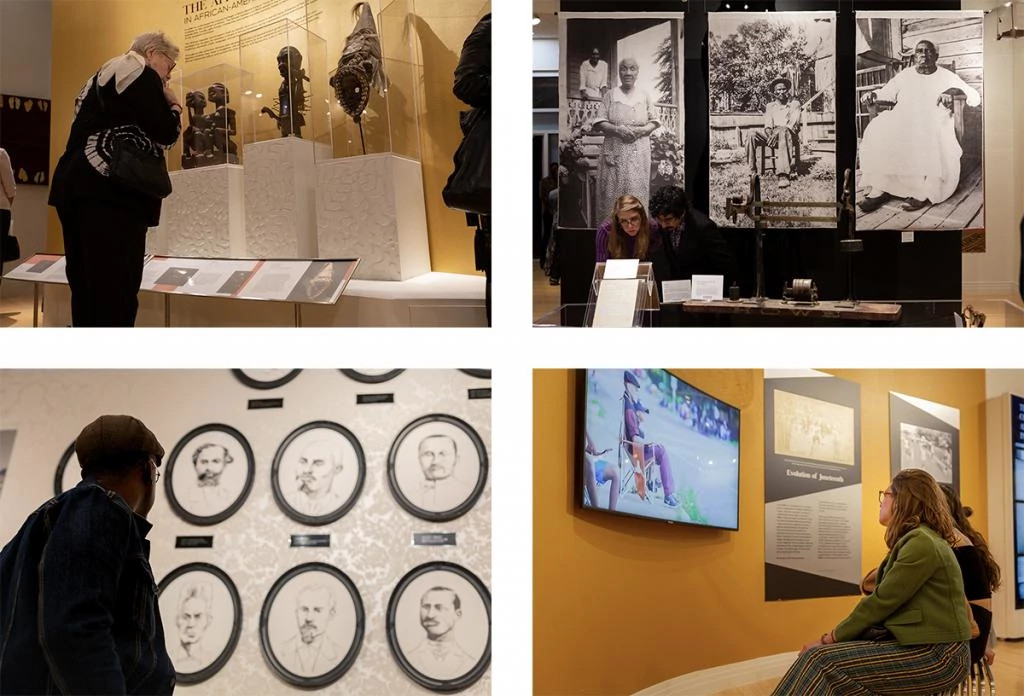
The African-American Presence in 19th Century Texas
The George Washington Carver Museum proudly presents its new core exhibit, The African American Presence in 19th Century Texas.
Presence succeeds the previous exhibit, Juneteenth: a Celebration of Freedom (installed in 2005), and highlights the transition from African civilizations, to bonded servitude, to a precious but ever so fragile freedom in the United States of America. Presence has five different sections: the African Impulse in African American Culture, Slavery in Texas, African Americans in Texas Politics, Freedmen’s Communities of Texas, and Juneteenth. The exhibit is a dynamic multi-sensory experience for visitors that is structured to grow over time in response to ongoing research. Presence was built to evolve, just as Africans Americans have for generations.
PERMANENT EXHIBITS
- Families Gallery
The Families kiosk exhibit highlights 10 Austin African-American families who have contributed greatly to the Central Texas landscape. From the area’s first black settlements to some of this generation’s strongest community leaders, this interactive gallery explores the history of Austin’s African-American community and allows guests to present their own family stories for all to see. This digitized exhibit is on view in the Carver Genealogy Center.
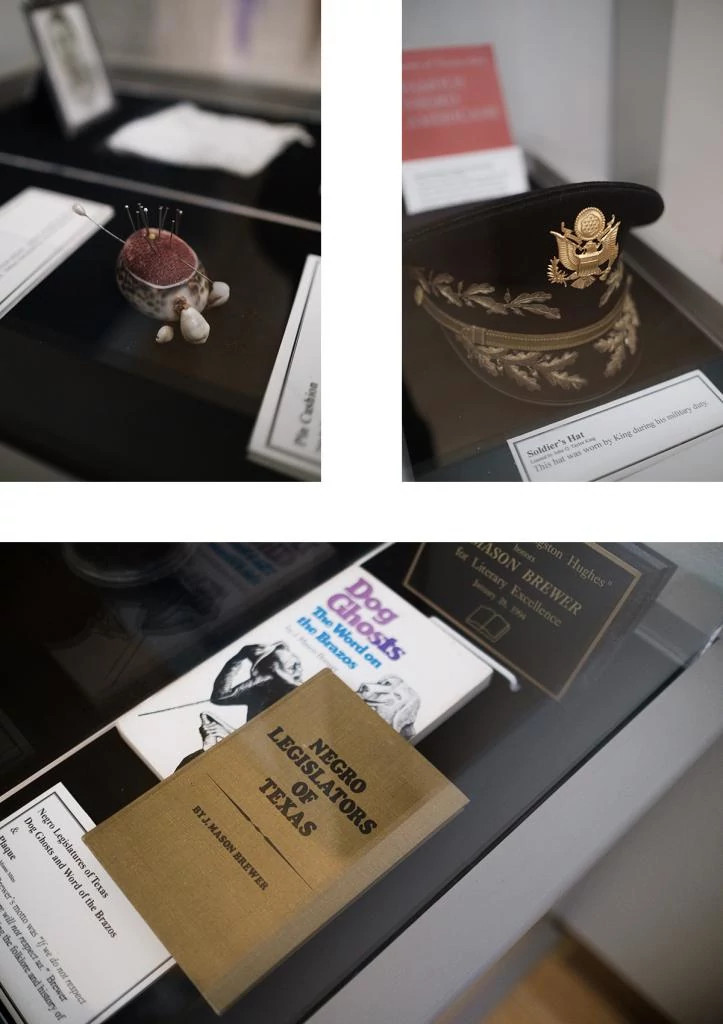
- L.C. Anderson High School Exhibit
This permanent exhibit spotlights the prestige and accomplishments of the L.C. Anderson High School body in sports, music, and academia through artifacts, oral histories, and yearbook imagery. For the better part of a century, this was the only high school in Austin where Black students could attend. Located in the eastern part of the city, Old L.C. Anderson High School and her alumnae shaped what is known today as the Black Cultural District of Austin Texas.
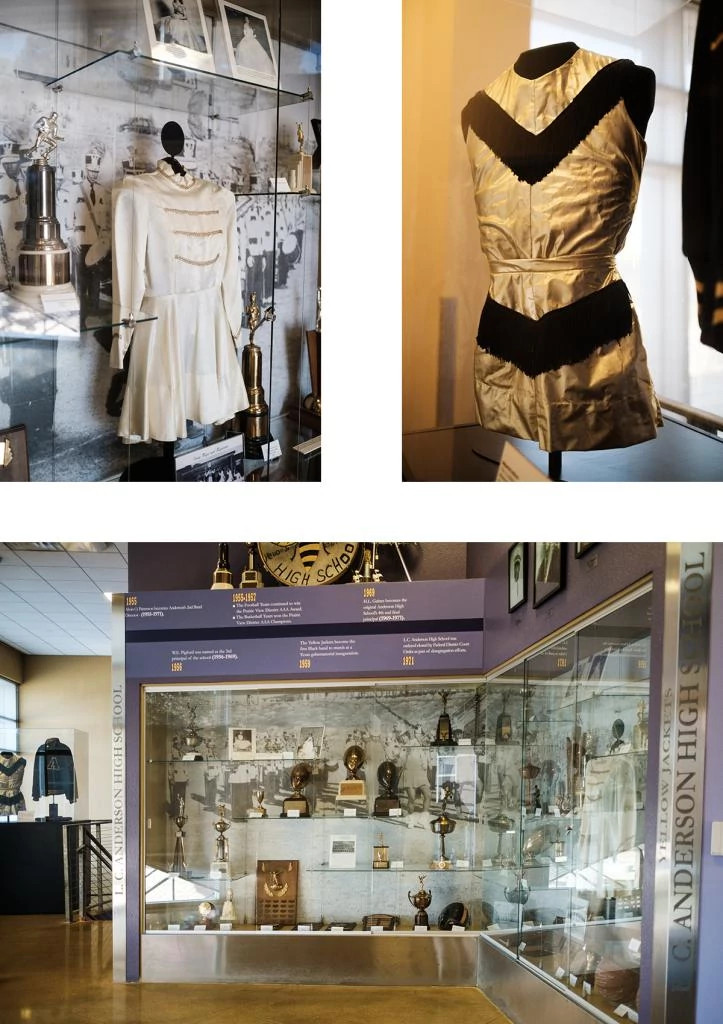
- Freedom Plaza
Freedom Plaza is home to the Juneteenth Memorial Sculpture Monument, which opened to the public on June 27, 2015. It is made up of five bronze figures that represent the story of Juneteenth and a paved timeline of the Black Presence in the Americas—from the Middle Passage to the Emancipation Proclamation that leads to the Bell of Freedom. The Juneteenth Sculptures were created by Eddie Dixon and Austin native, Adrienne Rison Isom.
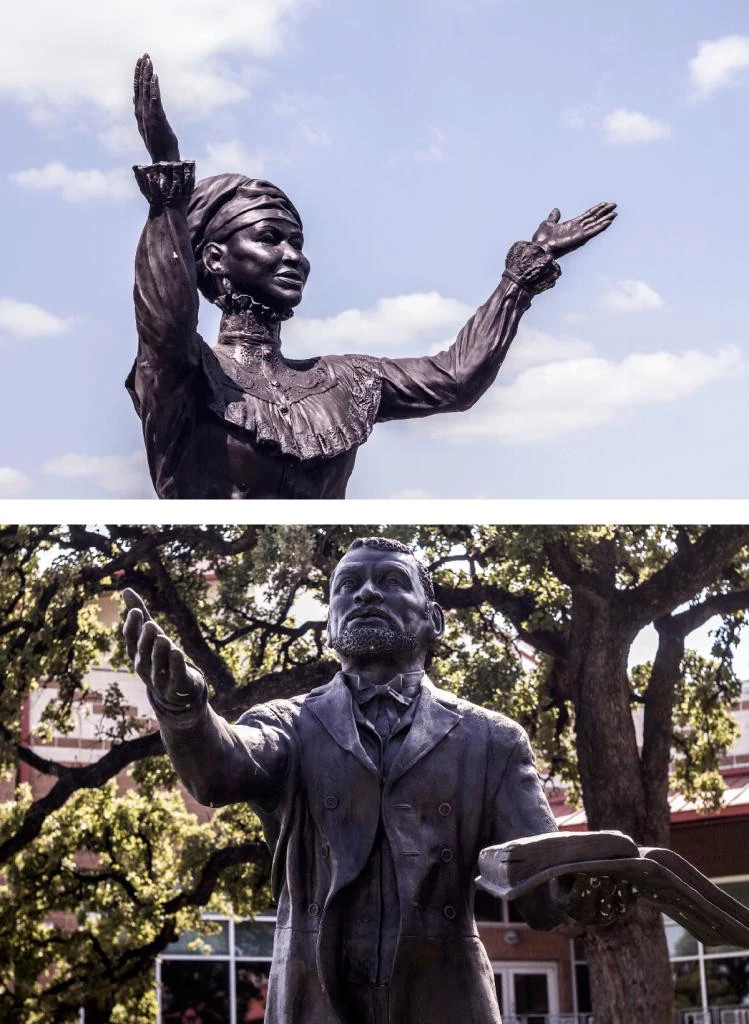
- Children's Gallery
The Children’s Gallery, entitled Let’s Pretend Dr. Carver!, is a hands-on look at famous African-American scientists and inventors. Children can learn about some of history’s most creative minds while seeing that they, too, can achieve great things when they put their own minds to work. We invite all visitors to become an inventor for a day!
PAST EXHIBITS
- Small Black Museum Residency Project Volume I
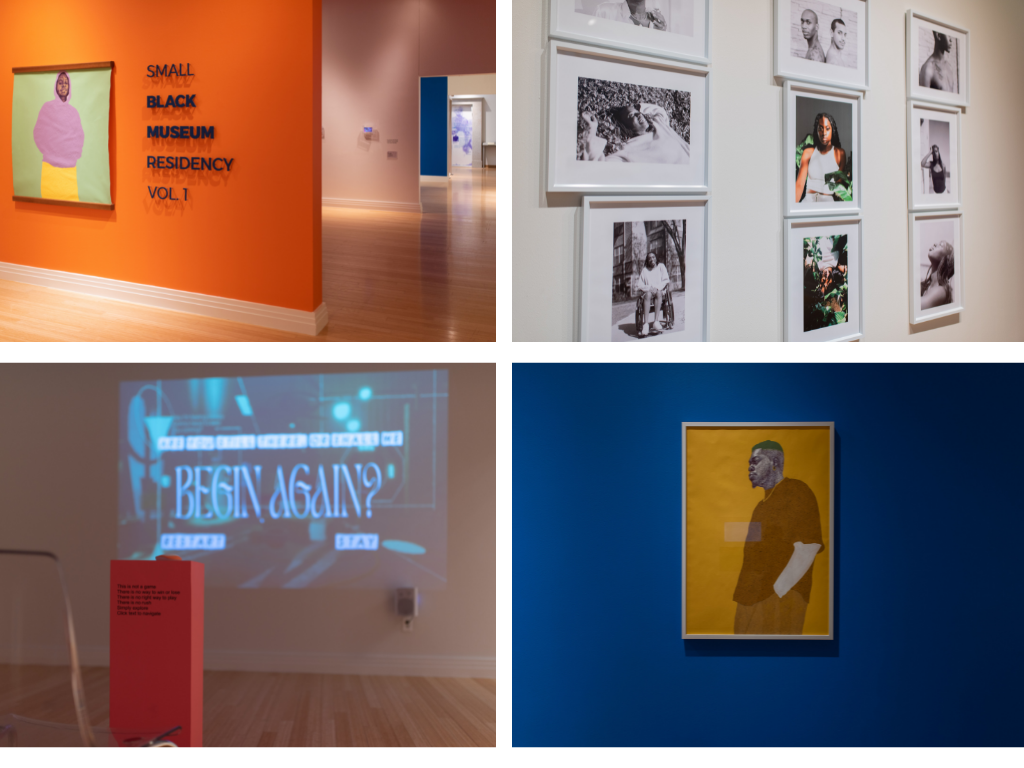
Featuring Temi Olujobi, Hypatia Sorunke, and Adrian Armstrong
2021 was the inaugural year of the Small Black Museum Residency Project. The mission of this residency program is to support and promote both established and emerging artists of African descent who are largely underrepresented in institutions. Often times, artists of color, in particular creatives of African descent, lack access to financial and institutional resources that would allow them to advance their professional careers. This program was created for artists who have a progressive approach to both content and form and whose work reflects shifting paradigms around race, identity, nation, and place. The Small Black Museum Residency Project benefits artists who have a steady studio practice and who are able to produce a new collection of work within the residency period. Artists who successfully complete the residency will be eligible to participate in a survey, group, or solo show. This exhibition is a culmination of the Museum's first artist residency. Learn more about the inaugural cohort below:
Temitope Olujobi: Nigerian-American Architect turned Game Designer originally from the suburbs of Baltimore, Maryland. They began their indulgence into all things 3D and digital art in the Second Life modification community making freakishly delightful virtual dwellings for some very eccentric gamers. Their desire to visualize the endless possibilities of future worlds has informed much of the digital artwork they have crafted in their career.
Hypatia Sorunke: Writer and visual storyteller whose work explores the links between culture, humanity, and power. Through portraiture, sound design, and video they reveal the many connections between nature and identity. This body of work creates space for deep reflection and hope. In a time where there are national conversations around land sovereignty, statehood, and citizenship—Sorunke creates space for their unique experience in America’s evolving landscape.
Adrian Armstrong: Musician, painter, printmaker, and mixed-media artist from Omaha, Nebraska. Now based in Austin, Adrian’s work explores Black identities and the perception of Black bodies in predominantly White American spaces. Some of the themes explored in Armstrong’s work include mental health, systematic oppression, and erasure, nostalgia, and personal development.
Special Consideration: Lise Ragbir, Dr. Eddie Chambers, Dawn Okoro, Studio Dzo, Dr. Awa Jhanga, Kahron Spearman, Kendyll Gross, Riley Reed, Dr. Moyo Okediji, Kaila Shedeen, Andrea Mellard, Shani Hebert, Eto Otitigbe, and Alissa McCain.
- Small Black Museum Residency Project Volume 2
The Small Black Museum Residency Project (SBMRP) was launched in 2021 to further align the Carver Museum’s
work with its mission to preserve and exhibit African American material culture, history, and aesthetic expression.
Established by curator, Carre Adams, the residency supports an ever-evolving ecosystem of Black
artists living and working in Central Texas. SBMRP seeks to cultivate early career artists by engaging them in critical
conversations about their work, providing mentorship around the business of art, and preparing them to engage with
a broad spectrum of institutions.
The residency project’s second iteration features work by Alexis Hunter, Elisha Luckett, and Elizabeth Hudson. Each
artist uses a form of portraiture to explore a range of themes that includes interiority, phantasmagoria, time, spiritual
memory, and gender-based oppression.
Alexis Hunter’s work is part of a contemporary feminist art movement that continues to challenge male-dominated
institutions through provocative interventions that offer vital critiques of white supremacy and patriarchy. Incensed by
the recent overturning of Roe v. Wade, Hunter has developed HAVEN’T I GIVEN ENOUGH???!!, a multimedia installation
that uses self-caricature and satire to examine the real horror of living in a society that vigorously polices women’s
bodies.
In [solomon//the circleUNBROKEN], Elisha Luckett explores the spiritual memory of his family, through the deliberate
integration of sound, text, and images. Influenced by Ming Smith’s use of soft focus and blur, Luckett’s painterly
photographic approach employs opacity as a way to protect the histories, familia myths, and grief that form the
“architectures of his lineage.” As viewers weave between the monoliths that hold the artist’s work, the cyclical nature
of our existence becomes increasingly apparent.
Elizabeth Hudson’s body of work, In Our Own Hands, is a surrealist reflection of Black interiority. Centering ease,
softness, and gentle power, Hudson creates abstracted landscapes and figurative portraits that the artist refers to
as mindscapes. Watercolor and acrylic portraits of Black women, often rendered from an aerial perspective, depict
Intimate representations of each subject and the vibrant spaces they create for themselves.
What can we learn about ourselves if we surrender to the interior world and resist the expectation that we are racial
subjects in constant conflict?How can the deployment of opacity protect againstfurther exploitation while transmitting
critical information to cultural insiders? What will it take to dismantle a global system of gender-based violence, and
how can artists continue to stage meaningful interventions? These are some of the questions that emerge from the
work created by Hunter, Hudson, and Luckett as they navigate the simultaneous invisibility and hypervisibility of Black
bodies.- Small Black Museum Residency Project Volume 3
Founded to uplift emerging Texas-based artists of African descent, the Small Black Museum Residency Project celebrates the culmination of its third year with an exhibition of works by taylor barnes, Nitashia Johnson, and Corey De'Juan Sherrard, Jr. Curated as a progressive fulfillment of the previous cohort’s intent to collaborate, this year's artists have created a profoundly synergistic body of work that serves as a mediation on the here and now, the in-between, and the future after.
Rebirth is familiar to most people; it is a universal experience that the living journey goes through and towards at discrete intervals. However, the inspiration or series of catalyzing moments for our reawakening bears distinction. This new body of work by taylor barnes (b. 1993) pushes the medium of charcoal to new limits. Like the materials that barnes chooses to employ in her adept storytelling, she is also shedding and communicates through charcoal, mud, and fiber is a sinuous
beginning, middle, or end. Nonetheless, what we can see is that she is returned.
Whereas barnes' work expands our understanding of what is required to be present, Nitashia Johnson, who emerges from a lineage of image makers committed to sharing the beauty of our collective narratives, recreates environments that ask for our care as we move through the world—despite the incessant demands of late-stage capitalism. Johnson's work is about returning to the natural world and stewardship of the land. She wields the elements in her imagery to summon us back to nature, where it's harder to be dazzled by material trappings, where the trees communicate amongst themselves, and pods of whales lay dying in stark protest of the surface world. Like a gentle breeze, her work disarmingly calls us to a more expansive understanding of the environment in which Blackness must exist into the future while acknowledging all the complexity that must be navigated to arrive at joy.
As a response to Johnson’s call to action, musician, educator, radio personality, and mixed-media visual artist Corey De'Juan Sherrard, Jr. (b. 1996) asserts that jazz is the perfect conduit for igniting and preserving movements for the liberation of Black people. In this instance, jazz is a tincture imbued with the medicine of our ancestors who charted a path through darkness toward freedom. Using various shades of black that mimic the diversity of Black skin and Black experiences, his compositions are multi-layered, each layer building upon the next like a quartet of jazz musicians who find themselves in euphoric improvisation. In the same way jazz musicians share their feelings, trust each other, and challenge each other, Sherrard uses this work to communicate the heart of his journey.
The work of the Vol. 3 cohort is arranged like an epic poem that concludes with a call and response: to fortify ourselves, our community, and the earth so that we can make "just and liberated futures irresistible." By extrapolating the prosaic into an ancestral calling, the work of barnes, Johnson, and Sherrard remind us that even a single ripple can grow into a tsunami of joy and radical action, that at any point we can transform ourselves from witness to protagonist.
- Perseverance: Works Inspired by the Word by Graylin Anderson
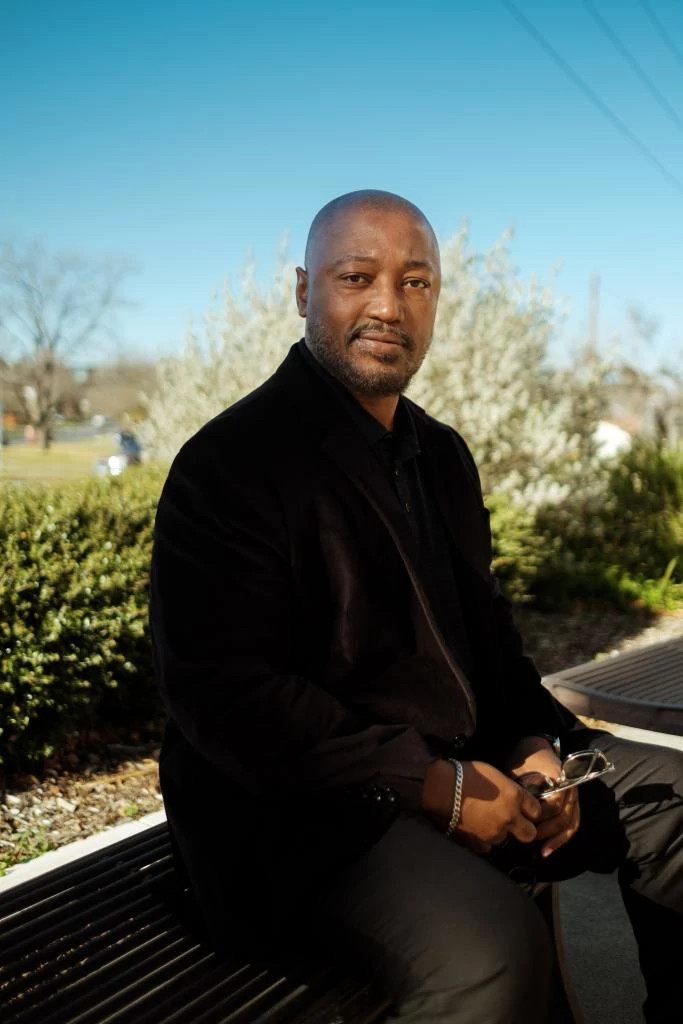
photo by Moyo Oyelola
Perserverance: Works Inspired by the Word
by Graylin Anderson
Featuring figurative works on paper and wood, Perseverance explores historical narratives of spirituality and resistance.
New Orleans-born Graylin Anderson began producing art in the late 1980s while serving in various branches of the United States Armed Forces. Before moving to Austin, Texas in 2002, Anderson’s work was exhibited in art galleries and museums in Georgia, including the Savannah Art Association Gallery and the Ralph Mark Gilbert Civil Rights Museum. In recent years, Anderson’s works have been exhibited in Austin’s Black owned art spaces like Mitchie’s Gallery, founded by the late community leader Joyce Adejumo.
- Majele (Venomous) by Olaniyi Rasheed Akindiya (AKIRASH)
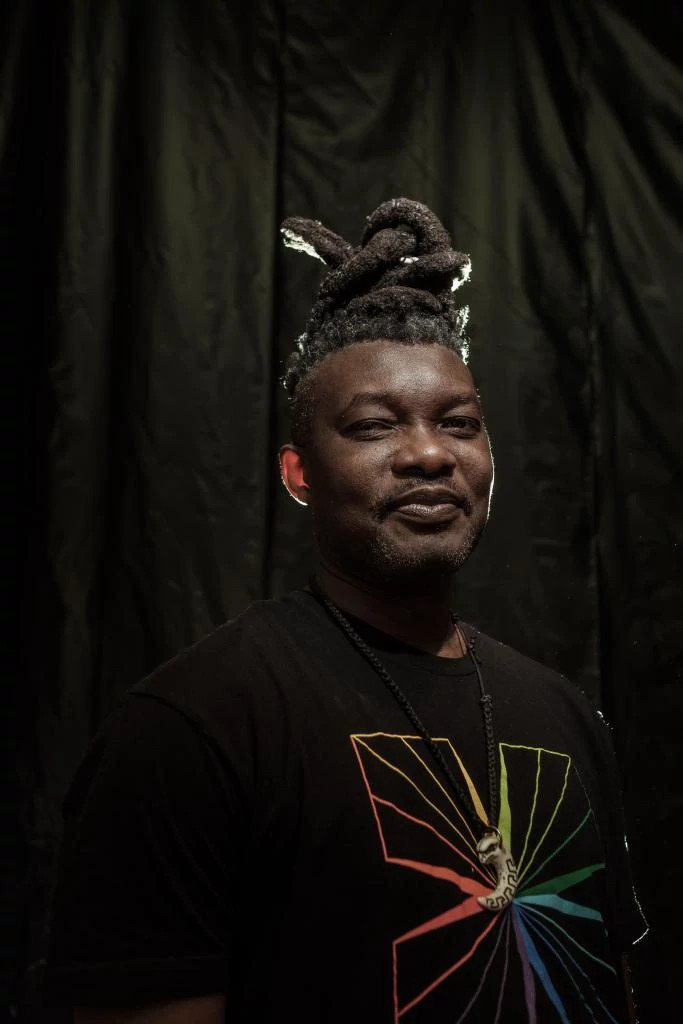
photo by Moyo Oyelola
Majele (Venomous)
by AKIRASH
Impacted by the forced separation of children from their parents at the U.S. Mexico border, Majele (Venomous) asks us to reckon with this dark moment in time. How can we heal the wounds, drain the venom, and live together in mutual respect and dignity?
AKIRASH is the recipient of numerous awards, grants, and fellowships including the Innovative Artist Award from the Mid America Artist Alliance (MAAA / NEA), Pollock Krasner Foundation Award, Santo Foundation, and Commonwealth Connection Award UK
- Grooves from the Deep and the space math of George Clinton
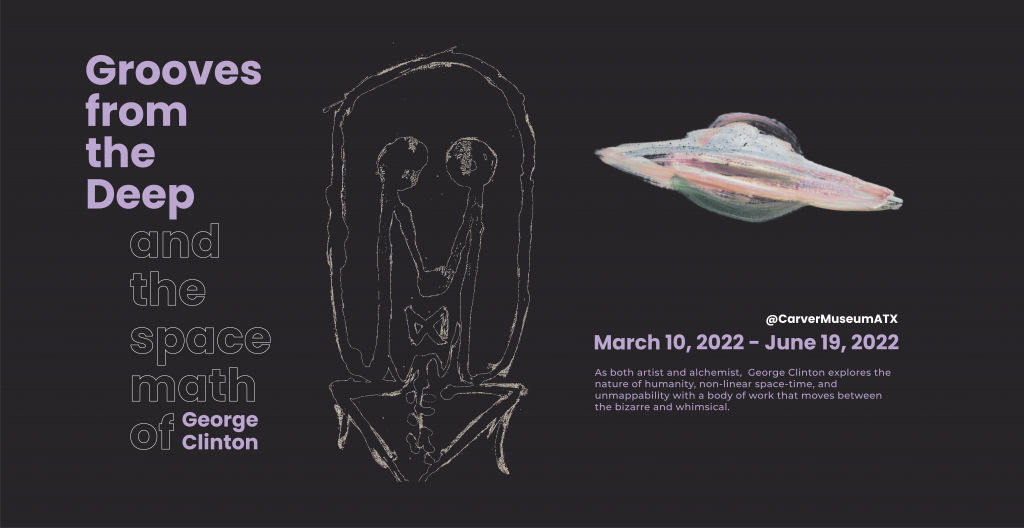
We were honored to exhibit the work of funk icon, extraterrestrial, and Afrofuturist, George Clinton at the Carver Museum ATX.
Through mixed-media paintings, Clinton teleports viewers to the inner-outer spaces of his imagination. Cameos of the mothership, the atomic dog, and other popular funk iconography emerge through cosmic equations. Inspired by the things we cannot yet see or imagine from the vantage point of earth, Clinton explores the nature of humanity, non-linear space-time, and unmappability.Drawing inspiration from his music, and the funk that moves through it, Clinton creates cosmic cheat codes, maps, and portals for those interested in freeing their minds. As both artist and alchemist, his work lives between the bizarre and whimsical .
Clinton, known primarily for his music, cited Motown‘s assembly line of sound as his inspiration. He gradually put together a collective of over 50 musicians and recorded these ensembles during the ’70s both as Parliament and Funkadelic. As a result of this synergistic approach to making music, Clinton and the Parliament/Funkadelic are some of the most widely sampled musicians in the world.
Clinton’s distinguished career as a producer, writer, performer, and visual artist have stemmed from his relentless dedication to funk as an art form unto itself. His music is rooted in the traditions of New Orleans and Blues of the Deep South. Clinton took Funk to new heights. Blending elements of Jazz, Rock, Pop, Classical and Gospel into his productions, he developed an easily identifiable style affectionately called ‘P-Funk.’ Today, Clinton continues to evolve his creative expression, delving into the realm of visual art and expanding the horizons of his artistry.
- Jamel Shabazz: Peace to the Queen
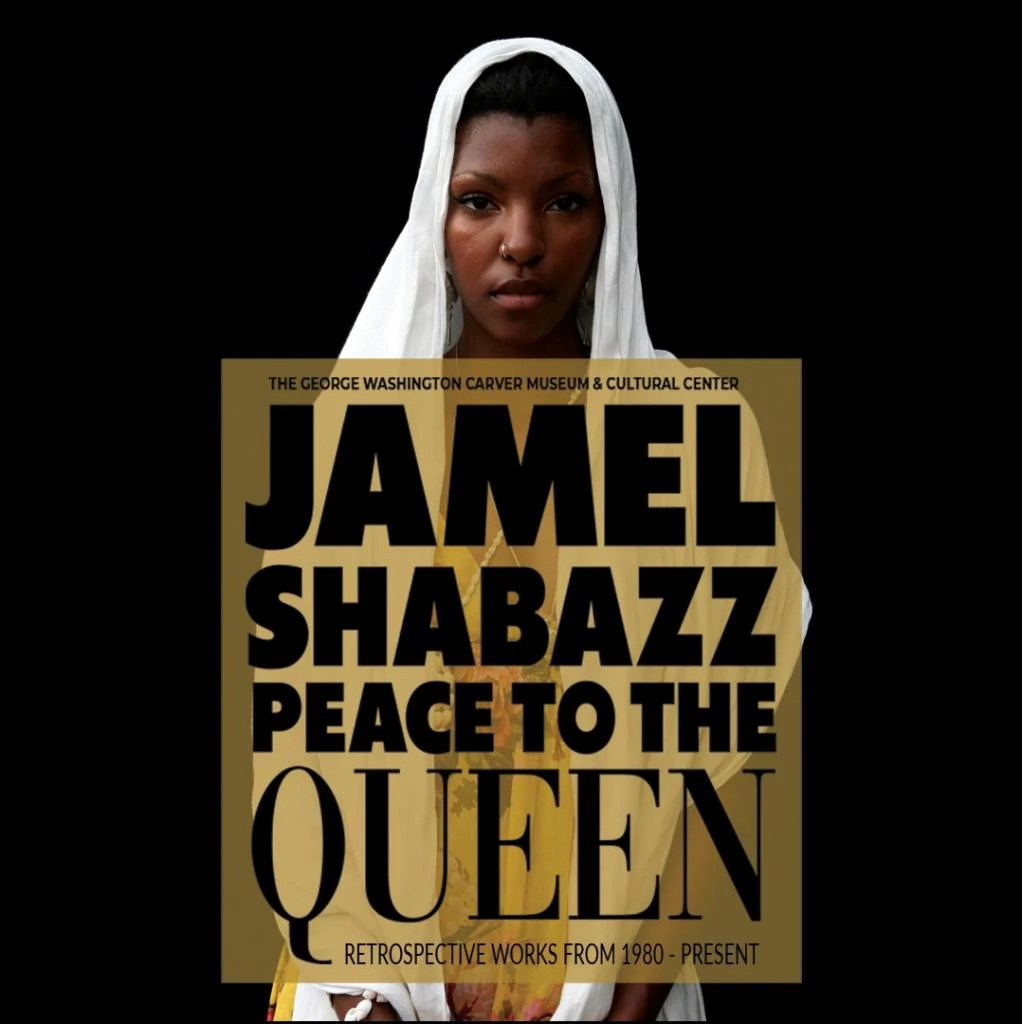
Carver Museum Presents the First Career Retrospective of iconic photographer Jamel Shabazz: Peace to the Queen.
Legendary photographer, humanitarian, and educator Jamel Shabazz presents his first career retrospective, Peace to the Queen at the Carver Museum. The exhibit spans four decades of work by the artist and features portraits of women of color that are candid, artful, and often intimate. At a moment when Black and Brown women are more visibly leading the charge around movements for racial and economic justice—Peace to the Queen has materialized and aligned at a critical moment in American history and Jamel Shabazz’s resurgent career.
Peace to the Queen signals a major turning point for the City of Austin-operated Carver Museum that has emerged as a formidable Black Arts institution in the Southwest region. Doctoral candidate at the University of Texas at Austin, Ja’nell Ajani is the lead curator of this groundbreaking collection of work by Jamel Shabazz. She is an alumna of Spelman College and has earned graduate degrees in African Studies and Studio Art/Photography from New York University.
Brooklyn native, Jamel Shabazz (b.1960) picked up his first camera at the age of 15 and began to document his peers. Inspired by photographers Leonard Freed, James Van Der Zee, Gordon Parks, and their compelling documentation of Black culture— he sought to build on the legacy of their work. Using the public spaces of New York City as his backdrop, Shabazz embarked on a journey to document and affirm the dignity of communities devastated by Reaganomics, the War on Drugs, and the continued criminalization of poor people. From this work, a hallmark style emerged along with some of his most iconic photographs.
Today, Jamel Shabazz’s work extends far beyond the public streets, parks, and subways of New York City and includes a robust portfolio of commercial, fashion, documentary, and fine art photography that has been exhibited around the world.
- Moyo Oyelola: Department of the People Plus Process
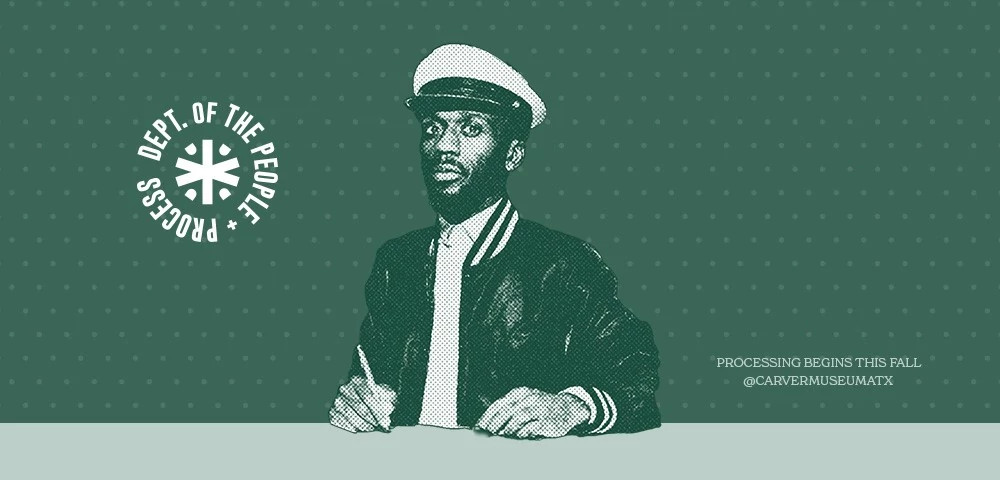
Supervised by multimedia artist Moyo Oyelola, a new branch of the Department of the People Plus Process, under the Division of False Authority, is on view November 3, 2022 - February 25, 2023.
"What does it mean to register your security, your car, and your life away to a greater authority? We all do it every day. Who does bureaucracy serve and does structure create or crush personal freedom? When does power become an enemy of progress?” questions interdisciplinary and performance-based artist Moyo Oyelola in his upcoming exhibit, The Department of the People + Process.
- Field Order 15: And Other Broken Promises
.png)
Join us on Thursday, March 23, from 6-8PM at the Long Center's Gallery 701 for the closing reception of Field Order 15: And Other Broken Promises, a powerful satellite exhibit curated by Carver Museum ATX's, Carre Adams.
Field Order 15: And Other Broken Promises examines the paradox of American exceptionalism and the call for reparations. This exhibit engages artists of African descent around the concept of repair. Eleven artists were asked to consider what is required for America to atone for the continued denial of full citizenship to Black people and what repair would feel like in the body. Themes in the exhibit are presented through a series of short film-based vignettes devised around a series of prompts and displayed next to sculptural and two-dimensional works that explore repair, identity, and contradiction. Works by Alexis Hunter, Tia Boyd, Queen Deelah, Elizabeth Hudson, Kemi Yemi-Ese, Chris Hill, Moyo Oyelola, Joe Anderson, Carlton Wilcoxson, Elisha Luckett, and Hakeem Adewumi.
Free and open to the public. RSVP Here. 701 W Riverside Dr, Austin, TX 78704
- Black Girls Don't Wear Red Lipstick
Black Girls Don't Wear Red Lipstick is a powerful photography exhibit by Leta Harrison. Inspired by Kam Franklin’s Black History Month symposium on resistance-fashion and self-expression at the Carver, this photo exhibition serves as a love letter to strong Black women who have shown courage and defiance when asked to dim their light. When a Black woman opts to wear red lipstick, she empowers herself. In all of its boldness, red lipstick and other vibrant hues of lip color, Black women need not ask permission.
Black Girls Don't Wear Red Lipstick aims to encourage women of color to stand out, embrace their differences, and rise against antiquated beauty standards based on a narrative set out to diminish Black personalities, presence, and contributions to the world.
Leta Harrison is an Austin-based photographer hailing from Washington DC. Harrison's early career began in 2017 with Creative Hands Studio, where she quickly realized her ability to story tell through photography. After some time in the nonprofit sector and freelance world, her work began to take flight with RAW Natural Born Artists and local newspapers. Soon after moving to Austin in 2020, her work was being featured in publications like Voyage Austin and Essence Magazine, and she has photographed events like Fusebash, Afrotech, and SXSW. Leta Harrison's work truly embodies the emotion behind the subject. Her photos posses a magic that provokes deep reaction, ignites important conversation, and captures authenticity of the moment.