

Montopolis Negro School Rehabilitation
After the City of Austin acquired the Montopolis Negro School in 2019, Austin Parks and Recreation (APR) initiated formal protective efforts and completed a hazardous material abatement in preparation for visioning efforts for the historic school building. The Montopolis community spearheaded the advocacy efforts that led to the City’s acquisition of the building and APR recognizes and commends the community’s efforts to ensure that this significant historic site is preserved and looks forward to collaboration on the future of the site. This project is in the preliminary planning phase. City Council District 3
To sign up for email updates, please send a request to ACME@austintexas.gov.
Background
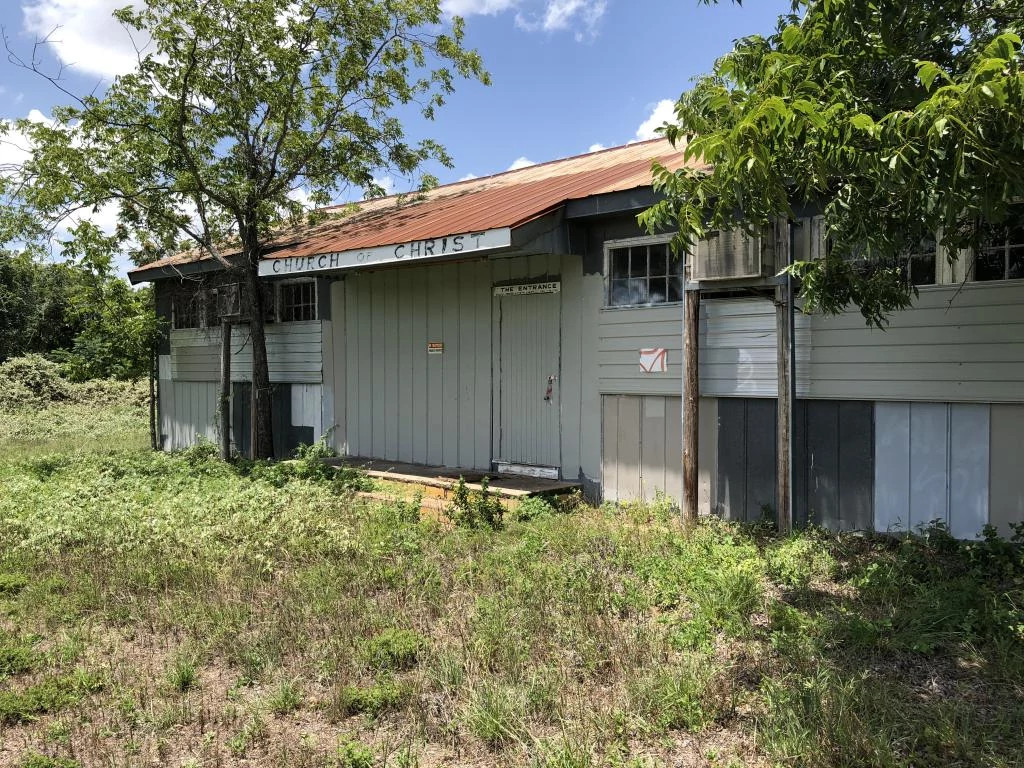
The Montopolis Negro School operated from 1935 to 1962 and is among the last surviving rural schools that Travis County operated for African American children during the Jim Crow era of racial segregation. After the Austin School District integrated in 1962, the building served as the Montopolis Church of Christ until the 1980s.
Until the 1954 Brown v. Board of Education landmark US Supreme Court case, the education system in the United States was racially segregated by law. In 1935, a major Austin flood destroyed the original Montopolis Negro School located on the north side of Bastrop Highway about one mile south of the Colorado River. St. Edward’s Baptist Church donated land to Travis County for school purposes at 500 Montopolis Dr. A two-room army barrack was relocated from Camp Swift to the site and renovated to serve as a school. Travis County transferred ownership of the school to Austin public schools in 1952, and the school closed in 1962 due to the desegregation of schools.
In 1967, the property was purchased from Austin public schools, and the building then served as the Montopolis Church of Christ. The church operated until the 1980s and the building has remained vacant since that time. In 2015, a private developer purchased the tract of land along with the building with the intention of developing the land into single-family homes, retail space, and an office building.
The City of Austin began the process of acquiring the Montopolis Negro School in 2017, as directed in Resolution 20170928-056, to preserve and program the building and site as a museum and tourist asset. Ultimately, negotiations with a private landowner were unsuccessful, and Resolution 20180628-081 initiated eminent domain proceedings in 2018. The Office of Real Estate Services communicated in a January 24, 2019 memorandum to City Council that the City of Austin had taken possession of the property.
Upon taking possession of the building, Austin Parks and Recreation communicated in a March 6, 2019 memorandum to City Council its intention to secure and protect the building and identify funding for a planning effort. Parks and Recreation completed formal protective efforts in 2019 and completed a hazardous material abatement in Summer 2020. The building’s furnishings are secured on-site in a secure container, and all sensitive material is stored in archival boxes in a climate-controlled environment. For further details please see this timeline of actions that led to eminent domain proceedings.
On November 6, 2021, Austin Parks and Recreation hosted an open house for former students and community members to visit the space. Parks and Recreation also worked closely with community members to host tours of the school as part of Juneteenth celebrations in 2023 and 2024.
Austin Parks and Recreation worked in partnership with Austin Transportation and Public Works and the Montopolis community to recommend removal of the planned Grove Boulevard extension roadway from the Austin Strategic Mobility Plan, which was approved by the Austin City Council in 2022. Subsequently, the tracts of land were authorized as parkland on September 21, 2023 (Ordinance No. 20230921-100).
Austin Arts, Culture, Music, and Entertainment (ACME) was created on October 1, 2025, and the leadership of the school project was transferred to ACME shortly thereafter.
Protective Efforts to Date
Austin Parks and Recreation received funding from the Historic Preservation Fund in FY19 to secure the building and complete a hazardous material abatement process. The following areas were addressed with the FY19 funding:
- Fencing
- Pews
- Archival storage boxes
- Relocation services associated with the acquisition
- Onsite storage unit
- Asbestos and lead testing, abatement, and monitoring
- Pest control
The Montopolis community spearheaded the advocacy efforts that led to the City’s acquisition of the building.
Next Steps
This project is in the preliminary planning phase and Austin Parks and Recreation is working with community members on identifying next steps. A community-informed plan will result in concepts for a future museum and community space. Once a plan is completed, the City of Austin will seek construction funding for plan implementation to ensure this site is preserved and transformed into a museum in accordance with City Council direction.
Scope of Services
The scope of services below lays out the expectations for the Historic Montopolis School Vision and Interpretive Plan.
- Purpose
The City of Austin Arts, Culture, Music, and Entertainment (ACME) seeks a team to develop a Historic Preservation and Interpretive Plan for the historic “Montopolis Negro School,” located at 500 Montopolis Drive. The school is historically significant as one of the last surviving rural schools for African Americans in Travis County from an era that was characterized by the racial segregation of public and private facilities and the disenfranchisement and discrimination of people of color. Additionally, the building later served as the Montopolis Church of Christ from about 1968-1984.
The City of Austin acquired the property through eminent domain, following council direction from Resolution No. 20170928-056 to “prepare a plan for restoration, management, operation, and funding of the property as a historic asset and museum that would attract tourists and convention delegates.”
The primary goal of the planning project is to develop a visionary framework to guide the restoration, interpretation, and future development of the site. The project requires that the design team have experience in historic preservation and interpretive planning, design, community-based facilitation, and programming, operational planning, and implementation recommendations to guide the establishment of sustainable
museum and cultural facilities.- Background
Historical documentation from the Travis County Historical Society and records on African American rural schools in Travis County indicate that the Montopolis School for Negro Children was established in 1891 as part of the Colorado School District, School No. 34.
The original Montopolis School was located in the 300 block of the Bastrop Highway, on the north side of the road, approximately one mile south of the Colorado River. The original building was destroyed in a storm in 1935.
In 1935, St. Edward’s Baptist Church, under the leadership of Reverend Harold, donated 1.82 acres of land on Montopolis Road for the construction of a new school site. The Montopolis Negro School operated at this location from 1935 to 1962 and is among the last surviving rural schools in Travis County that served African American children during the Jim Crow era of racial segregation.
In 1952, the school became part of the Austin Independent School District (AISD) after the City of Montopolis was annexed by the City of Austin in 1951. At that time, a restroom building and cafeteria were added, and new furniture was provided for the building. The school’s signage was also updated from “Montopolis Negro School” to “Montopolis School.”
In 1962, the school closed, and students from Montopolis were reassigned to other elementary schools. A community member remembered being transferred to Allison Elementary School, and a teacher from the school recommended that the students attend Sims Elementary School. Although the Austin school district began integrating schools in 1955, it started with only senior high schools (grades 11 and 12). In 1958, AISD began integrating junior high schools (grades 9 and 10). In 1960, it was reported that all senior and junior high schools were integrated, and one grade per year would follow until 1963, when the remaining grades would be given the option to attend an African American school or be assigned to a white elementary school. After its closure, the building later served as the Montopolis Church of Christ from approximately 1968 to 1984. Deed records indicate that in December 1968, David Willhoite—who had purchased the property through an Austin Independent School District (AISD) auction in 1967—transferred the deed to the Montopolis Church of Christ.
The City of Austin began acquiring the Montopolis Negro School site in 2017 to preserve and program the building site as a museum and tourist asset. Upon taking possession of the building, Austin Parks and Recreation (APR) communicated its intention to secure and protect the building and identify funding for a planning effort. APR completed formal protective efforts in 2019 and completed a hazardous material abatement in the summer of 2020. All the building’s furnishings related to its later use as a church are stored on site in a secure container, while all sensitive material is stored in archival boxes in a climate-controlled environment. As part of the preliminary planning efforts, APR engaged the Austin Transportation Department (ATPD) regarding an adjacent city-owned tract of land reserved for a future extension of Grove Blvd. As outlined in a December 1, 2021, memorandum to the Austin City Council, ATPD recommended removing the planned road
as part of an amendment to the Austin Strategic Mobility Plan (ASMP) that was presented to the Austin City Council in Spring 2022. In 1987, the City acquired the right-of-way for the extension of Grove Boulevard adjacent to the historic school property through eminent domain. In response to the community’s request to preserve the site's history and for restorative justice purposes, ATPD staff proposed, through the amendment process, removing the future roadway from the ASMP so the City can include the full site in its historic preservation effort. As a result of these efforts, the entire property was dedicated as parkland.The study area includes one parcel of dedicated parkland that was originally comprised of:
- 37,104 SF (±0.852-acre) parcel on which the single-story historic school building is situated, which may become dedicated parkland
- 32,109 SF city-owned adjacent parcel that was previously set aside for road purposes, but pending City Council action in 2022, the parcel may become dedicated parkland
- Scope of Work
Major Disciplines shall be represented on the contractor team:
- Historic Preservation
- Interpretive Planning and Museum Exhibit Design
- Architecture*
- Landscape Architecture and/or Civil Engineering*
- Community Engagement and Information Services
- Cost Estimating
- Structural*
- *No professionally sealed documents are required for this project.
The Historic Preservation and Interpretive Plan and process will include the following components:
- Inclusive Outreach and Community Engagement Plan that is structured to allow for outreach and engagement of current and former residents of the Montopolis neighborhood, including former students of the school or parishioners of the church; Montopolis neighborhood, and greater Austin. The engagement plan shall include strategies to engage the African American community and organizations. Additionally, the plan should engage broader groups with interests in historic preservation, public history, heritage tourism, and education. The design team will lead the community engagement efforts, and ACME will support the process in a manner consistent with the City of Austin’s Public Participation Principles and Community Engagement Operations and Procedures. Engagement should include strategies for inclusive public participation, input collection and analysis, and presentation materials in collaboration with the consultant, the City Project Manager (PM) and ACME. ACME will review and provide feedback consistent with City of Austin community engagement standards along with reporting requirements to ensure continued alignment. Final plan for engagement will be posted on project webpage and will be component of final plan.
- Goals of engagement and measure of success will be as follows:
- Inform - Engagement activities should result in community members being informed about the history of the Montopolis Negro School, potential interpretive themes and programs, and the planning and implementation process.
- Diverse community representation - There should be representation of diverse groups of community members, including but not limited to, Montopolis neighborhood and community groups, immediate community members, area businesses, historic preservation advocates, and public history advocates. Participants should be representative of the demographics of Austin and the Montopolis neighborhood.
- Include African American media sources, such as The Villager Newspaper and KAZI Radio, and make efforts to establish a database of former students and their descendants.
- Consultation - Engagement activities should be designed in a way that gathers input from community members to inform the plan.
- Preliminary scoping process should include consultation with community leaders to consider goals and scope of planning process are in alignment with community expectations and capacity. A summary of preliminary scoping feedback will be provided in the final public engagement summary.
- Public Engagement Plan (PEP): The PEP will outline the goals for engagement and include a description of all outreach activities and efforts, noting how each will integrate with the planning process.
- Community Wide Survey: The design team will develop a survey to gather feedback on the goals and principles. The survey will be conducted and promoted by ACME and uploaded to Speak Up Austin.
- Small Group and Public Meetings, Project Introduction and Information Gathering 1:
- Conduct a minimum of four public meetings. ACME, in coordination with the consultant, shall identify and secure meeting spaces at both private and public facilities. ACME may also provide children activities in accordance with local standards of care reflected in City of Austin Ordinance No. 20170216-066. Refreshments and supervised children’s activities
may be provided if needed. - The design team will conduct up to six focused group meetings to garner detailed information including interpretation, programming, infrastructure, transportation, historic preservation, neighborhood connectivity, environmental concerns, and any other relevant issues informing the preservation and activation of the Montopolis School.
- Smaller focus group meetings of all interested parties. All interested parties notified of meetings using alternate methods such as email, newspaper notices, etc. Appoint an advisory committee to work with the department.
- Conduct a minimum of four public meetings. ACME, in coordination with the consultant, shall identify and secure meeting spaces at both private and public facilities. ACME may also provide children activities in accordance with local standards of care reflected in City of Austin Ordinance No. 20170216-066. Refreshments and supervised children’s activities
- Additional Engagement and Outreach
- Design Team may propose additional community engagement strategies
- ACME shall utilize online tools such as Speak Up Austin (managed by the City of Austin), surveys, and social media
- Design Team shall assist work in collaboration with ACME on outreach through mainstream media and other relevant media including pop-up event meetings/gatherings.
- Documentation of Public Process
- Prepare a contact list of stakeholders and interested parties for record- keeping, consultation, and notification purposes. ACME will maintain the database of community members.
- Prepare and maintain every meeting presentation and all meeting materials, sign-in sheets, and meeting minutes. All meeting promotional materials must have Spanish translation. Provide material to city for posting on website 48 hours prior to meeting. Meeting material will also be included in an appendix of the final plan.
- Maintain every piece of public feedback, including, but not limited to, feedback from meetings, online surveys, emails, and phone calls, to be documented in an appendix of the final plan.
- Assist in preparation of ACME notifications on upcoming public meetings (3-4 weeks in advance), boards, commissions, City Council, including monthly project updates. Press releases shall be reviewed and disseminated by ACME. A summary of the public process and how the public engagement plan was achieved will be included as a component of the final report.
- Goals of engagement and measure of success will be as follows:
- Data Collection and Site Contextual Analysis: Compile and analyze various reports that relate to the project study area, including but not limited to parkland, right-of-way, and application of code and regulatory requirements.
- Report examples include, but are not limited to:
- Draft City of Austin Historic Landmark nomination
- Draft National Register of Historic Places nomination
- Land Plan Study, Alterra Design Group, December 12, 2018
- Our Parks, Our Future Long-Range Plan
- City planning documents, policies, ordinances, neighborhood plans, vision plans, GIS maps and data, emerging projects, and environmental studies.
- Conduct site reconnaissance and develop a site analysis map to a level that will support a sound planning process. The analysis map shall record existing conditions, existing signage, key features, opportunities, and constraints of the site, based on visual observation and analysis of information obtained. Include photographic documentation of existing conditions. Note: A Land Plan Study was completed as part of an appraisal process in 2018 and is provided in appendix. Conduct a review and analysis of existing transportation systems, including roadways, public transit, trails, and parking, with an emphasis on the needs and impacts of new museum or cultural facility.
- Park, pedestrian, bicycle, and neighborhood connections: Review parks and civic assets within the Montopolis neighborhood and make recommendations for connectivity and wayfinding to the Montopolis School property. These assets include, but are not limited to, cultural resources and heritages sites within the surrounding area, including but not limited to: Roy G. Guerrero Colorado River Metropolitan Park, Ecology Action Circle Acres Nature Preserve, Montopolis Recreation Center and Neighborhood Park, Civitan Neighborhood Park, Burdett Prairie Cemetery, and San Jose Cemetery (Cementerio San José). Assess visibility, accessibility, and gateway characteristics.
- Comparative Facility Report and Analysis of heritage tourism potential: Provide information on comparative facilities across the United States, such as Rosenwald Schools and Civil Rights sites as well as other regional small museums. Review potential visitor numbers, programs, operations pro forma and maintenance budget and structure, parking and traffic mitigation, funding sources, and possible revenue generation. Include case study summaries if available.
- Preservation Treatment Recommendation (Historical Rehabilitation Report): Prepare a report outlining the existing conditions and the historic preservation treatment approach, including a potential compatible accessory public facility, accessibility improvements, and goals for preserving the property’s rural character as part of its cultural landscape. Provide guidance on materials and craftmanship. Report will also provide a summary of artifacts and ephemera from the building
available for future programming. - Interpretive Plan: Plan will guide future cultural and museum exhibit design. Plan elements include, but are not limited to:
- Significance statements describing the national, state, and local significance of the site and building, as well as the site’s context within the development of the Montopolis neighborhood.
- Interpretive themes that identify and organize the site’s most important stories.
- An audience analysis identifying existing and targeted audiences, and specific needs associated with each group.
- Visitor experience objectives outlining the ways various audiences may connect with the stories and resources of the site, including but not limited to outdoor interpretation and site elements, temporary/changing exhibit strategies, and a mix of interpretive media.
- Management Options: Provides options for the redevelopment and management by the City of Austin or through a partnership with a nonprofit or community entity. Plan would provide recommendations for the capacity and experience of a future management entity.
- Concept and Preliminary Design: Provide concepts based on the site analysis, needs assessment, City staff and public input. Determine design parameters, measured drawings of the existing building, outdoor interpretation or programming zones, parking access, pedestrian entries, sustainability and potential compatible accessory facilities. The concepts shall be supported with graphic materials to illustrate ideas to City staff and the public.
- Implementation Plan with Cost Estimates: Provide short-term, mid-term and long-term recommendations, funding strategies, and partnership models to guide next steps. The plan shall define key phases and associated projects and include a Class 4 level cost estimate to inform future capital funding requirements for each of these projects, an overall budget estimate for the entire vision plan, and include preliminary operations and maintenance budgets. Potential funding, grants, and partnership strategies shall be included, such as nonprofit partnerships.
- Sustainability: The project will integrate the City of Austin’s Sustainability Standards to ensure environmentally responsible, equitable, and resilient outcomes. It will apply relevant city sustainability policies, incorporating energy efficiency, water conservation, low-carbon materials, and waste reduction strategies. The project will ensure alignment with the City of Austin Green Building Program, LEED or equivalent certifications, and other municipal sustainability guidelines, while adhering to local environmental regulations, including stormwater management, tree protection, and habitat conservation standards. All planning, design, and implementation efforts will be guided by these sustainability principles to achieve measurable environmental and community benefits.
- Plan Delivery:
- Provide a draft plan that includes the elements described in sections above as well as illustrative plan graphics, sections, perspectives, and an estimate of construction costs for proposed improvements to effectively communicate the vision plan concepts to City staff and the public. The draft plan shall be reviewed by staff and comments and edits shall be made in revised draft plan, which will be posted for public feedback.
- Following public review, and board, commission, and council process, incorporate feedback into a Final Historic Preservation and Interpretive Vision Plan that synthesizes the vision planning process into a single report with an Executive Summary.
- Provide three hard copies and a City-approved electronic copy of the Final Vision Plan Report and electronic copies of all related materials, including GIS and digital mapping files, to the City PM. The Historic Preservation and Interpretive Plan that results from this effort shall be used as a roadmap for the preservation, redevelopment, and management of the facility in the long-term, but also facilitates execution of early phases in the near term. The Historic Preservation and Interpretive Plan will also be used as a promotional tool to generate public interest, support, and funding for future redevelopment and partnerships. The design team shall demonstrate the ability to produce high quality illustrative media in a variety of ways that effectively convey the content and spirit of the design.
- Project Organization: Create a Work Plan that identifies the following project areas at a minimum:
- Organization of the project team including the designation of a primary point of contact.
- Project schedule outlining timeline for deliverables within 10-month timeframe from contract
execution. - Inclusive Outreach and Community Engagement Plan
- Other required actions for the completion of the Historic Preservation and Interpretive Plan
- Engage, inform, and rely upon the City-identified Technical Advisory Group (TAG) composed of representatives from city departments and/or community members. These members will support the process by providing access to data in their respective departments and ensure that their respective departments’ goals, policies, plans, and constraints are understood and considered during the planning process by the selected firm. Typically, the TAG meets three times during a project.
- Report examples include, but are not limited to:
- City of Austin Staff, Public Reviews: Boards, Commissions, Council Review
- Prepare one presentation of approximately 10-20 slides and conduct up to eight project presentations
of the final draft Historic Preservation and Interpretive Plan. - Prepare and conduct a project presentation of the draft Historic Preservation and Interpretive Plan to
ACME executive team and/or City Manager’s Office. - Present plan to all required boards and commission for feedback including, but not limited to Historic
Landmark Commission, African American Resource Advisory Commission, Parks and Recreation Board,
ACME leadership, Environmental Commission, Development Commission, Carver Ambassadors, Parks
and Recreation Board, General Planning Commission, Design Commission and Arts Commission. - Present plan to the Austin City Council if needed.
- Make any necessary changes to the final adopted Historic Preservation and Interpretive Plan, if advised
by the City Council and reviewed and approved by the City PM, prior to final acceptance by the City.
- Prepare one presentation of approximately 10-20 slides and conduct up to eight project presentations
- City Responsibilities
- Create a Technical Advisory Group (TAG) to assist the Design Team with relevant city departments’ goals, policies, plans, and constraints.
- Develop and maintain a webpage to post project information (content provided by the design team)
- Access to online survey tool(s). Approve and disseminate all press releases, notifications, meeting invitations, and other communications to the public (content provided in collaboration with the design team).
- Assign a project manager to coordinate with the Consultant on project organization, schedule of meetings, and other deliverables. The project manager will provide oversight and administration of the contract.
- Proposed Contract Schedule
Contract Proposal Finalized by April 10, 2026
Contract Execution: April 27, 2026
Community Focus Group Meeting Dates
The Montopolis Proud and Alumni - Saturday, June 27, 2026 at 1:30 p.m.
Community at large - Saturday, July 18, 2026 at 10 a.m. - Community at large
Focus Group Meeting - Tuesday, August 5, 2026, 10 a.m. - 12 p.m. - Wesley United Methodist Church
Community Meeting - Wednesday, September 23, 6 a.m. - 8 p.m. - Montopolis Recreation and Community Center
Community Engagement
- Community Meeting, February 17, 2026
Montopolis Recreation Center (The Conference Room)
Monday, February 17, 2026, 6:00 p.m.This meeting marked a key milestone in the project and focused on:
- An update from Austin Parks and Recreation on the oral history project and the historic designation phase of the Montopolis Negro School project
- Introduction of the Vision Plan and Design Project Team
- Presentation of the draft scope of work for the vision plan and design project
- Opportunity for the community to review, provide feedback, and help finalize the scope of work
- An overview of how the project team will approach the vision planning and design process, including community engagement and next steps
- Community Meeting, November 3, 2025
Community Meeting: Future of the Montopolis Negro School
November 3, 2025, 6:00 p.m.
Hosted by City Council District 3 Office
Montopolis Recreation and Community Center at 1200 Montopolis Drive- Community Meeting, September 4, 2024
Community Meeting: Future of the Montopolis Negro School
September 4, 2024, 6:30 p.m.
Hosted by City Council District 3 Office
Montopolis Recreation and Community Center, 1200 Montopolis Drive- Open House, November 6, 2021
Open House: November 6, 2021
500 Montopolis Dr.- Handout for Open House (PDF 1 MB)
Funding and Resources
The funding for the acquisition of the Montopolis School was made possible by Hotel Occupancy Tax (HOT) funding to support projects and initiatives that meet allowable uses as defined under Chapter 351 of the Texas Tax Code. HOT revenue is an essential tool for the promotion of tourism and supports the growth of the tourism, convention, and hotel industry. Austin Parks and Recreation is an important partner in this effort as public parks, museums, and cultural centers are among the top tourist attractions in the city.
Contact
For more information or questions, contact Candice Cooper by email at candice.cooper@austintexas.gov or phone at (512) 974-1624.