Prepare for Freezing Weather
Locate Your Water Shutoff
Make sure everyone in your household knows where the main shutoff valve is located and keep it clear of debris. In Austin Water's service area, the property owner's shutoff is typically on your side of the water meter at the meter box. (Renters: ask your property manager.) If you can't find it or the valve is damaged, use the City shutoff valve in the meter box. You may need a water meter key, available at most hardware stores.
Seal Out Cold Air
Close doors and windows tightly. Repair broken or drafty windows, doors, and walls. Fix leaks in crawl spaces and basements. Weatherize unheated areas and keep garage doors closed during the freeze.
Protect Exposed Pipes and Water Heaters
Insulate pipes in unheated or drafty areas like attics and garages. For water heaters, follow the manufacturer's winterization recommendations. Pipe insulation is available at hardware and plumbing supply stores.
Winterize Outside Faucets
Turn off outdoor faucets, disconnect hoses, and insulate faucets with towels or foam covers. Turn off and drain automatic sprinkler systems.
Leaving Town?
If you'll be away during freezing weather, shut off your water at the meter and keep your thermostat at 65 degrees or higher.
- Emergency Supplies
-
.png)
The new My ATX Water meter box lids can be opened with a standard meter box lid key. Use the key to press down the spring mechanism before turning it to open the lid. Please be cautious to prevent damage to the wires connecting the lid to the meter inside the box.
- During Freezing Weather (1-2 days)
.png)
*For extended Freeze (more than 2 days)
Austin Water will provide guidance for protecting your pipes and our water system infrastructure during the freeze. Follow our instructions for the best advice:
Facebook
X
Instagram
YouTube
- Thawing pipes after freeze
-
If you only have a trickle of water or no water coming out, you may have a frozen pipe or water meter. Take the following steps:
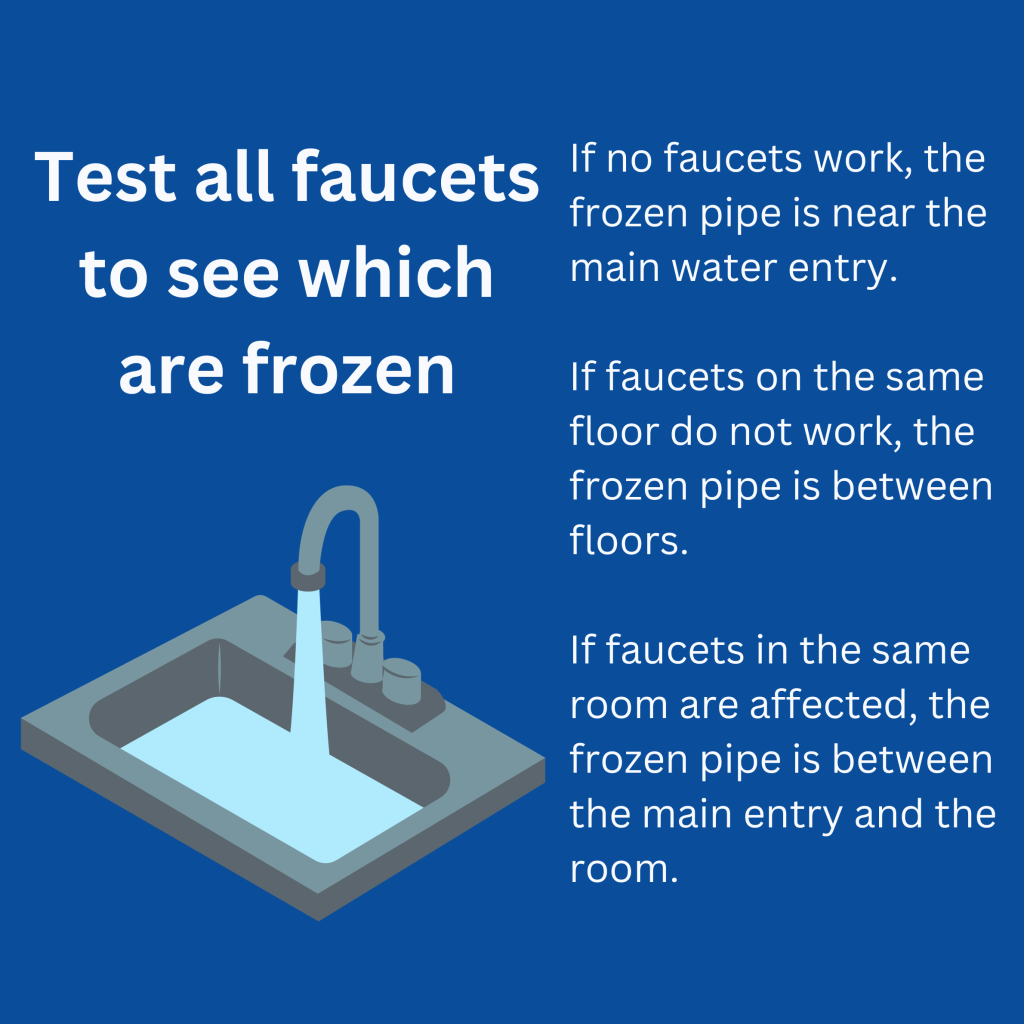
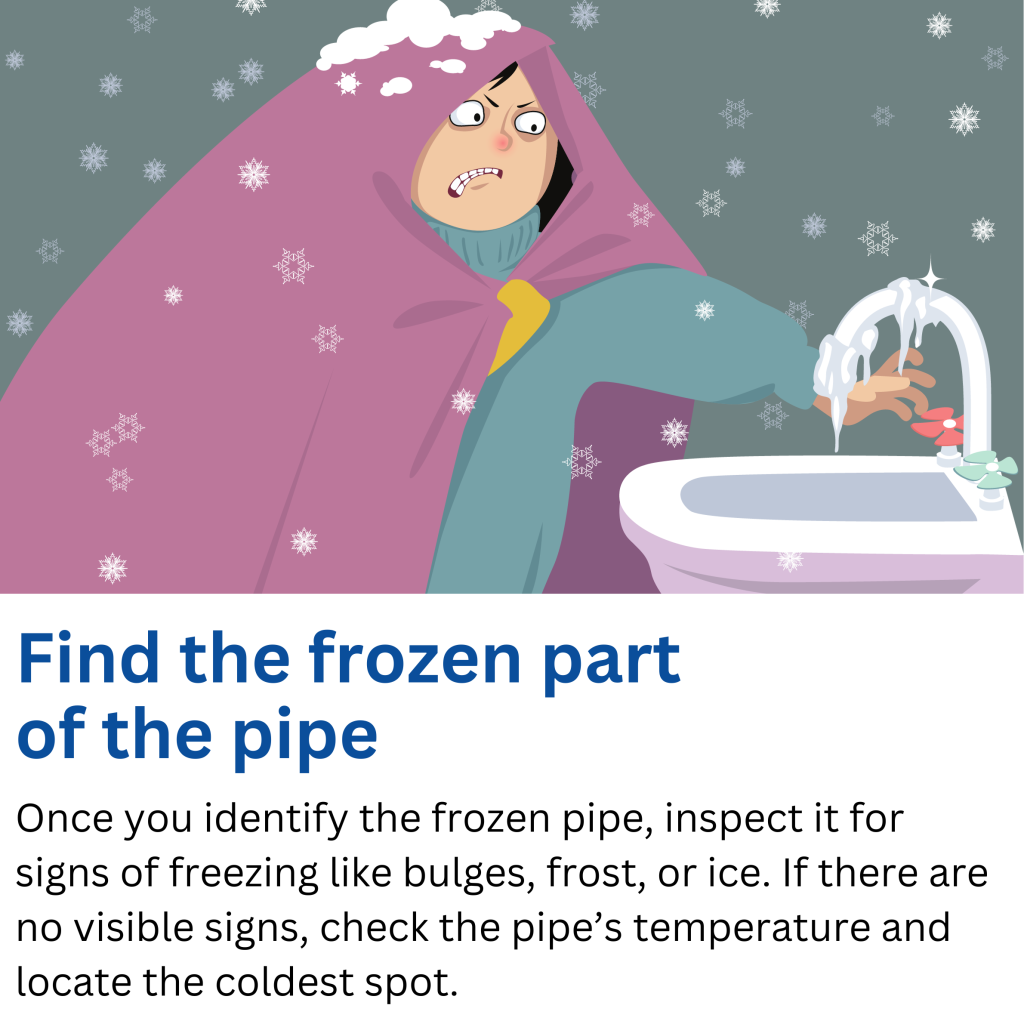
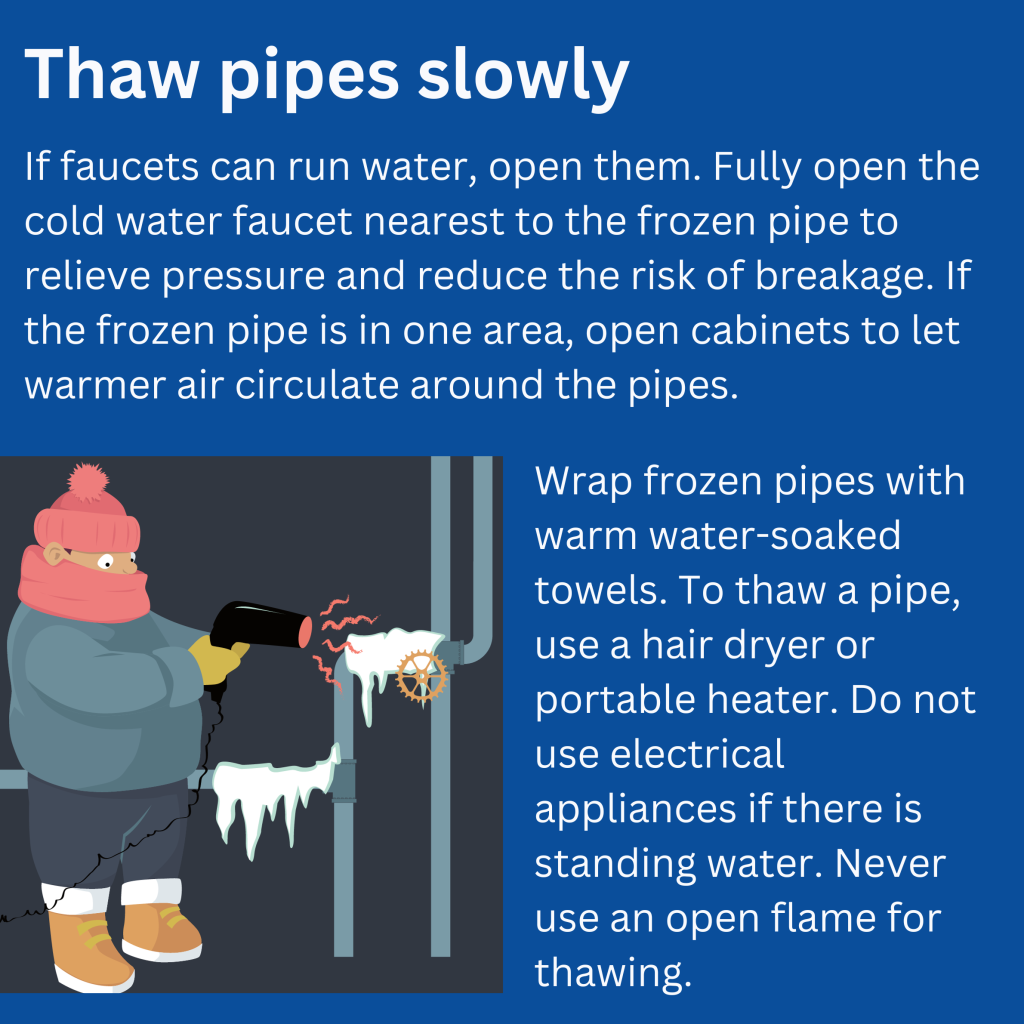
If these steps do not work, contact a licensed plumber or your property manager for assistance.
- Rainwater harvesting systems
-
Avoid costly repairs to your rainwater harvesting system from a major freeze with these cold-weather tips:
- Be aware of standing water in the pipes leading to and from your system's cistern(s). Exposed pipes should be empty with no standing water. If your system has a first flush, empty it out. If the first flush breaks, your system will no longer be able to collect water.
- If you have a drip or irrigation system hooked up to your rainwater harvesting system, make sure that any pipes leading to it are emptied with the valves shut off.
- Tightly wrap spigots or valves with insulating materials, such as socks or towels.
- Smaller rainwater systems can crack if the water inside them freezes. For systems with a capacity of 150 gallons or less, we recommend draining the system and disconnecting it from the downspout leading in. This will ensure it does not receive any rainwater during a freeze event.
- If you must shut off your water due to a water emergency, your collected rainwater can be used to flush toilets.